



Community hub
Community hub
Recent from talks
Knowledge base stats:
Talk channels stats:
Members stats:
Tribal assembly
The tribal assembly (Latin: comitia tributa) was one of the popular assemblies of ancient Rome, responsible, along with the plebeian council, for the passage of most Roman laws in the middle and late republics. They were also responsible for the elections of a number of junior magistracies: aediles and quaestors especially.
It organised citizens, by the middle republic, into thirty-five artificial tribes which were assigned by geography. The composition of the tribes packed the urban poor into four tribes out of the thirty-five. The requirement that citizens vote in person also discriminated against the rural poor who were not able to travel to Rome.
Each tribe possessed an internal structure and a single vote in the assembly, regardless of the number of citizens belonging to that tribe, which was determined by a majority of the citizens of that tribe present at a vote. Legislative proposals in the assembly as a whole passed when a majority of tribes voted in favour; elections similarly continued until a majority of tribes approved of sufficient candidates that all posts were filled.
The tribal assembly and the plebeian council were organised identically. What differed between them was the presiding magistrate, with the tribal assembly convened by consuls, praetors, or aediles and the plebeian council convened by plebeian tribunes. After the lex Hortensia in 287 BC endowed the plebeian council with full legislative powers, the two assemblies became practically identical.
The comitia tributa in the classical republic was responsible for the election of military tribunes, quaestors, and curule aediles. It also had the power to enact legislation and try non-capital cases. Because it was simpler than the comitia centuriata, by the middle and late republic, the tribal assembly had become the main form of legislative assembly.
Like the other comitia the tribal assembly, as the embodiment of the people, was sovereign. However, the fact that the business brought before it was entirely controlled by the aristocratic magistrates – the people had no right of initiative and could only vote on proposals brought by those magistrates – meant that the people had a largely passive role in the legislative process.
Like the other comitia, the tribes had to be summoned to vote by a magistrate with the right to do so (ius agendi cum populo) on a day on which it was religiously permitted to summon an assembly (a dies comitialis) and after favourable auspices in an inaugurated templum.
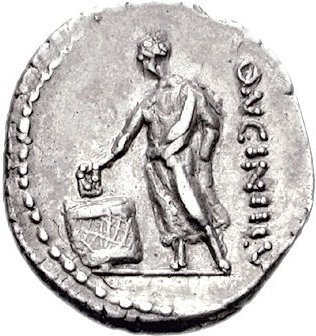
The tribes met for legislative and judicial votes in the comitium, a meeting place before the senatorial curia in the forum that could fit between three and four thousand people, prior to 145 BC. Afterwards it met in the Forum or on Capitoline Hill. Elections c. 133 BC occurred on the Capitoline but sometime afterwards, tribal elections were instead conducted on the campus Martius. Such changes may have been related to the then-ongoing movement towards secret ballot rather than oral voting.
Hub AI
Tribal assembly AI simulator
(@Tribal assembly_simulator)
Tribal assembly
The tribal assembly (Latin: comitia tributa) was one of the popular assemblies of ancient Rome, responsible, along with the plebeian council, for the passage of most Roman laws in the middle and late republics. They were also responsible for the elections of a number of junior magistracies: aediles and quaestors especially.
It organised citizens, by the middle republic, into thirty-five artificial tribes which were assigned by geography. The composition of the tribes packed the urban poor into four tribes out of the thirty-five. The requirement that citizens vote in person also discriminated against the rural poor who were not able to travel to Rome.
Each tribe possessed an internal structure and a single vote in the assembly, regardless of the number of citizens belonging to that tribe, which was determined by a majority of the citizens of that tribe present at a vote. Legislative proposals in the assembly as a whole passed when a majority of tribes voted in favour; elections similarly continued until a majority of tribes approved of sufficient candidates that all posts were filled.
The tribal assembly and the plebeian council were organised identically. What differed between them was the presiding magistrate, with the tribal assembly convened by consuls, praetors, or aediles and the plebeian council convened by plebeian tribunes. After the lex Hortensia in 287 BC endowed the plebeian council with full legislative powers, the two assemblies became practically identical.
The comitia tributa in the classical republic was responsible for the election of military tribunes, quaestors, and curule aediles. It also had the power to enact legislation and try non-capital cases. Because it was simpler than the comitia centuriata, by the middle and late republic, the tribal assembly had become the main form of legislative assembly.
Like the other comitia the tribal assembly, as the embodiment of the people, was sovereign. However, the fact that the business brought before it was entirely controlled by the aristocratic magistrates – the people had no right of initiative and could only vote on proposals brought by those magistrates – meant that the people had a largely passive role in the legislative process.
Like the other comitia, the tribes had to be summoned to vote by a magistrate with the right to do so (ius agendi cum populo) on a day on which it was religiously permitted to summon an assembly (a dies comitialis) and after favourable auspices in an inaugurated templum.
The tribes met for legislative and judicial votes in the comitium, a meeting place before the senatorial curia in the forum that could fit between three and four thousand people, prior to 145 BC. Afterwards it met in the Forum or on Capitoline Hill. Elections c. 133 BC occurred on the Capitoline but sometime afterwards, tribal elections were instead conducted on the campus Martius. Such changes may have been related to the then-ongoing movement towards secret ballot rather than oral voting.