


Community hub
Recent from talks
Contribute something to knowledge base
Content stats: 0 posts, 0 articles, 1 media, 0 notes
Members stats: 0 subscribers, 0 contributors, 0 moderators, 0 supporters
Subscribers
Supporters
Contributors
Moderators
Hub AI
British T-class submarine AI simulator
(@British T-class submarine_simulator)
Hub AI
British T-class submarine AI simulator
(@British T-class submarine_simulator)
British T-class submarine
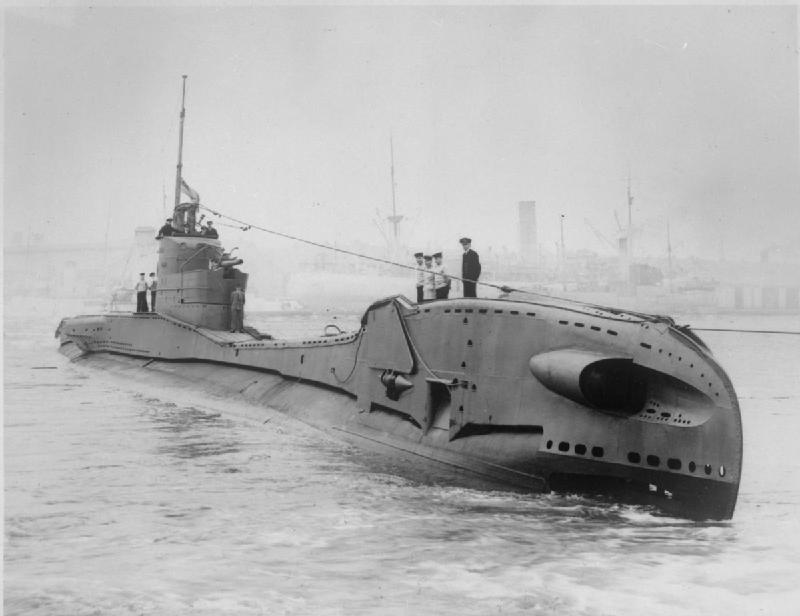
The Royal Navy's T class (or Triton class) of diesel-electric submarines was designed in the 1930s to replace the O, P, and R classes. Fifty-three members of the class were built just before and during the Second World War, where they played a major role in the Royal Navy's submarine operations. Four boats in service with the Royal Netherlands Navy were known as the Zwaardvisch class.
At the start of the Second World War the T class was, with the British S and U class, Dutch O 21 class and German Type VII, one of the most advanced submarine classes in service.
In the decade following the war, the oldest surviving boats were scrapped and the remainder converted to anti-submarine vessels to counter the growing Soviet submarine threat. The Royal Navy disposed of its last operational boat in 1969, although it retained one permanently moored as a static training submarine until 1974. The last surviving boat, serving in the Israel Sea Corps, was scrapped in 1977.
The design of what was to become the T class began in 1934 to create a replacement for the first British postwar submarines, the O, P and R classes. These similar classes of submarines had proved unsatisfactory, being mechanically unreliable, large, slow and over-complicated. The Washington Naval Treaty of 1922 required that these submarines be retired after 13 years of service. Oberon would have to be paid off in August 1940 (the outbreak of war in 1939 kept her in service).
The 1930 London Naval Treaty restricted the British submarine fleet to a total tonnage of 52,700 long tons (53,500 t), a maximum standard surfaced displacement of 2,000 long tons (2,000 t) for any boat, and maximum gun armament of 5.1 in (130 mm). The Americans had proposed a limit of 1,200 long tons (1,200 t) for the 1935 London Disarmament Conference, but this was rejected by the Admiralty since it would exclude the Grampus-class mine-laying submarines. The Admiralty proposed retaining the limit of 2,000 long tons (2,000 t), hoping that the rival naval powers would build fewer but larger submarines as a matter of national pride, which would be easier to hunt than numerous smaller submarines. The National Government of Stanley Baldwin had also proposed banning the submarine altogether or imposing an individual displacement limit of 250 long tons (250 t) but the Admiralty correctly predicted that the other nations would not accept such strict limitations and continued with the design of what was then known as the "Repeat P" or "Replace P" class of submarines.
The O, P, and R classes had been designed with the Pacific in mind as a counter to the Imperial Japanese Navy. In the absence of a battle fleet, the submarines would be the primary offensive weapon against the Japanese. The replacement "Repeat P" class had to have a similar endurance but be easier to maintain, as well as appreciably smaller in expectation of future treaty restrictions. In drawing up the requirements for the British submarine fleet, 20 of these new submarines were estimated to be required for a total tonnage of 20,000 tons. Rear Admiral (Submarines), Noel Laurence, one of the most distinguished British submariners of the First World War, also pushed for a strong torpedo armament. He was convinced that a British submarine facing a powerful Japanese surface force would have difficulty penetrating the destroyer screen, and only a large torpedo salvo would be able to ensure the required hits at longer ranges, if necessary using only Asdic data for a firing solution.
On 27 February 1934, the Director of Naval Construction (DNC), Sir Arthur Johns, was asked to investigate designs for a 1,000 long tons (1,000 t) displacement patrol submarine. The DNC designed (DNC 'A' and DNC 'B'), forming the basis of the November 1934 preliminary staff requirement. These designs called for an armament of six internal 21-inch (530 mm) torpedo tubes, two external tubes, and one 3-inch (76 mm) (or 4 in, 100 mm, if stability permitted) gun, and a patrol capability of 4,000 nautical miles (7,400 km; 4,600 mi) at 11 knots (20 km/h; 13 mph) plus sufficient fuel for a 28-day patrol, corresponding to a range of 5,500 nmi (10,200 km; 6,300 mi) at 11 knots (20 km/h; 13 mph). Submerged endurance was to be 15 hours at 2 knots (3.7 km/h; 2.3 mph) or eight hours at 5 knots (9.3 km/h; 5.8 mph). A maximum submerged speed of 9 knots (17 km/h; 10 mph), surfaced speed of 15 knots (28 km/h; 17 mph) and diving depth of 300 feet (91 m) were specified. An alternative proposal by Rear Admiral Laurence suggested using a double hull for greater survivability under depth charge attack but his proposal was rejected by the DNC in favour of a more conventional single hull with saddle tanks.
In 1935, the "Repeat P" design was modified to reduce the displacement to 1,000 long tons (1,000 t) in compliance with treaty limitations. Design 'C' had to sacrifice machinery space, reducing the surfaced speed to only 14.5 kn (26.9 km/h; 16.7 mph) and the surfaced endurance to 8,600 nmi (15,900 km; 9,900 mi) at 8 knots (15 km/h; 9.2 mph). The design was again modified with Design 'D', eliminating fuel stowage in external tanks (which had proved prone to leakage on the O, P, and R classes) in favor of stowage within the pressure hull. It proved impossible to reduce the displacement to 1,000 long tons (1,000 t) without unacceptable reductions to endurance and the displacement was allowed to rise to 1,075 long tons (1,092 t).
British T-class submarine
The Royal Navy's T class (or Triton class) of diesel-electric submarines was designed in the 1930s to replace the O, P, and R classes. Fifty-three members of the class were built just before and during the Second World War, where they played a major role in the Royal Navy's submarine operations. Four boats in service with the Royal Netherlands Navy were known as the Zwaardvisch class.
At the start of the Second World War the T class was, with the British S and U class, Dutch O 21 class and German Type VII, one of the most advanced submarine classes in service.
In the decade following the war, the oldest surviving boats were scrapped and the remainder converted to anti-submarine vessels to counter the growing Soviet submarine threat. The Royal Navy disposed of its last operational boat in 1969, although it retained one permanently moored as a static training submarine until 1974. The last surviving boat, serving in the Israel Sea Corps, was scrapped in 1977.
The design of what was to become the T class began in 1934 to create a replacement for the first British postwar submarines, the O, P and R classes. These similar classes of submarines had proved unsatisfactory, being mechanically unreliable, large, slow and over-complicated. The Washington Naval Treaty of 1922 required that these submarines be retired after 13 years of service. Oberon would have to be paid off in August 1940 (the outbreak of war in 1939 kept her in service).
The 1930 London Naval Treaty restricted the British submarine fleet to a total tonnage of 52,700 long tons (53,500 t), a maximum standard surfaced displacement of 2,000 long tons (2,000 t) for any boat, and maximum gun armament of 5.1 in (130 mm). The Americans had proposed a limit of 1,200 long tons (1,200 t) for the 1935 London Disarmament Conference, but this was rejected by the Admiralty since it would exclude the Grampus-class mine-laying submarines. The Admiralty proposed retaining the limit of 2,000 long tons (2,000 t), hoping that the rival naval powers would build fewer but larger submarines as a matter of national pride, which would be easier to hunt than numerous smaller submarines. The National Government of Stanley Baldwin had also proposed banning the submarine altogether or imposing an individual displacement limit of 250 long tons (250 t) but the Admiralty correctly predicted that the other nations would not accept such strict limitations and continued with the design of what was then known as the "Repeat P" or "Replace P" class of submarines.
The O, P, and R classes had been designed with the Pacific in mind as a counter to the Imperial Japanese Navy. In the absence of a battle fleet, the submarines would be the primary offensive weapon against the Japanese. The replacement "Repeat P" class had to have a similar endurance but be easier to maintain, as well as appreciably smaller in expectation of future treaty restrictions. In drawing up the requirements for the British submarine fleet, 20 of these new submarines were estimated to be required for a total tonnage of 20,000 tons. Rear Admiral (Submarines), Noel Laurence, one of the most distinguished British submariners of the First World War, also pushed for a strong torpedo armament. He was convinced that a British submarine facing a powerful Japanese surface force would have difficulty penetrating the destroyer screen, and only a large torpedo salvo would be able to ensure the required hits at longer ranges, if necessary using only Asdic data for a firing solution.
On 27 February 1934, the Director of Naval Construction (DNC), Sir Arthur Johns, was asked to investigate designs for a 1,000 long tons (1,000 t) displacement patrol submarine. The DNC designed (DNC 'A' and DNC 'B'), forming the basis of the November 1934 preliminary staff requirement. These designs called for an armament of six internal 21-inch (530 mm) torpedo tubes, two external tubes, and one 3-inch (76 mm) (or 4 in, 100 mm, if stability permitted) gun, and a patrol capability of 4,000 nautical miles (7,400 km; 4,600 mi) at 11 knots (20 km/h; 13 mph) plus sufficient fuel for a 28-day patrol, corresponding to a range of 5,500 nmi (10,200 km; 6,300 mi) at 11 knots (20 km/h; 13 mph). Submerged endurance was to be 15 hours at 2 knots (3.7 km/h; 2.3 mph) or eight hours at 5 knots (9.3 km/h; 5.8 mph). A maximum submerged speed of 9 knots (17 km/h; 10 mph), surfaced speed of 15 knots (28 km/h; 17 mph) and diving depth of 300 feet (91 m) were specified. An alternative proposal by Rear Admiral Laurence suggested using a double hull for greater survivability under depth charge attack but his proposal was rejected by the DNC in favour of a more conventional single hull with saddle tanks.
In 1935, the "Repeat P" design was modified to reduce the displacement to 1,000 long tons (1,000 t) in compliance with treaty limitations. Design 'C' had to sacrifice machinery space, reducing the surfaced speed to only 14.5 kn (26.9 km/h; 16.7 mph) and the surfaced endurance to 8,600 nmi (15,900 km; 9,900 mi) at 8 knots (15 km/h; 9.2 mph). The design was again modified with Design 'D', eliminating fuel stowage in external tanks (which had proved prone to leakage on the O, P, and R classes) in favor of stowage within the pressure hull. It proved impossible to reduce the displacement to 1,000 long tons (1,000 t) without unacceptable reductions to endurance and the displacement was allowed to rise to 1,075 long tons (1,092 t).
Recent media
Recent media