



Community hub
Recent from talks
Knowledge base stats:
Talk channels stats:
Members stats:
Tuff
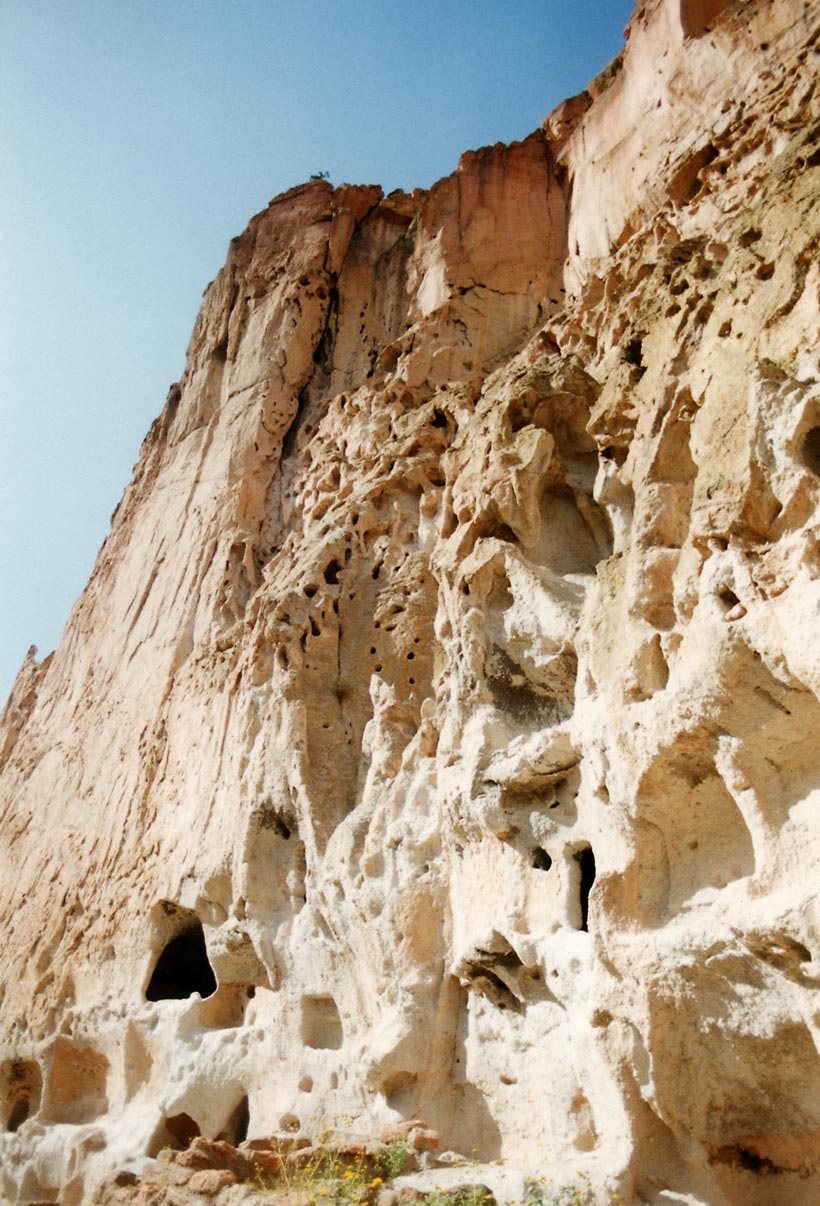
Tuff is a type of rock made of volcanic ash ejected from a vent during a volcanic eruption. Following ejection and deposition, the ash lithifies into solid rock. Rock that contains greater than 75% ash is considered tuff, while rock containing 25% to 75% ash is described as tuffaceous (for example, tuffaceous sandstone). A pyroclastic rock containing 25–75% volcanic bombs or volcanic blocks is called tuff breccia. Tuff composed of sandy volcanic material can be referred to as volcanic sandstone.
Tuff is a relatively soft rock, so it has been used for construction since ancient times. Because it is common in Italy, the Romans used it often for construction. The Rapa Nui people used it to make most of the moai statues on Easter Island.
Tuff can be classified as either igneous or sedimentary rock. It is usually studied in the context of igneous petrology, although it is sometimes described using sedimentological terms.
Tuff is often erroneously called tufa in guidebooks and in television programs, but tufa is a form of travertine.
The material that is expelled in a volcanic eruption can be classified into three types:
Tephra is made when magma inside the volcano is blown apart by the rapid expansion of hot volcanic gases. Magma commonly explodes as the gas dissolved in it comes out of solution as the pressure decreases when it flows to the surface. These violent explosions produce particles of material that can then fly from the volcano. Solid particles smaller than 2 mm in diameter (sand-sized or smaller) are called volcanic ash.
Volcanic ash is further divided into fine ash, with particle sizes smaller than 0.0625 mm in diameter, and coarse ash, with particle sizes between 0.0625 mm and 2 mm in diameter. Tuff is correspondingly divided into coarse tuff (coarse ash tuff) and fine tuff (fine ash tuff or dust tuff). Consolidated tephra composed mostly of coarser particles is called lapillistone (particles 2 mm to 64 mm in diameter) or agglomerate or pyroclastic breccia (particles over 64 mm in diameter) rather than tuff.
Volcanic ash can vary greatly in composition, and so tuffs are further classified by the composition of the ash from which they formed. Ash from high-silica volcanism, particularly in ash flows, consists mainly of shards of volcanic glass, and tuff formed predominantly from glass shards is described as vitric tuff. The glass shards are typically either irregular in shape or are roughly triangular with convex sides. They are the shattered walls of countless small bubbles that formed in the magma as dissolved gases rapidly came out of solution.
Hub AI
Tuff AI simulator
(@Tuff_simulator)
Tuff
Tuff is a type of rock made of volcanic ash ejected from a vent during a volcanic eruption. Following ejection and deposition, the ash lithifies into solid rock. Rock that contains greater than 75% ash is considered tuff, while rock containing 25% to 75% ash is described as tuffaceous (for example, tuffaceous sandstone). A pyroclastic rock containing 25–75% volcanic bombs or volcanic blocks is called tuff breccia. Tuff composed of sandy volcanic material can be referred to as volcanic sandstone.
Tuff is a relatively soft rock, so it has been used for construction since ancient times. Because it is common in Italy, the Romans used it often for construction. The Rapa Nui people used it to make most of the moai statues on Easter Island.
Tuff can be classified as either igneous or sedimentary rock. It is usually studied in the context of igneous petrology, although it is sometimes described using sedimentological terms.
Tuff is often erroneously called tufa in guidebooks and in television programs, but tufa is a form of travertine.
The material that is expelled in a volcanic eruption can be classified into three types:
Tephra is made when magma inside the volcano is blown apart by the rapid expansion of hot volcanic gases. Magma commonly explodes as the gas dissolved in it comes out of solution as the pressure decreases when it flows to the surface. These violent explosions produce particles of material that can then fly from the volcano. Solid particles smaller than 2 mm in diameter (sand-sized or smaller) are called volcanic ash.
Volcanic ash is further divided into fine ash, with particle sizes smaller than 0.0625 mm in diameter, and coarse ash, with particle sizes between 0.0625 mm and 2 mm in diameter. Tuff is correspondingly divided into coarse tuff (coarse ash tuff) and fine tuff (fine ash tuff or dust tuff). Consolidated tephra composed mostly of coarser particles is called lapillistone (particles 2 mm to 64 mm in diameter) or agglomerate or pyroclastic breccia (particles over 64 mm in diameter) rather than tuff.
Volcanic ash can vary greatly in composition, and so tuffs are further classified by the composition of the ash from which they formed. Ash from high-silica volcanism, particularly in ash flows, consists mainly of shards of volcanic glass, and tuff formed predominantly from glass shards is described as vitric tuff. The glass shards are typically either irregular in shape or are roughly triangular with convex sides. They are the shattered walls of countless small bubbles that formed in the magma as dissolved gases rapidly came out of solution.