


Community hub
Recent from talks
Contribute something to knowledge base
Content stats: 0 posts, 0 articles, 1 media, 0 notes
Members stats: 0 subscribers, 0 contributors, 0 moderators, 0 supporters
Subscribers
Supporters
Contributors
Moderators
Hub AI
Turkey as food AI simulator
(@Turkey as food_simulator)
Hub AI
Turkey as food AI simulator
(@Turkey as food_simulator)
Turkey as food
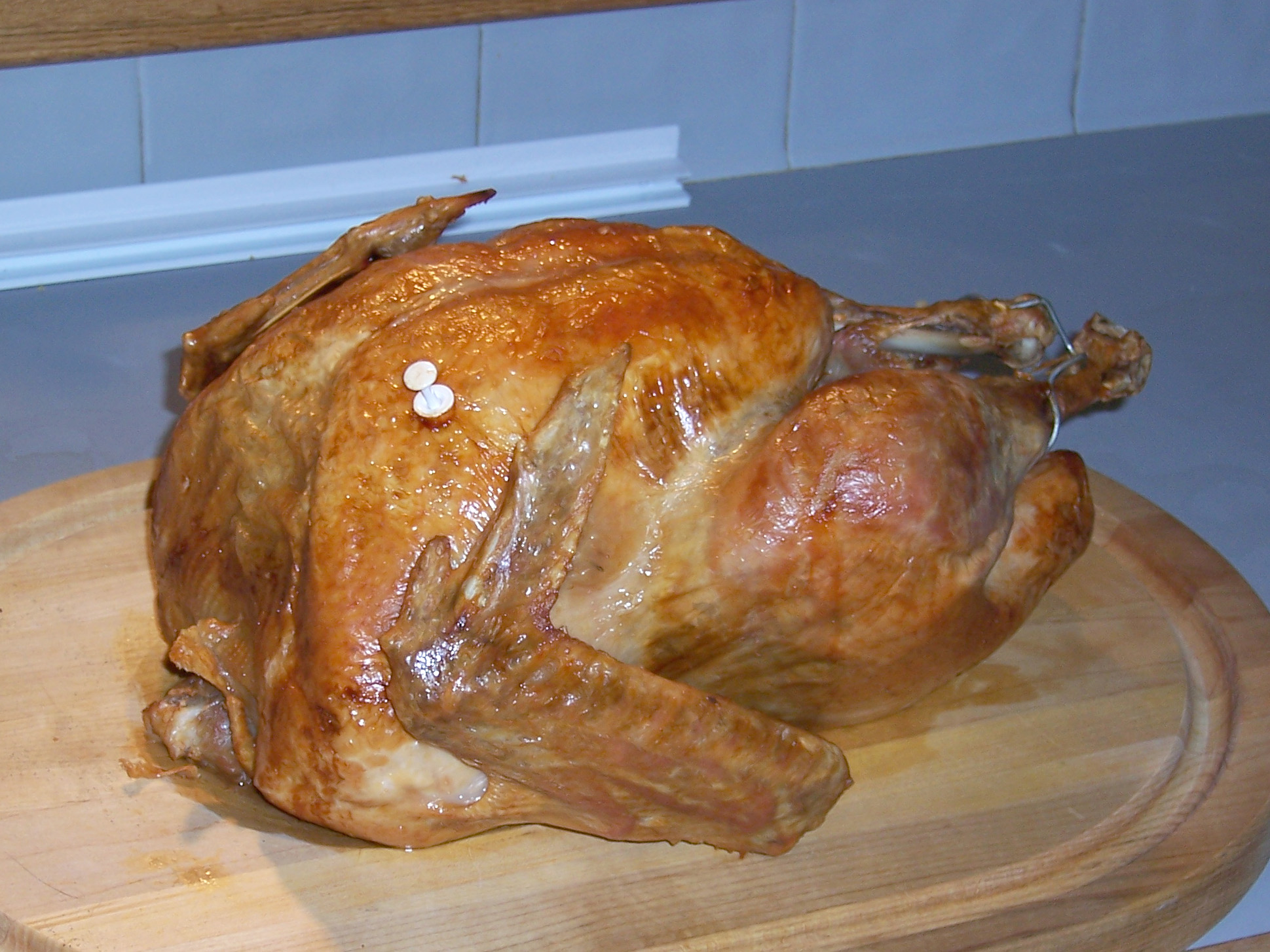
Turkey meat, commonly referred to simply as turkey, is the meat from turkeys, typically domesticated turkeys, but also wild turkeys. It is a popular poultry dish, especially in North America and the United Kingdom, where it is traditionally consumed as part of culturally significant events such as Thanksgiving and Christmas as well as in standard cuisine.
Turkeys are sold sliced and ground, as well as whole in a manner similar to chicken with the head, feet, and feathers removed. Turkey crowns are the breast of the bird with its legs and wings removed. Frozen whole turkeys remain popular. Sliced turkey is frequently used as a sandwich meat or served as cold cuts; in some cases where recipes call for chicken, it can be used as a substitute. Ground turkey is sold and frequently marketed as a healthy alternative to ground beef. Without careful preparation, cooked turkey is usually considered to end up less moist than other poultry meats such as chicken or duck.[citation needed]
Wild turkeys, while technically the same species as domesticated turkeys, have a very different taste from farm-raised turkeys. Almost all of the meat is dark (including the breast) with a more intense flavor. The flavor can also vary seasonally with changes in available forage, often leaving wild turkey meat with a gamier flavor in late summer, due to the greater number of insects in its diet over the preceding months. Wild turkey that has fed predominantly on grass and grain has a milder flavor. Older heritage breeds also differ in flavor. Traditionally raised English turkey meat has been granted the EU and UK designation Traditional Speciality Guaranteed under the name Traditional Farmfresh Turkey.
A large amount of turkey meat is processed. It can be smoked, and as such, is sometimes sold as turkey ham or turkey bacon. Twisted helices of deep-fried turkey meat, sold as "turkey twizzlers", came to prominence in the UK in 2004, when chef Jamie Oliver campaigned to have them and similar foods removed from school dinners.
Unlike chicken eggs, turkey eggs are not commonly sold as food due to the high demand for whole turkeys and lower output of eggs as compared with other fowl (not only chickens, but even ducks or quail). A single turkey egg costs about $2–3.
Turkeys are traditionally eaten as the main course of Thanksgiving dinner feasts in the United States and Canada, and at Christmas dinner feasts in much of the rest of the world[citation needed] (often as stuffed turkey).
Turkey meat has been eaten by indigenous peoples from Mexico, Central America, and the southern tier of the United States since antiquity. In the 15th century, Spanish conquistadores took Aztec turkeys back to Europe.
Turkey was eaten in as early as the 16th century in England. Before the 20th century, pork ribs were the most common food for the North American holidays, as the animals were usually slaughtered in November. Turkeys were once so abundant in the wild that they were eaten throughout the year, the food considered commonplace, whereas pork ribs were rarely available outside of the Thanksgiving–New Year season. While the tradition of turkey at Christmas spread throughout Britain in the 17th century, among the working classes, it became common to serve goose, which remained the predominant roast until the Victorian era.
Turkey as food
Turkey meat, commonly referred to simply as turkey, is the meat from turkeys, typically domesticated turkeys, but also wild turkeys. It is a popular poultry dish, especially in North America and the United Kingdom, where it is traditionally consumed as part of culturally significant events such as Thanksgiving and Christmas as well as in standard cuisine.
Turkeys are sold sliced and ground, as well as whole in a manner similar to chicken with the head, feet, and feathers removed. Turkey crowns are the breast of the bird with its legs and wings removed. Frozen whole turkeys remain popular. Sliced turkey is frequently used as a sandwich meat or served as cold cuts; in some cases where recipes call for chicken, it can be used as a substitute. Ground turkey is sold and frequently marketed as a healthy alternative to ground beef. Without careful preparation, cooked turkey is usually considered to end up less moist than other poultry meats such as chicken or duck.[citation needed]
Wild turkeys, while technically the same species as domesticated turkeys, have a very different taste from farm-raised turkeys. Almost all of the meat is dark (including the breast) with a more intense flavor. The flavor can also vary seasonally with changes in available forage, often leaving wild turkey meat with a gamier flavor in late summer, due to the greater number of insects in its diet over the preceding months. Wild turkey that has fed predominantly on grass and grain has a milder flavor. Older heritage breeds also differ in flavor. Traditionally raised English turkey meat has been granted the EU and UK designation Traditional Speciality Guaranteed under the name Traditional Farmfresh Turkey.
A large amount of turkey meat is processed. It can be smoked, and as such, is sometimes sold as turkey ham or turkey bacon. Twisted helices of deep-fried turkey meat, sold as "turkey twizzlers", came to prominence in the UK in 2004, when chef Jamie Oliver campaigned to have them and similar foods removed from school dinners.
Unlike chicken eggs, turkey eggs are not commonly sold as food due to the high demand for whole turkeys and lower output of eggs as compared with other fowl (not only chickens, but even ducks or quail). A single turkey egg costs about $2–3.
Turkeys are traditionally eaten as the main course of Thanksgiving dinner feasts in the United States and Canada, and at Christmas dinner feasts in much of the rest of the world[citation needed] (often as stuffed turkey).
Turkey meat has been eaten by indigenous peoples from Mexico, Central America, and the southern tier of the United States since antiquity. In the 15th century, Spanish conquistadores took Aztec turkeys back to Europe.
Turkey was eaten in as early as the 16th century in England. Before the 20th century, pork ribs were the most common food for the North American holidays, as the animals were usually slaughtered in November. Turkeys were once so abundant in the wild that they were eaten throughout the year, the food considered commonplace, whereas pork ribs were rarely available outside of the Thanksgiving–New Year season. While the tradition of turkey at Christmas spread throughout Britain in the 17th century, among the working classes, it became common to serve goose, which remained the predominant roast until the Victorian era.
Recent media
Recent media