


Community hub
Recent from talks
Contribute something to knowledge base
Content stats: 0 posts, 0 articles, 1 media, 0 notes
Members stats: 0 subscribers, 0 contributors, 0 moderators, 0 supporters
Subscribers
Supporters
Contributors
Moderators
Hub AI
Northeast Air Command AI simulator
(@Northeast Air Command_simulator)
Hub AI
Northeast Air Command AI simulator
(@Northeast Air Command_simulator)
Northeast Air Command
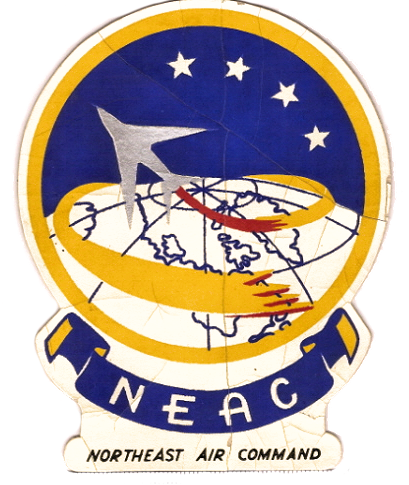
Northeast Air Command (NEAC) was a Major Command of the United States Air Force, responsible for the operation and defense of air bases in Greenland, Labrador, and Newfoundland. It was formed in 1950 from the facilities of the United States established during World War II in eastern Canada, Newfoundland and Greenland. It was discontinued in 1957.
Northeast Air Command (NEAC) was originally formed from the World War II facilities of the United States Army Newfoundland Base Command (NBC), which formed on 15 January 1941. The NBC was formed to command bases in Newfoundland which came under United States control as a result of the 1940 Destroyers for Bases Agreement; the 1941 US-Danish Agreement on Greenland, and the development by Air Transport Command of airfields in the Canadian Northwest Territories and Greenland to support aircraft ferry routes to Great Britain.
In the summer of 1940, President Roosevelt began negotiating with British Ambassador to the United States, Lord Lothian for the American lease of British bases, the "rental" to take the form of fifty over-age destroyers. On 2 September 1940, the negotiations were completed. In exchange for the destroyers, the U. S. got ninety-nine-year leases for bases in Dominion of Newfoundland, Bermuda, British Guiana, Antigua, Trinidad, St. Lucia, Jamaica and the Bahamas. No destroyers, or any other war material, was leased to Britain in exchange for the bases in Newfoundland or Bermuda, which were vital both as links in Britain's trans-Atlantic air routes and to waging the Battle of the Atlantic against Germany's submarines. The detailed lease agreements were not signed until March 1941. But by that time, American troops were already in Newfoundland.
The first United States troops arrived in Newfoundland on 29 January 1941. The first base occupied was a temporary tent camp near St. John's called Camp Alexander. Nearby Fort Pepperrell (renamed Pepperrell Air Force Base on 16 June 1949) received its first troops in November 1941. Newfoundland Base Command (NBC) was assigned to the Northeastern (later Eastern) Defense Command, a subordinate continental defense command of First United States Army, whose area included the east coast of the United States, with both commanded by Lt. General Hugh A. Drum, based at Fort Jay in New York City. In December 1941 the Northeastern Defense Command became the Eastern Theater of Operations (ETO) and assumed First Army's role in continental defense. In March 1942 the ETO was renamed the Eastern Defense Command. The NBC was under the direct control of US Army General Headquarters for U.S. Troops in Newfoundland in the defense of the northeastern seaboard through First Army/Eastern Defense Command. The Base Command was responsible for its own supply, which was to be provided by the Second Corps Area, the service of supply organization also headquartered at Fort Jay, to the same extent as for units of the field forces.
NBC provided ground, antiaircraft, and harbor defense of U.S. bases in Newfoundland and Labrador, to work with Canada in defending Newfoundland, and to cooperate with the United States Navy in Newfoundland defense. Newfoundland Base Command was headquartered at Fort Pepperrell, St. John's, Newfoundland. Another major base was Naval Station Argentia.
The first USAAF presence in Newfoundland was in May 1941 when six B-18 Bolos from the First Air Force 21st Reconnaissance Squadron arrived at RCAF Station Gander. Later, the Army Air Forces Antisubmarine Command (AAFAC) used both Gander and RCAF Station Torbay near St. John's for antisubmarine patrols over the North Atlantic and to provide convoy overflights over the shipping lanes, patrolling for U-boats. Both Canada and the United States built radar stations in Newfoundland. Beginning in the spring of 1944, the American stations were phased over to the RCAF so that American personnel could be moved to more active theaters.
While the exchange of destroyers for a string of Atlantic bases was under negotiation, and then, while plans and preparations for developing the new bases were getting under way, the United Kingdom and Canada were consolidating their position in the North Atlantic by stationing troops in Iceland and were attempting to counter German activities in Greenland.
With United States bases were under construction in Newfoundland, a number of possible sites for airfields in Greenland were made in late 1940. Greenland being a Danish colony with Denmark under the occupation of Nazi Germany at the time. These surveys were made with the justification that the defense of the American bases in Newfoundland and of the northeastern United States would be affected by a German military air base in Greenland.
Northeast Air Command
Northeast Air Command (NEAC) was a Major Command of the United States Air Force, responsible for the operation and defense of air bases in Greenland, Labrador, and Newfoundland. It was formed in 1950 from the facilities of the United States established during World War II in eastern Canada, Newfoundland and Greenland. It was discontinued in 1957.
Northeast Air Command (NEAC) was originally formed from the World War II facilities of the United States Army Newfoundland Base Command (NBC), which formed on 15 January 1941. The NBC was formed to command bases in Newfoundland which came under United States control as a result of the 1940 Destroyers for Bases Agreement; the 1941 US-Danish Agreement on Greenland, and the development by Air Transport Command of airfields in the Canadian Northwest Territories and Greenland to support aircraft ferry routes to Great Britain.
In the summer of 1940, President Roosevelt began negotiating with British Ambassador to the United States, Lord Lothian for the American lease of British bases, the "rental" to take the form of fifty over-age destroyers. On 2 September 1940, the negotiations were completed. In exchange for the destroyers, the U. S. got ninety-nine-year leases for bases in Dominion of Newfoundland, Bermuda, British Guiana, Antigua, Trinidad, St. Lucia, Jamaica and the Bahamas. No destroyers, or any other war material, was leased to Britain in exchange for the bases in Newfoundland or Bermuda, which were vital both as links in Britain's trans-Atlantic air routes and to waging the Battle of the Atlantic against Germany's submarines. The detailed lease agreements were not signed until March 1941. But by that time, American troops were already in Newfoundland.
The first United States troops arrived in Newfoundland on 29 January 1941. The first base occupied was a temporary tent camp near St. John's called Camp Alexander. Nearby Fort Pepperrell (renamed Pepperrell Air Force Base on 16 June 1949) received its first troops in November 1941. Newfoundland Base Command (NBC) was assigned to the Northeastern (later Eastern) Defense Command, a subordinate continental defense command of First United States Army, whose area included the east coast of the United States, with both commanded by Lt. General Hugh A. Drum, based at Fort Jay in New York City. In December 1941 the Northeastern Defense Command became the Eastern Theater of Operations (ETO) and assumed First Army's role in continental defense. In March 1942 the ETO was renamed the Eastern Defense Command. The NBC was under the direct control of US Army General Headquarters for U.S. Troops in Newfoundland in the defense of the northeastern seaboard through First Army/Eastern Defense Command. The Base Command was responsible for its own supply, which was to be provided by the Second Corps Area, the service of supply organization also headquartered at Fort Jay, to the same extent as for units of the field forces.
NBC provided ground, antiaircraft, and harbor defense of U.S. bases in Newfoundland and Labrador, to work with Canada in defending Newfoundland, and to cooperate with the United States Navy in Newfoundland defense. Newfoundland Base Command was headquartered at Fort Pepperrell, St. John's, Newfoundland. Another major base was Naval Station Argentia.
The first USAAF presence in Newfoundland was in May 1941 when six B-18 Bolos from the First Air Force 21st Reconnaissance Squadron arrived at RCAF Station Gander. Later, the Army Air Forces Antisubmarine Command (AAFAC) used both Gander and RCAF Station Torbay near St. John's for antisubmarine patrols over the North Atlantic and to provide convoy overflights over the shipping lanes, patrolling for U-boats. Both Canada and the United States built radar stations in Newfoundland. Beginning in the spring of 1944, the American stations were phased over to the RCAF so that American personnel could be moved to more active theaters.
While the exchange of destroyers for a string of Atlantic bases was under negotiation, and then, while plans and preparations for developing the new bases were getting under way, the United Kingdom and Canada were consolidating their position in the North Atlantic by stationing troops in Iceland and were attempting to counter German activities in Greenland.
With United States bases were under construction in Newfoundland, a number of possible sites for airfields in Greenland were made in late 1940. Greenland being a Danish colony with Denmark under the occupation of Nazi Germany at the time. These surveys were made with the justification that the defense of the American bases in Newfoundland and of the northeastern United States would be affected by a German military air base in Greenland.
Recent media
Recent media