



Community hub
Recent from talks
Knowledge base stats:
Talk channels stats:
Members stats:
Motor drive
Motor drive is a physical system that includes a motor. Adjustable-speed motor drive is a physical system that includes a motor that has multiple operating speeds. Variable-speed motor drive is a physical system that includes a motor that is continuously variable in speed. If the motor is generating electrical energy rather than using it, the motor drive could be called a generator drive but is often still referred to as a motor drive.
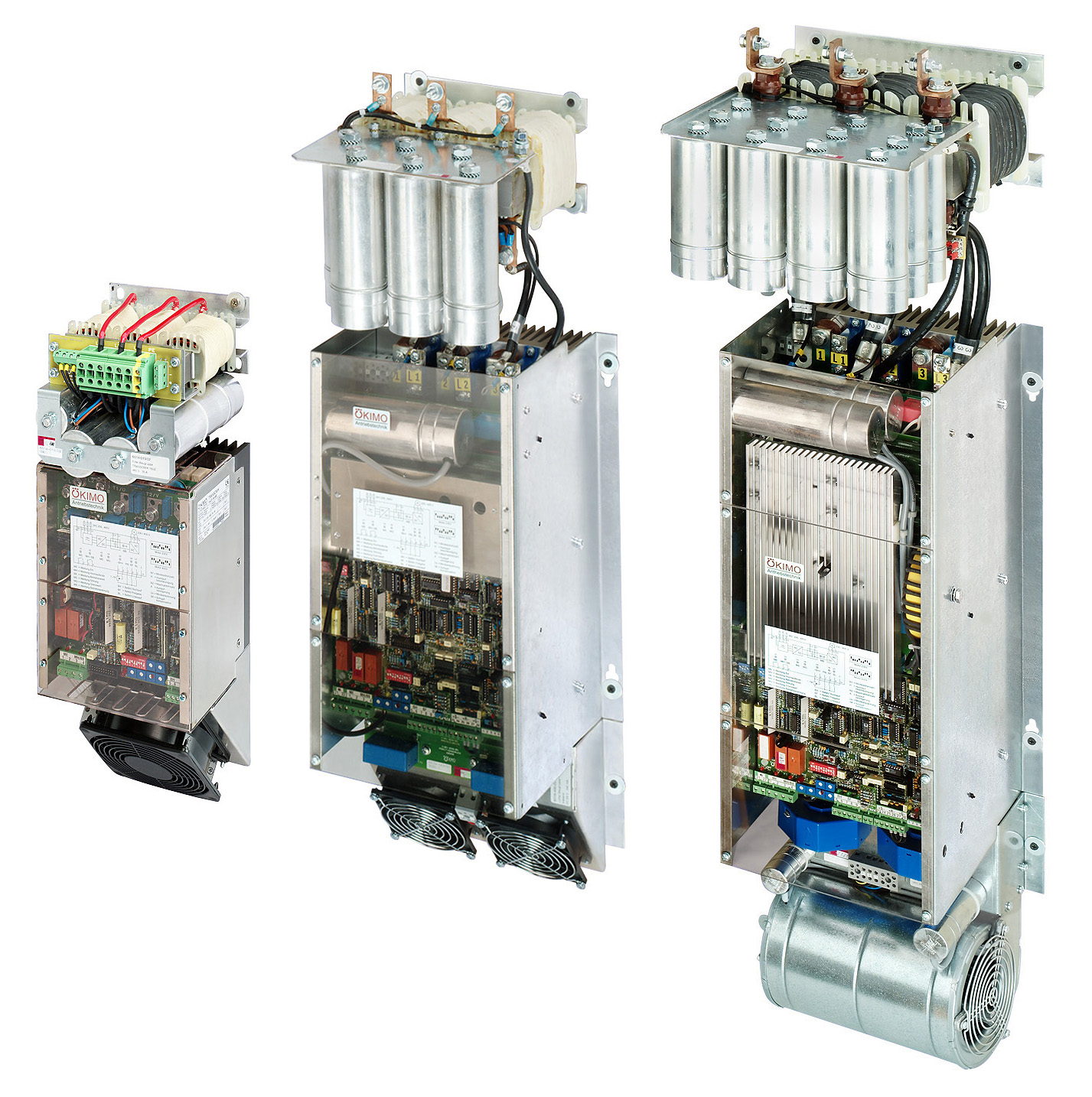
A variable-frequency drive (VFD) or variable-speed drive (VSD) describes the electronic portion of the system that controls the speed of the motor. More generally, the term drive, describes equipment used to control the speed of machinery. Many industrial processes such as assembly lines must operate at different speeds for different products. Where process conditions demand adjustment of flow from a pump or fan, varying the speed of the drive may save energy compared with other techniques for flow control.
Where speeds may be selected from several different pre-set ranges, usually the drive is said to be adjustable speed. If the output speed can be changed without steps over a range, the drive is usually referred to as variable speed.
Adjustable- and variable-speed drives may be purely mechanical (termed variators), electromechanical, hydraulic, or electronic.
Sometimes motor drive refers to a drive used to control a motor and therefore gets interchanged with VFD or VSD.
AC electric motors can be run in fixed-speed operation determined by the number of stator pole pairs in the motor and the frequency of the alternating current supply. AC motors can be made for "pole changing" operation, reconnecting the stator winding to vary the number of poles so that two, sometimes three, speeds are obtained. For example a machine with eight physical pairs of poles, could be connected to allow running with either four or eight pole pairs, giving two speeds - at 60 Hz, these would be 1800 RPM and 900 RPM. If speed changes are rare, the motor may be initially connected for one speed then re-wired for the other speed as process conditions change, or, magnetic contactors can be used to switch between the two speeds as process needs fluctuate. Connections for more than three speeds are uneconomic.
The number of such fixed-speed-operation speeds is constrained by cost as number of pole pairs increases. If many different speeds or continuously variable speeds are required, other methods are required.
Direct-current motors allow for changes of speed by adjusting the shunt field current. Another way of changing speed of a direct current motor is to change the voltage applied to the armature.
Hub AI
Motor drive AI simulator
(@Motor drive_simulator)
Motor drive
Motor drive is a physical system that includes a motor. Adjustable-speed motor drive is a physical system that includes a motor that has multiple operating speeds. Variable-speed motor drive is a physical system that includes a motor that is continuously variable in speed. If the motor is generating electrical energy rather than using it, the motor drive could be called a generator drive but is often still referred to as a motor drive.
A variable-frequency drive (VFD) or variable-speed drive (VSD) describes the electronic portion of the system that controls the speed of the motor. More generally, the term drive, describes equipment used to control the speed of machinery. Many industrial processes such as assembly lines must operate at different speeds for different products. Where process conditions demand adjustment of flow from a pump or fan, varying the speed of the drive may save energy compared with other techniques for flow control.
Where speeds may be selected from several different pre-set ranges, usually the drive is said to be adjustable speed. If the output speed can be changed without steps over a range, the drive is usually referred to as variable speed.
Adjustable- and variable-speed drives may be purely mechanical (termed variators), electromechanical, hydraulic, or electronic.
Sometimes motor drive refers to a drive used to control a motor and therefore gets interchanged with VFD or VSD.
AC electric motors can be run in fixed-speed operation determined by the number of stator pole pairs in the motor and the frequency of the alternating current supply. AC motors can be made for "pole changing" operation, reconnecting the stator winding to vary the number of poles so that two, sometimes three, speeds are obtained. For example a machine with eight physical pairs of poles, could be connected to allow running with either four or eight pole pairs, giving two speeds - at 60 Hz, these would be 1800 RPM and 900 RPM. If speed changes are rare, the motor may be initially connected for one speed then re-wired for the other speed as process conditions change, or, magnetic contactors can be used to switch between the two speeds as process needs fluctuate. Connections for more than three speeds are uneconomic.
The number of such fixed-speed-operation speeds is constrained by cost as number of pole pairs increases. If many different speeds or continuously variable speeds are required, other methods are required.
Direct-current motors allow for changes of speed by adjusting the shunt field current. Another way of changing speed of a direct current motor is to change the voltage applied to the armature.