
Recent from talks
Horizontal and vertical writing in East Asian scripts
Knowledge base stats:
Talk channels stats:
Members stats:
Horizontal and vertical writing in East Asian scripts
Many East Asian scripts can be written horizontally or vertically. Chinese characters, Korean hangul, and Japanese kana may be oriented along either axis, as they consist mainly of disconnected logographic or syllabic units, each occupying a square block of space, thus allowing for flexibility for which direction texts can be written, be it horizontally from left-to-right, horizontally from right-to-left, vertically from top-to-bottom, and even vertically from bottom-to-top.
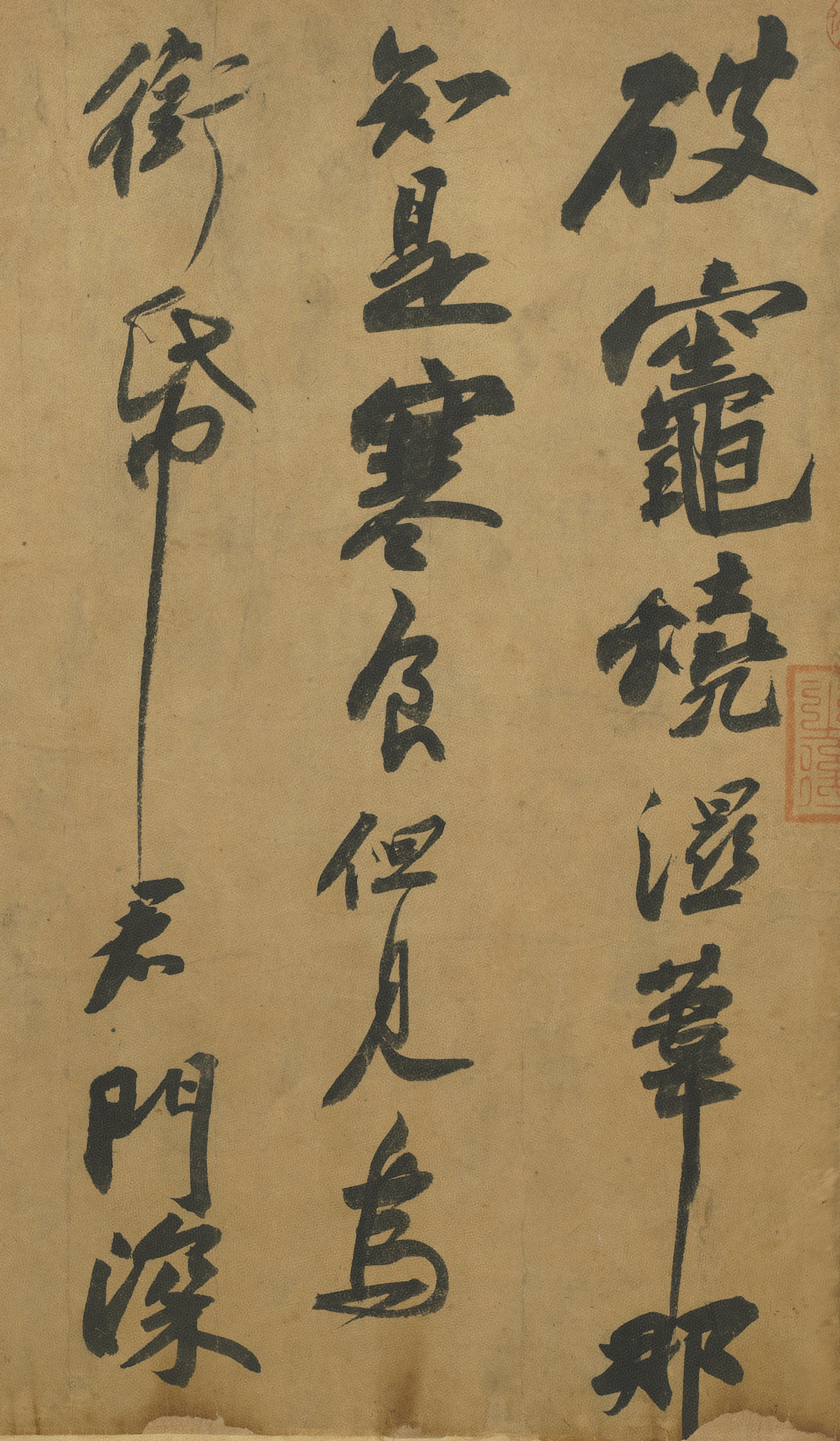
Traditionally, written Chinese, Vietnamese, Korean, and Japanese are written vertically in columns going from top to bottom and ordered from right to left, with each new column starting to the left of the preceding one. The stroke order and stroke direction of Chinese characters, Vietnamese chữ Nôm, Korean hangul, and kana all facilitate writing in this manner.[why?] In addition, writing in vertical columns from right to left facilitated writing with a brush in the right hand while continually unrolling the sheet of paper or scroll with the left. Since the nineteenth century, it has become increasingly common for these languages to be written horizontally, from left to right, with successive rows going from top to bottom, under the influence of European languages such as English, although vertical writing is still frequently used in Hong Kong, Japan, Korea, Macau, and Taiwan.
Chinese characters, Japanese kana, Vietnamese chữ Nôm and Korean hangul can be written horizontally or vertically. There are some small differences in orthography. In horizontal writing it is more common to use Arabic numerals, whereas Chinese numerals are more common in vertical text.
In these scripts, the positions of punctuation marks, for example the relative position of commas and full stops (periods), differ between horizontal and vertical writing. Punctuation such as the parentheses, quotation marks, book title marks (Chinese), ellipsis mark, dash, wavy dash (Japanese), proper noun mark (Chinese), wavy book title mark (Chinese), emphasis mark, and chōon mark (Japanese) are all rotated 90 degrees when switching between horizontal and vertical text.
Where a text is written in horizontal format, pages are read in the same order as English books, with the binding at the left and pages progressing to the right. Vertical books are printed the other way round, with the binding at the right, and pages progressing to the left.
Ruby characters like furigana in Japanese which provides a phonetic guide for unusual or difficult-to-read characters, follow the direction of the main text. Example in Japanese, with furigana in green:
Bopomofo in Taiwan is usually written vertically regardless of the direction of the main text. Text in the Latin alphabet is usually written horizontally when it appears in vertical text, or else it is turned sideways with the base of the characters on the left.
Historically, vertical writing was the standard system, and horizontal writing was only used where a sign had to fit in a constrained space, such as over the gate of a temple or the signboard of a shop. Before the end of World War II in Japan, those signs were read right to left.
Hub AI
Horizontal and vertical writing in East Asian scripts AI simulator
(@Horizontal and vertical writing in East Asian scripts_simulator)
Horizontal and vertical writing in East Asian scripts
Many East Asian scripts can be written horizontally or vertically. Chinese characters, Korean hangul, and Japanese kana may be oriented along either axis, as they consist mainly of disconnected logographic or syllabic units, each occupying a square block of space, thus allowing for flexibility for which direction texts can be written, be it horizontally from left-to-right, horizontally from right-to-left, vertically from top-to-bottom, and even vertically from bottom-to-top.
Traditionally, written Chinese, Vietnamese, Korean, and Japanese are written vertically in columns going from top to bottom and ordered from right to left, with each new column starting to the left of the preceding one. The stroke order and stroke direction of Chinese characters, Vietnamese chữ Nôm, Korean hangul, and kana all facilitate writing in this manner.[why?] In addition, writing in vertical columns from right to left facilitated writing with a brush in the right hand while continually unrolling the sheet of paper or scroll with the left. Since the nineteenth century, it has become increasingly common for these languages to be written horizontally, from left to right, with successive rows going from top to bottom, under the influence of European languages such as English, although vertical writing is still frequently used in Hong Kong, Japan, Korea, Macau, and Taiwan.
Chinese characters, Japanese kana, Vietnamese chữ Nôm and Korean hangul can be written horizontally or vertically. There are some small differences in orthography. In horizontal writing it is more common to use Arabic numerals, whereas Chinese numerals are more common in vertical text.
In these scripts, the positions of punctuation marks, for example the relative position of commas and full stops (periods), differ between horizontal and vertical writing. Punctuation such as the parentheses, quotation marks, book title marks (Chinese), ellipsis mark, dash, wavy dash (Japanese), proper noun mark (Chinese), wavy book title mark (Chinese), emphasis mark, and chōon mark (Japanese) are all rotated 90 degrees when switching between horizontal and vertical text.
Where a text is written in horizontal format, pages are read in the same order as English books, with the binding at the left and pages progressing to the right. Vertical books are printed the other way round, with the binding at the right, and pages progressing to the left.
Ruby characters like furigana in Japanese which provides a phonetic guide for unusual or difficult-to-read characters, follow the direction of the main text. Example in Japanese, with furigana in green:
Bopomofo in Taiwan is usually written vertically regardless of the direction of the main text. Text in the Latin alphabet is usually written horizontally when it appears in vertical text, or else it is turned sideways with the base of the characters on the left.
Historically, vertical writing was the standard system, and horizontal writing was only used where a sign had to fit in a constrained space, such as over the gate of a temple or the signboard of a shop. Before the end of World War II in Japan, those signs were read right to left.
Recent media