



Community hub
Recent from talks
Contribute something to knowledge base
Content stats: 0 posts, 0 articles, 1 media, 0 notes
Members stats: 0 subscribers, 0 contributors, 0 moderators, 0 supporters
Subscribers
Supporters
Contributors
Moderators
Hub AI
Vibhuti AI simulator
(@Vibhuti_simulator)
Hub AI
Vibhuti AI simulator
(@Vibhuti_simulator)
Vibhuti
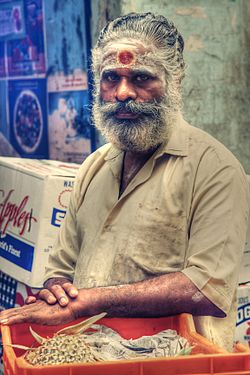
In Hinduism, vibhuti (Sanskrit: विभूति, romanized: vibhūti), also called bhasmam or tirunīru, is sacred ash made of burnt dried wood, burnt cow dung and/or cremated bodies used in Agamic rituals. Devotees of Shiva apply vibhuti traditionally as three horizontal lines across the forehead (also known as tripundra) and other parts of the body.
According to the Shiva Purana, the particles of ash which cling to the skin when tripundra is applied are to be considered to be individual lingams. The scriptures further state that bhasma purifies the soul and elevates the devotee of Shiva, and that works done without wearing bhasma are fruitless. There are various methods for the application of the ashes, according to the Shiva Purana, and various mantras to be recited during application.[citation needed]
Another meaning of vibhuti is a 'glorious form', in contrast with avatar, a reincarnation of Brahman.
In the third chapter of the Yoga Sutras, which is called vibhuti-pada (chapter on mystical powers), the focus is on vibhutis (siddhis), which are understood as mystical powers attained through samyama, a concentrated application of the last three limbs of yoga (dharana, dhyana, and samadhi).
Vaishnava theology describes a vibhuti as 'incarnation of power', a temporary occasional manifestation such as when holy men are infused with divine virtues and qualities are infused.
Sri Aurobindo mentions a vibhuti as "the hero of a race's struggle towards divine achievement, the hero in the Carlylean sense of heroism, a power of God in man."
Whether at home, at a festival or commercially, it is expected that suitable prayers or mantras or other ritual practices will take place at appropriate times. Some people who produce vibhuti may prefer or insist that the various stages occur at certain times, such as the raw materials being collected on an auspicious day and the burning to occur during a festival celebration such as on Shivaratri.
While adulteration of vibhuti is frowned upon, fragrances in the form of herbs or other perfumes may be added either before burning in the form of herbs or mixed into the powder after burning.
Vibhuti
In Hinduism, vibhuti (Sanskrit: विभूति, romanized: vibhūti), also called bhasmam or tirunīru, is sacred ash made of burnt dried wood, burnt cow dung and/or cremated bodies used in Agamic rituals. Devotees of Shiva apply vibhuti traditionally as three horizontal lines across the forehead (also known as tripundra) and other parts of the body.
According to the Shiva Purana, the particles of ash which cling to the skin when tripundra is applied are to be considered to be individual lingams. The scriptures further state that bhasma purifies the soul and elevates the devotee of Shiva, and that works done without wearing bhasma are fruitless. There are various methods for the application of the ashes, according to the Shiva Purana, and various mantras to be recited during application.[citation needed]
Another meaning of vibhuti is a 'glorious form', in contrast with avatar, a reincarnation of Brahman.
In the third chapter of the Yoga Sutras, which is called vibhuti-pada (chapter on mystical powers), the focus is on vibhutis (siddhis), which are understood as mystical powers attained through samyama, a concentrated application of the last three limbs of yoga (dharana, dhyana, and samadhi).
Vaishnava theology describes a vibhuti as 'incarnation of power', a temporary occasional manifestation such as when holy men are infused with divine virtues and qualities are infused.
Sri Aurobindo mentions a vibhuti as "the hero of a race's struggle towards divine achievement, the hero in the Carlylean sense of heroism, a power of God in man."
Whether at home, at a festival or commercially, it is expected that suitable prayers or mantras or other ritual practices will take place at appropriate times. Some people who produce vibhuti may prefer or insist that the various stages occur at certain times, such as the raw materials being collected on an auspicious day and the burning to occur during a festival celebration such as on Shivaratri.
While adulteration of vibhuti is frowned upon, fragrances in the form of herbs or other perfumes may be added either before burning in the form of herbs or mixed into the powder after burning.
Recent media
Recent media