
Recent from talks
Virginia Sorensen
Knowledge base stats:
Talk channels stats:
Members stats:
Virginia Sorensen
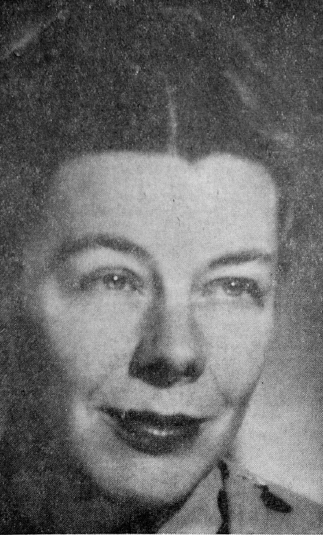
Virginia Louise Sorensen (née Eggertsen; February 17, 1912 – December 24, 1991), also credited as Virginia Sorenson, was an American regionalist writer. Her role in Utah and Mormon literature places her within the "lost generation" of Mormon writers. She was awarded the 1957 Newbery Medal for her children's novel, Miracles on Maple Hill.
Virginia Sorensen was born on February 17, 1912, to Helen El Deva Blackett and Claud E. Eggertsen in Provo, Utah, but grew up in Manti and American Fork, Utah. Her parents were descended from Mormon pioneers; her mother identified as a Christian Scientist, while Sorensen described her father as a Jack Mormon. Because of this, she wrote from a liminal position between Mormon and mainstream western American life. Of this circumstance, she said of her siblings and herself, "We all felt obliged to be especially good and bright because our parents weren't active church people." From an early age, she wrote poetry and told stories to friends and family.
She attended Brigham Young University, where she met her first husband, Frederick C. Sorensen, who taught English at a local high school. She graduated from BYU with a bachelor's degree in journalism. The couple moved several times throughout their 25 years of marriage for Frederick's work. While living in Terre Haute, Indiana, where Frederick was a professor at what is now Indiana State University, Sorensen published her first novel, A Little Lower Than the Angels. In 1954, Sorensen stayed at MacDowell Colony in Peterborough, New Hampshire, for an artist residency where she met Alec Waugh.
Sorensen had two children with her first husband: Frederick Sorensen Jr. and Elizabeth Hepburn. In 1958 she divorced Frederick, and in 1969 married author Alec Waugh at the Rock of Gibraltar. She later converted to Anglicanism at Waugh's request. Sorensen and Waugh lived primarily in Morocco but moved back to the states when Alec's health began to fail in 1980. After Alec died, she moved to North Carolina, where she died on December 24, 1991, at the age of 79. Her ashes were buried in the Provo Cemetery, next to her mother and sister.
Sorensen wrote several Mormon-themed books. Despite this, she said of herself, "As a writer and as a person, I can honestly say that I am not particularly interested in Mormons.”
Virginia Sorensen uses the motif of the "Returning Mormon", coined by biographer Stephen Carter, which describes the main characters returning to their small-town Mormon roots and coming to terms with their religion. This is shown in three of her novels: On This Star, The Evening and the Morning, and Many Heavens. In every novel, the main character tries to reintegrate in society after becoming more worldly, but because of Mormonism's closed culture, they find it difficult. In On This Star, Erik Eriksen fails entirely, and his story ends in death, showing that Sorensen believed it was impossible to reintegrate with Mormon society once one becomes involved with the outside world. In The Evening and the Morning, Kate Alexander returns to her hometown of Manti, Utah, after being shunned for pursuing an affair with a married man and giving birth to a daughter. Kate attempts to pursue this romance when she discovers his wife is dead, but finds that he is unwilling to love her in the same way, once again showing the protagonist failing to reintegrate into Mormon culture despite her hope that it was possible. In Many Heavens, Zina is hired to take care of Mette, the disabled wife of Niels Nielsen, but falls in love with him. He admits that he holds different types of love for both of them, and eventually Mette is the one to approach Zina about becoming a plural wife, despite this story occurring after the 1890 Manifesto. In all of these stories, Sorensen's progression of allowing the world and Mormonism to intermingle successfully is shown. Carter believes that this shows Sorensen's own progression of coming to terms with Mormonism. As Sorensen wrote The Proper Gods where the protagonist was able to fully integrate into a different culture, she was able to shift to allow Mormonism to prevail in Many Heavens, and break the cycle of the "Returning Mormon" and their inability to reintegrate in Mormon society and culture.
Sorensen also emphasized the complexities of life, and her novels caution against thinking in absolutes, along with how religion closely tied to community can effect outsiders. In On This Star, Sorensen uses the Eriksen family and Erik to differentiate between the duty that comes with blind faith and true desire. The Eriksen family as a whole represents Mormonism because of their close alignment due to their shared heritage, beliefs, and goals. Because Erik no longer lives in the community and traveled across the country to pursue music, he is considered an outsider because he no longer aligns with those goals and beliefs. Despite this deviation, Linda Berlin believes that Erik is the only one to exhibit true Christ-like love because he did things with true desire rather than a sense of duty, like the rest of the Eriksen family did. Sorensen also contrasts blind faith and doubt in On This Star with the Chelnicia (Chel) Bowen and Erik Eriksen. Erik has traveled outside of Utah, and Chel has not, which is apparent in the way they deal with issues of religion. Chel is unfamiliar with temple ceremonies and why they are necessary—she just knows they are. Virginia Sorensen uses Chel's ignorance and naivete to critique the aspects of Mormonism that she did not agree with. LuDene Dallimore writes in "Mercy, Zina, and Kate: Virginia Sorensen's Strong Women in a Man's Society" about Many Heavens and how one of the themes present is "the certainty of religious faith with the complexities of doubt" and how the concept of "many heavens" and salvation is difficult to find in uncertainty. Sorensen also uses blind faith versus doubt to contrast Simon and Mercy Baker in A Little Lower than the Angels. Until Mercy's death, Simon and Mercy came into disagreement because of Simon's zealous and Mercy's lack of belief. Because of Mercy's opposition to blind faith, Dallimore says that she "[represents] a kind of spiritual life that is opposed to the spirit of religion". Kingdom Come is the only one of Sorensen's novels about Mormonism in which the characters do not go on a complex faith journey full of doubt.
Many scholars also consider Sorensen's novels to contain themes of feminism. The female protagonists in Sorensen's novels (specifically Mercy Baker, Zina Johnson, and Kate Alexander) are faced with discovering or coming to terms with their identities in male-dominated societies. Similarly, Grant T. Smith in his essay "Women Together: Kate Alexander's Search for Self in The Evening and the Morning" wrote that Kate's purpose as a woman ostracized from society allows her to act as a feminist heroic figure to create her own destiny based on love. Smith also discusses the importance of female communities and how that contributes to female self-sufficiency. He writes that "the ritual of community bonding is demonstrated in the process of repentance that Kate undertakes".
Hub AI
Virginia Sorensen AI simulator
(@Virginia Sorensen_simulator)
Virginia Sorensen
Virginia Louise Sorensen (née Eggertsen; February 17, 1912 – December 24, 1991), also credited as Virginia Sorenson, was an American regionalist writer. Her role in Utah and Mormon literature places her within the "lost generation" of Mormon writers. She was awarded the 1957 Newbery Medal for her children's novel, Miracles on Maple Hill.
Virginia Sorensen was born on February 17, 1912, to Helen El Deva Blackett and Claud E. Eggertsen in Provo, Utah, but grew up in Manti and American Fork, Utah. Her parents were descended from Mormon pioneers; her mother identified as a Christian Scientist, while Sorensen described her father as a Jack Mormon. Because of this, she wrote from a liminal position between Mormon and mainstream western American life. Of this circumstance, she said of her siblings and herself, "We all felt obliged to be especially good and bright because our parents weren't active church people." From an early age, she wrote poetry and told stories to friends and family.
She attended Brigham Young University, where she met her first husband, Frederick C. Sorensen, who taught English at a local high school. She graduated from BYU with a bachelor's degree in journalism. The couple moved several times throughout their 25 years of marriage for Frederick's work. While living in Terre Haute, Indiana, where Frederick was a professor at what is now Indiana State University, Sorensen published her first novel, A Little Lower Than the Angels. In 1954, Sorensen stayed at MacDowell Colony in Peterborough, New Hampshire, for an artist residency where she met Alec Waugh.
Sorensen had two children with her first husband: Frederick Sorensen Jr. and Elizabeth Hepburn. In 1958 she divorced Frederick, and in 1969 married author Alec Waugh at the Rock of Gibraltar. She later converted to Anglicanism at Waugh's request. Sorensen and Waugh lived primarily in Morocco but moved back to the states when Alec's health began to fail in 1980. After Alec died, she moved to North Carolina, where she died on December 24, 1991, at the age of 79. Her ashes were buried in the Provo Cemetery, next to her mother and sister.
Sorensen wrote several Mormon-themed books. Despite this, she said of herself, "As a writer and as a person, I can honestly say that I am not particularly interested in Mormons.”
Virginia Sorensen uses the motif of the "Returning Mormon", coined by biographer Stephen Carter, which describes the main characters returning to their small-town Mormon roots and coming to terms with their religion. This is shown in three of her novels: On This Star, The Evening and the Morning, and Many Heavens. In every novel, the main character tries to reintegrate in society after becoming more worldly, but because of Mormonism's closed culture, they find it difficult. In On This Star, Erik Eriksen fails entirely, and his story ends in death, showing that Sorensen believed it was impossible to reintegrate with Mormon society once one becomes involved with the outside world. In The Evening and the Morning, Kate Alexander returns to her hometown of Manti, Utah, after being shunned for pursuing an affair with a married man and giving birth to a daughter. Kate attempts to pursue this romance when she discovers his wife is dead, but finds that he is unwilling to love her in the same way, once again showing the protagonist failing to reintegrate into Mormon culture despite her hope that it was possible. In Many Heavens, Zina is hired to take care of Mette, the disabled wife of Niels Nielsen, but falls in love with him. He admits that he holds different types of love for both of them, and eventually Mette is the one to approach Zina about becoming a plural wife, despite this story occurring after the 1890 Manifesto. In all of these stories, Sorensen's progression of allowing the world and Mormonism to intermingle successfully is shown. Carter believes that this shows Sorensen's own progression of coming to terms with Mormonism. As Sorensen wrote The Proper Gods where the protagonist was able to fully integrate into a different culture, she was able to shift to allow Mormonism to prevail in Many Heavens, and break the cycle of the "Returning Mormon" and their inability to reintegrate in Mormon society and culture.
Sorensen also emphasized the complexities of life, and her novels caution against thinking in absolutes, along with how religion closely tied to community can effect outsiders. In On This Star, Sorensen uses the Eriksen family and Erik to differentiate between the duty that comes with blind faith and true desire. The Eriksen family as a whole represents Mormonism because of their close alignment due to their shared heritage, beliefs, and goals. Because Erik no longer lives in the community and traveled across the country to pursue music, he is considered an outsider because he no longer aligns with those goals and beliefs. Despite this deviation, Linda Berlin believes that Erik is the only one to exhibit true Christ-like love because he did things with true desire rather than a sense of duty, like the rest of the Eriksen family did. Sorensen also contrasts blind faith and doubt in On This Star with the Chelnicia (Chel) Bowen and Erik Eriksen. Erik has traveled outside of Utah, and Chel has not, which is apparent in the way they deal with issues of religion. Chel is unfamiliar with temple ceremonies and why they are necessary—she just knows they are. Virginia Sorensen uses Chel's ignorance and naivete to critique the aspects of Mormonism that she did not agree with. LuDene Dallimore writes in "Mercy, Zina, and Kate: Virginia Sorensen's Strong Women in a Man's Society" about Many Heavens and how one of the themes present is "the certainty of religious faith with the complexities of doubt" and how the concept of "many heavens" and salvation is difficult to find in uncertainty. Sorensen also uses blind faith versus doubt to contrast Simon and Mercy Baker in A Little Lower than the Angels. Until Mercy's death, Simon and Mercy came into disagreement because of Simon's zealous and Mercy's lack of belief. Because of Mercy's opposition to blind faith, Dallimore says that she "[represents] a kind of spiritual life that is opposed to the spirit of religion". Kingdom Come is the only one of Sorensen's novels about Mormonism in which the characters do not go on a complex faith journey full of doubt.
Many scholars also consider Sorensen's novels to contain themes of feminism. The female protagonists in Sorensen's novels (specifically Mercy Baker, Zina Johnson, and Kate Alexander) are faced with discovering or coming to terms with their identities in male-dominated societies. Similarly, Grant T. Smith in his essay "Women Together: Kate Alexander's Search for Self in The Evening and the Morning" wrote that Kate's purpose as a woman ostracized from society allows her to act as a feminist heroic figure to create her own destiny based on love. Smith also discusses the importance of female communities and how that contributes to female self-sufficiency. He writes that "the ritual of community bonding is demonstrated in the process of repentance that Kate undertakes".
Recent media