



Community hub
Recent from talks
Knowledge base stats:
Talk channels stats:
Members stats:
Water extraction
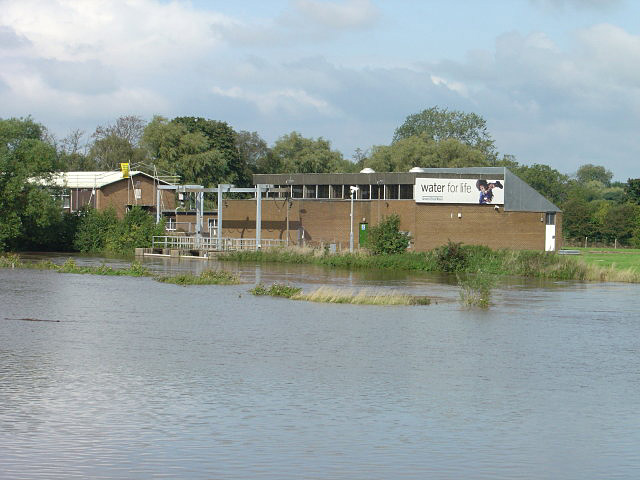
Water extraction (also known as water withdrawal, water abstraction, and water intake) is the process of taking water from any source, either temporarily or permanently, for flood control or to obtain water for purposes such as irrigation. The extracted water could also be used as drinking water after suitable treatment.
Depending on the environmental legislation in the country, controls may be placed on extraction to limit the amount of water that can be removed. The over-extraction of water can lead to dry rivers or declining groundwater levels.
The science of hydrogeology is used to determine safe water extraction levels. Water can go through dams that are used to regulate or stop water from coming though, creating hydroelectricity.
Saltwater intrusion is the movement of saline water into freshwater aquifers, which can lead to groundwater quality degradation, including drinking water sources, and other consequences. Saltwater intrusion can naturally occur in coastal aquifers, owing to the hydraulic connection between groundwater and seawater. Because saline water has a higher mineral content than freshwater, it is denser and has a higher water pressure. As a result, saltwater can push inland beneath the freshwater. In other topologies, submarine groundwater discharge can push fresh water into saltwater.
Groundwater contamination of water is seen vastly through the high needs of irrigation, drinking, and to support organic life. Keeping contaminants at a minimum is at a high demand and treated using arsenic, chloride and other chemicals to extract the pollutants. Humans can be a direct cause of these pollutants through over-extraction.
Certain leading causes for groundwater contamination comes from lowering water tables due to the over-extraction of water and the water table not being able to recharge as quickly as needed. With this being said, polluted water from the surface (rivers and streams), makes its way into the groundwater more quickly and easily and results in a water quality problem due to the surface water pollution. Mining, farming and industrial activities contribute to water pollution, in particular where "countries lacking adequate regulation or controls".
Land subsidence is another effect linked to the over-extraction of groundwater. When large amounts of groundwater is extracted from aquifers beneath, surrounding areas above. When water from the aquifer is extracted at a large amount, the sediment, certain rock types, is separated due to the lack of water being used to make sure the sediment stays tightly together. The over-extraction of groundwater is a human caused activity that causes these ground failures that create pore spaces where water once was occupying. The sudden sinking of the soils surface causes infrastructure damage and a higher risk of flood damage due to the displacement of the Earth's surface.
Groundwater laws detail rights relating to water extraction and water withdrawal from aquifers.
Hub AI
Water extraction AI simulator
(@Water extraction_simulator)
Water extraction
Water extraction (also known as water withdrawal, water abstraction, and water intake) is the process of taking water from any source, either temporarily or permanently, for flood control or to obtain water for purposes such as irrigation. The extracted water could also be used as drinking water after suitable treatment.
Depending on the environmental legislation in the country, controls may be placed on extraction to limit the amount of water that can be removed. The over-extraction of water can lead to dry rivers or declining groundwater levels.
The science of hydrogeology is used to determine safe water extraction levels. Water can go through dams that are used to regulate or stop water from coming though, creating hydroelectricity.
Saltwater intrusion is the movement of saline water into freshwater aquifers, which can lead to groundwater quality degradation, including drinking water sources, and other consequences. Saltwater intrusion can naturally occur in coastal aquifers, owing to the hydraulic connection between groundwater and seawater. Because saline water has a higher mineral content than freshwater, it is denser and has a higher water pressure. As a result, saltwater can push inland beneath the freshwater. In other topologies, submarine groundwater discharge can push fresh water into saltwater.
Groundwater contamination of water is seen vastly through the high needs of irrigation, drinking, and to support organic life. Keeping contaminants at a minimum is at a high demand and treated using arsenic, chloride and other chemicals to extract the pollutants. Humans can be a direct cause of these pollutants through over-extraction.
Certain leading causes for groundwater contamination comes from lowering water tables due to the over-extraction of water and the water table not being able to recharge as quickly as needed. With this being said, polluted water from the surface (rivers and streams), makes its way into the groundwater more quickly and easily and results in a water quality problem due to the surface water pollution. Mining, farming and industrial activities contribute to water pollution, in particular where "countries lacking adequate regulation or controls".
Land subsidence is another effect linked to the over-extraction of groundwater. When large amounts of groundwater is extracted from aquifers beneath, surrounding areas above. When water from the aquifer is extracted at a large amount, the sediment, certain rock types, is separated due to the lack of water being used to make sure the sediment stays tightly together. The over-extraction of groundwater is a human caused activity that causes these ground failures that create pore spaces where water once was occupying. The sudden sinking of the soils surface causes infrastructure damage and a higher risk of flood damage due to the displacement of the Earth's surface.
Groundwater laws detail rights relating to water extraction and water withdrawal from aquifers.