
Recent from talks
West End, Atlanta
Knowledge base stats:
Talk channels stats:
Members stats:
West End, Atlanta
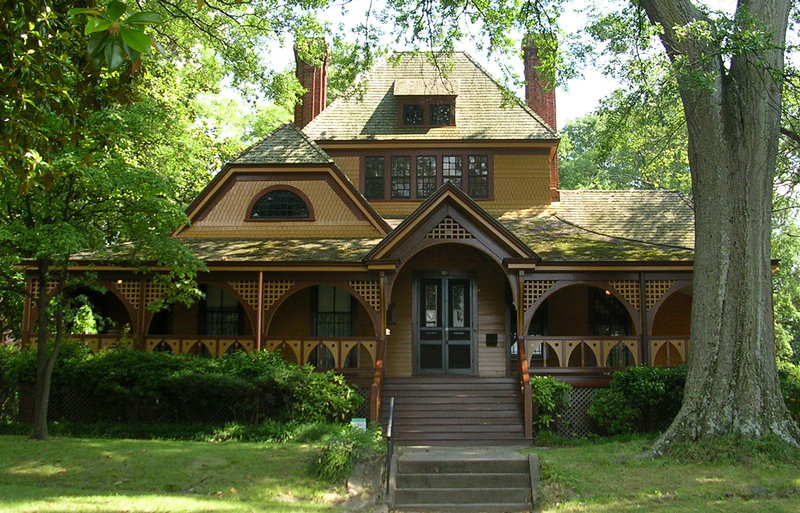
West End is a historic neighborhood in the U.S. city of Atlanta, one of the oldest outside Downtown Atlanta, and is listed on the National Register of Historic Places. West End is located southwest of Castleberry Hill, east of Westview, west of Adair Park Historic District, and just north of Oakland City. Architectural styles within the neighborhood include Craftsman Bungalow, Queen Anne, Stick style, Folk Victorian, Colonial Revival, American Foursquare and Neoclassical Revival.
In this century, West End has endured many changes in its metamorphosis to an intown neighborhood while retaining its own distinctive character and vitality. This has been accomplished both by adaptation and participation in change and by its citizens' recognition of the district's special history.
Before there was a West End or an Atlanta, the area was a crossroads. Newnan Road connected the town of that name to Decatur and Lawrenceville. Crossing this road was the Sandtown Road going west to an Indian town of that name. Near this junction around 1830, Charner Humphries established an inn/tavern which came to be known as Whitehall due to the then unusual fact that it had a coat of white paint when most other buildings were of washed or natural wood.
From a frontier outpost in the 1830s, the district evolved into an independent political entity closely linked by rail and roads to its neighbor Atlanta.
In April 1871, Richard Peters and George Adair bought out the charter of the Atlanta Street Railway Company (horse-drawn) and on September 1 of that year opened the first section connecting Five Points to the West End – a route that passed by both of their homes. The following year the West End & Atlanta Street Railroad also started service to West End and Westview Cemetery.
By the 1880s many wealthy Atlantans built large estates here and when they came, the main street of Gordon Street became a bustling commercial district. In 1894, it was annexed by Atlanta as a distinct ward following two decades of planned suburbanization. From 1894 to 1930, West End grew rapidly in population and prosperity. An examination of building permits for Peeples, Gordon, Lee and Lawton Streets shows a large number of single family residences being built and increasing commercial buildings and churches going up along Gordon and at the long established business district at Gordon and Lee. National and local prosperity and the mobility created by the automobile in the 1920s helped West End to grow. Approximately fifty businesses were now clustered at Gordon and Lee with branches of Sears, Firestone, Piggly-Wiggly, and Goodyear.
Churches and schools increased to serve the growing population. Schools began to dot West End, the largest being the 1923 Joseph E. Brown High School at Peeples and Beecher. West End became a desirable suburban community in the 1880s, and grew rapidly in population and prosperity, so that by 1930 there were more than 22,000 residents.
Notable residents in this early period included Atlanta mayor Dennis Hammond, Evan Howell, governor James Smith (1872–77), John Conley (son of Governor Benjamin Conley), Thomas Stokes (founding partner of Davison's Department Store), L. Z. Rosser (president of the Atlanta Board of Education), J. P. Allen (clothing store owner), T. D. Longino (medical doctor and alderman), J. N. McEachern (insurance executive), as well as several authors such as Frank L. Stanton, Madge Bigham and Joel Chandler Harris, known for his Uncle Remus Tales. Both during his life and up to the present, Harris has perhaps been West End's most famous resident. He attracted such figures as President Theodore Roosevelt and Andrew Carnegie to Atlanta, the former returning after Harris' death to lecture for the Uncle Remus Memorial Association.
Hub AI
West End, Atlanta AI simulator
(@West End, Atlanta_simulator)
West End, Atlanta
West End is a historic neighborhood in the U.S. city of Atlanta, one of the oldest outside Downtown Atlanta, and is listed on the National Register of Historic Places. West End is located southwest of Castleberry Hill, east of Westview, west of Adair Park Historic District, and just north of Oakland City. Architectural styles within the neighborhood include Craftsman Bungalow, Queen Anne, Stick style, Folk Victorian, Colonial Revival, American Foursquare and Neoclassical Revival.
In this century, West End has endured many changes in its metamorphosis to an intown neighborhood while retaining its own distinctive character and vitality. This has been accomplished both by adaptation and participation in change and by its citizens' recognition of the district's special history.
Before there was a West End or an Atlanta, the area was a crossroads. Newnan Road connected the town of that name to Decatur and Lawrenceville. Crossing this road was the Sandtown Road going west to an Indian town of that name. Near this junction around 1830, Charner Humphries established an inn/tavern which came to be known as Whitehall due to the then unusual fact that it had a coat of white paint when most other buildings were of washed or natural wood.
From a frontier outpost in the 1830s, the district evolved into an independent political entity closely linked by rail and roads to its neighbor Atlanta.
In April 1871, Richard Peters and George Adair bought out the charter of the Atlanta Street Railway Company (horse-drawn) and on September 1 of that year opened the first section connecting Five Points to the West End – a route that passed by both of their homes. The following year the West End & Atlanta Street Railroad also started service to West End and Westview Cemetery.
By the 1880s many wealthy Atlantans built large estates here and when they came, the main street of Gordon Street became a bustling commercial district. In 1894, it was annexed by Atlanta as a distinct ward following two decades of planned suburbanization. From 1894 to 1930, West End grew rapidly in population and prosperity. An examination of building permits for Peeples, Gordon, Lee and Lawton Streets shows a large number of single family residences being built and increasing commercial buildings and churches going up along Gordon and at the long established business district at Gordon and Lee. National and local prosperity and the mobility created by the automobile in the 1920s helped West End to grow. Approximately fifty businesses were now clustered at Gordon and Lee with branches of Sears, Firestone, Piggly-Wiggly, and Goodyear.
Churches and schools increased to serve the growing population. Schools began to dot West End, the largest being the 1923 Joseph E. Brown High School at Peeples and Beecher. West End became a desirable suburban community in the 1880s, and grew rapidly in population and prosperity, so that by 1930 there were more than 22,000 residents.
Notable residents in this early period included Atlanta mayor Dennis Hammond, Evan Howell, governor James Smith (1872–77), John Conley (son of Governor Benjamin Conley), Thomas Stokes (founding partner of Davison's Department Store), L. Z. Rosser (president of the Atlanta Board of Education), J. P. Allen (clothing store owner), T. D. Longino (medical doctor and alderman), J. N. McEachern (insurance executive), as well as several authors such as Frank L. Stanton, Madge Bigham and Joel Chandler Harris, known for his Uncle Remus Tales. Both during his life and up to the present, Harris has perhaps been West End's most famous resident. He attracted such figures as President Theodore Roosevelt and Andrew Carnegie to Atlanta, the former returning after Harris' death to lecture for the Uncle Remus Memorial Association.
Recent media