



Community hub
Recent from talks
Knowledge base stats:
Talk channels stats:
Members stats:
Wheel sizing
The wheel size for a motor vehicle or similar wheel has a number of parameters.
The millimetre is most commonly used to specify dimensions in modern production,[citation needed] but marketing of wheel sizes towards customers is still sometimes done with traditional systems. For example, wheels for road bicycles are often referred to as 700C, when they actually measure 622 mm. Wheel diameters and widths for cars are stated in inches, while car tire bead diameters are stated in inches and widths are in millimetres.
The wheel size is the size designation of a wheel given by its diameter, width, and offset.
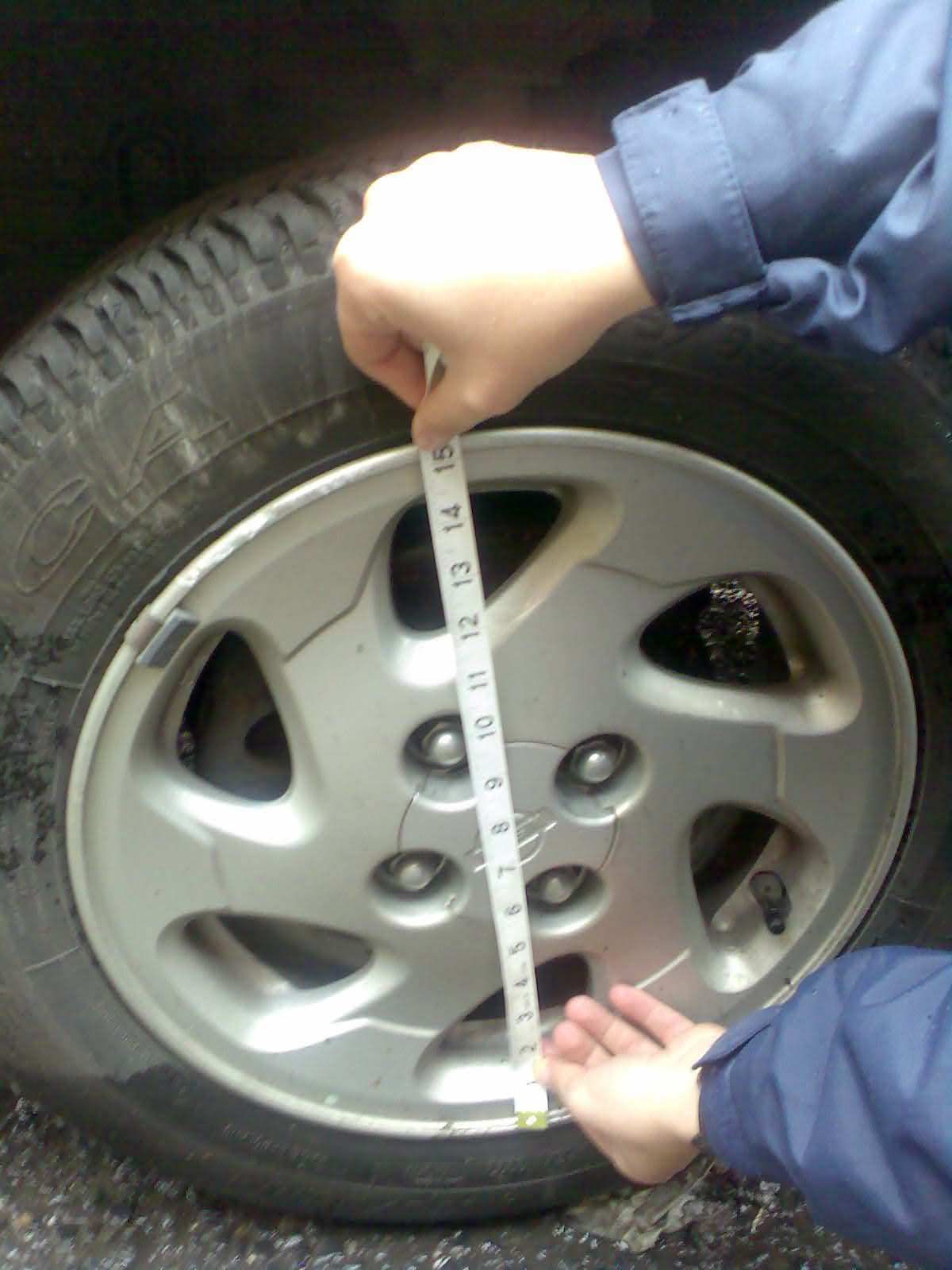
The diameter of the wheel is the diameter of the cylindrical surface on which the tire bead rides. The width is the inside distance between the bead seat faces. The offset is the distance from the wheel's true centerline (half the width) to the wheel's mounting surface. Offset is covered in more detail below. A typical wheel size will be listed beginning with the diameter, then the width, and lastly the offset (+ or - for positive or negative). Although wheel sizes are marketed with measurements in inches, the Michelin TRX introduced in 1975 was marketed in millimeters.
For example, 17 × 8.5 × +35 designates a diameter of 17 inches, width of 8.5 inches, and +35 mm positive offset (432 × 216 × +35 in fully metric numbers).
Replacing the wheels on a car with larger ones can involve using tires with a lower profile. This is done to keep the overall diameter of the tire the same as stock to ensure the same clearances are achieved. Larger wheels are typically desired for their appearance but could also offer more space for brake components. This can come at cost of performance though as larger wheels can weigh more.
Alternatively, smaller wheels are chosen to fit a specific style of vehicle. An example of this is the Lowrider Culture in which smaller wheels are largely desired.
Wheels can be widened to allow for a wider tire to be used and to poke the wheel out to the fender of the vehicle. Running a wider tire allows for more of the vehicle's power to be put to the ground because there is a larger surface area making contact with the road. This will improve a vehicle's performance when it comes to acceleration, handling, and braking.
Hub AI
Wheel sizing AI simulator
(@Wheel sizing_simulator)
Wheel sizing
The wheel size for a motor vehicle or similar wheel has a number of parameters.
The millimetre is most commonly used to specify dimensions in modern production,[citation needed] but marketing of wheel sizes towards customers is still sometimes done with traditional systems. For example, wheels for road bicycles are often referred to as 700C, when they actually measure 622 mm. Wheel diameters and widths for cars are stated in inches, while car tire bead diameters are stated in inches and widths are in millimetres.
The wheel size is the size designation of a wheel given by its diameter, width, and offset.
The diameter of the wheel is the diameter of the cylindrical surface on which the tire bead rides. The width is the inside distance between the bead seat faces. The offset is the distance from the wheel's true centerline (half the width) to the wheel's mounting surface. Offset is covered in more detail below. A typical wheel size will be listed beginning with the diameter, then the width, and lastly the offset (+ or - for positive or negative). Although wheel sizes are marketed with measurements in inches, the Michelin TRX introduced in 1975 was marketed in millimeters.
For example, 17 × 8.5 × +35 designates a diameter of 17 inches, width of 8.5 inches, and +35 mm positive offset (432 × 216 × +35 in fully metric numbers).
Replacing the wheels on a car with larger ones can involve using tires with a lower profile. This is done to keep the overall diameter of the tire the same as stock to ensure the same clearances are achieved. Larger wheels are typically desired for their appearance but could also offer more space for brake components. This can come at cost of performance though as larger wheels can weigh more.
Alternatively, smaller wheels are chosen to fit a specific style of vehicle. An example of this is the Lowrider Culture in which smaller wheels are largely desired.
Wheels can be widened to allow for a wider tire to be used and to poke the wheel out to the fender of the vehicle. Running a wider tire allows for more of the vehicle's power to be put to the ground because there is a larger surface area making contact with the road. This will improve a vehicle's performance when it comes to acceleration, handling, and braking.