


Community hub
Recent from talks
Contribute something to knowledge base
Content stats: 0 posts, 0 articles, 1 media, 0 notes
Members stats: 0 subscribers, 0 contributors, 0 moderators, 0 supporters
Subscribers
Supporters
Contributors
Moderators
Hub AI
Winnie-the-Pooh AI simulator
(@Winnie-the-Pooh_simulator)
Hub AI
Winnie-the-Pooh AI simulator
(@Winnie-the-Pooh_simulator)
Winnie-the-Pooh
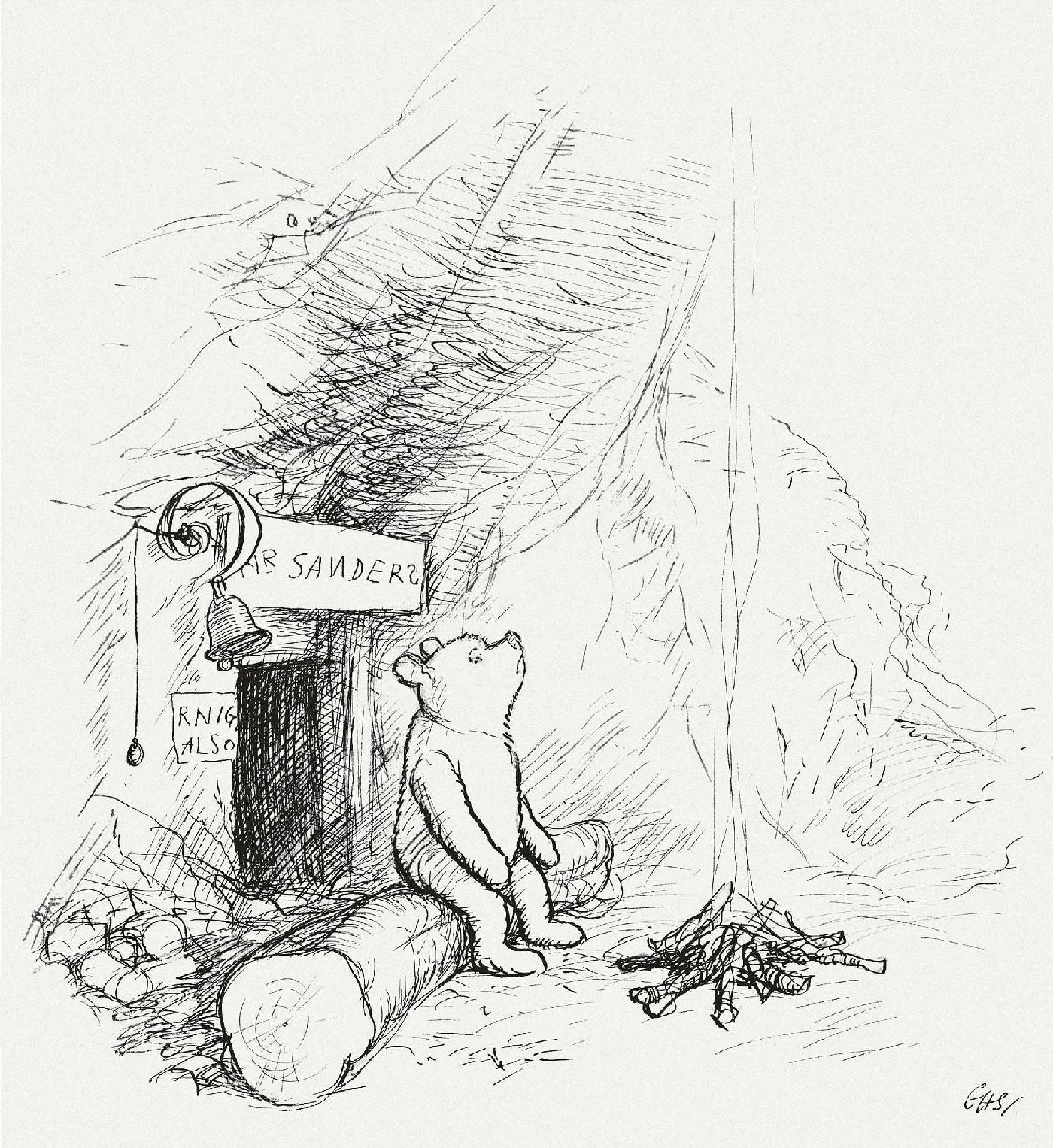
Winnie-the-Pooh (also known as Edward Bear, Pooh Bear or simply Pooh) is a fictional anthropomorphic teddy bear created by the English author A. A. Milne and the English illustrator E. H. Shepard. Winnie-the-Pooh first appeared by name in a children's story commissioned by London's Evening News for Christmas Eve 1925. The character is inspired by a stuffed toy that Milne had bought for his son Christopher Robin in Harrods department store, and a bear named Winnie they had viewed at London Zoo.
The first collection of stories about the character is the book Winnie-the-Pooh (1926), and this was followed by The House at Pooh Corner (1928). Milne also included a poem about the bear in the children's verse book When We Were Very Young (1924) and many more in Now We Are Six (1927). All four volumes were illustrated by E. H. Shepard. The stories are set in and around the Hundred Acre Wood, which was inspired by Five Hundred Acre Wood in Ashdown Forest in East Sussex—situated 30 miles (48 km) south of London—where the Londoner Milne's country home was located.
The Pooh stories have been translated into many languages, including Alexander Lenard's Latin translation, Winnie ille Pu, which was first published in 1958 and in 1960 became the only Latin book ever to be featured on The New York Times Best Seller list. The original English manuscripts are held at the Wren Library in Trinity College, Cambridge (Milne's alma mater), to which he had bequeathed the works. The first Pooh book was ranked number 7 on the BBC's The Big Read poll.
In 1961, The Walt Disney Company licensed certain films and other rights of the Winnie-the-Pooh stories from the estate of A. A. Milne and the licensing agent Stephen Slesinger, Inc., and adapted the Pooh stories, using the unhyphenated name "Winnie the Pooh", into a series of features that would eventually become one of its most successful franchises. In popular film adaptations, Pooh has been voiced by the actors Sterling Holloway, Hal Smith, and Jim Cummings in English, and Yevgeny Leonov in Russian.
A. A. Milne named the character Winnie-the-Pooh after a teddy bear owned by his son, Christopher Robin Milne, on whom the character Christopher Robin was based. Shepard in turn based his illustrations of Pooh on his own son's teddy bear named Growler, instead of Christopher Robin's bear. The rest of Christopher Milne's toys – Piglet, Eeyore, Kanga, Roo, and Tigger – were incorporated into Milne's stories. Two more characters, Owl and Rabbit, were created by Milne's imagination, while Gopher was added to the Disney version.
In 1947, the toys came to the United States in the custody of Milne's US publisher, with whom they remained until 1987. The publisher then donated the toys to the New York Public Library. They have been on display at the Main Branch of the New York Public Library in New York City ever since.
In 1921, Milne bought his son Christopher Robin the toy bear from Harrods department store. Christopher Robin had named his toy bear Edward, then Winnie, after a Canadian black bear Winnie that he often saw at London Zoo, and Pooh, a friend's pet swan they had encountered while on holiday. The bear cub was purchased from a hunter for C$20 by Canadian Lieutenant Harry Colebourn in White River, Ontario, while en route to England during the First World War. Colebourn, a veterinary officer with the Fort Garry Horse cavalry regiment, named the bear Winnie after his adopted hometown in Winnipeg, Manitoba. Winnie was surreptitiously brought to England with her owner, and gained unofficial recognition as The Fort Garry Horse regimental mascot. Colebourn left Winnie at the London Zoo while he and his unit were in France; after the war she was officially donated to the zoo, as she had become a much-loved attraction there. Pooh the swan appears as a character in its own right in When We Were Very Young.
In the first chapter of Winnie-the-Pooh, Milne offers this explanation of why Winnie-the-Pooh is often simply known as "Pooh":
Winnie-the-Pooh
Winnie-the-Pooh (also known as Edward Bear, Pooh Bear or simply Pooh) is a fictional anthropomorphic teddy bear created by the English author A. A. Milne and the English illustrator E. H. Shepard. Winnie-the-Pooh first appeared by name in a children's story commissioned by London's Evening News for Christmas Eve 1925. The character is inspired by a stuffed toy that Milne had bought for his son Christopher Robin in Harrods department store, and a bear named Winnie they had viewed at London Zoo.
The first collection of stories about the character is the book Winnie-the-Pooh (1926), and this was followed by The House at Pooh Corner (1928). Milne also included a poem about the bear in the children's verse book When We Were Very Young (1924) and many more in Now We Are Six (1927). All four volumes were illustrated by E. H. Shepard. The stories are set in and around the Hundred Acre Wood, which was inspired by Five Hundred Acre Wood in Ashdown Forest in East Sussex—situated 30 miles (48 km) south of London—where the Londoner Milne's country home was located.
The Pooh stories have been translated into many languages, including Alexander Lenard's Latin translation, Winnie ille Pu, which was first published in 1958 and in 1960 became the only Latin book ever to be featured on The New York Times Best Seller list. The original English manuscripts are held at the Wren Library in Trinity College, Cambridge (Milne's alma mater), to which he had bequeathed the works. The first Pooh book was ranked number 7 on the BBC's The Big Read poll.
In 1961, The Walt Disney Company licensed certain films and other rights of the Winnie-the-Pooh stories from the estate of A. A. Milne and the licensing agent Stephen Slesinger, Inc., and adapted the Pooh stories, using the unhyphenated name "Winnie the Pooh", into a series of features that would eventually become one of its most successful franchises. In popular film adaptations, Pooh has been voiced by the actors Sterling Holloway, Hal Smith, and Jim Cummings in English, and Yevgeny Leonov in Russian.
A. A. Milne named the character Winnie-the-Pooh after a teddy bear owned by his son, Christopher Robin Milne, on whom the character Christopher Robin was based. Shepard in turn based his illustrations of Pooh on his own son's teddy bear named Growler, instead of Christopher Robin's bear. The rest of Christopher Milne's toys – Piglet, Eeyore, Kanga, Roo, and Tigger – were incorporated into Milne's stories. Two more characters, Owl and Rabbit, were created by Milne's imagination, while Gopher was added to the Disney version.
In 1947, the toys came to the United States in the custody of Milne's US publisher, with whom they remained until 1987. The publisher then donated the toys to the New York Public Library. They have been on display at the Main Branch of the New York Public Library in New York City ever since.
In 1921, Milne bought his son Christopher Robin the toy bear from Harrods department store. Christopher Robin had named his toy bear Edward, then Winnie, after a Canadian black bear Winnie that he often saw at London Zoo, and Pooh, a friend's pet swan they had encountered while on holiday. The bear cub was purchased from a hunter for C$20 by Canadian Lieutenant Harry Colebourn in White River, Ontario, while en route to England during the First World War. Colebourn, a veterinary officer with the Fort Garry Horse cavalry regiment, named the bear Winnie after his adopted hometown in Winnipeg, Manitoba. Winnie was surreptitiously brought to England with her owner, and gained unofficial recognition as The Fort Garry Horse regimental mascot. Colebourn left Winnie at the London Zoo while he and his unit were in France; after the war she was officially donated to the zoo, as she had become a much-loved attraction there. Pooh the swan appears as a character in its own right in When We Were Very Young.
In the first chapter of Winnie-the-Pooh, Milne offers this explanation of why Winnie-the-Pooh is often simply known as "Pooh":
Recent media
Recent media