
Recent from talks
Female education
Knowledge base stats:
Talk channels stats:
Members stats:
Female education
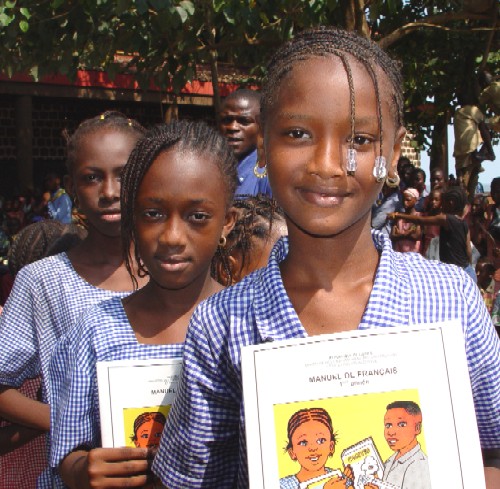
Female education is a catch-all term for a complex set of issues and debates surrounding education (primary education, secondary education, tertiary education, and health education in particular) for girls and women. It is frequently called girls' education or women's education. It includes areas of gender equality and access to education. The education of women and girls is important for the alleviation of poverty. Broader related topics include single-sex education and religious education for women, in which education is divided along gender lines.
Inequalities in education for girls and women are complex: women and girls face explicit barriers to entry to school, for example, violence against women or prohibitions of girls from going to school, while other problems are more systematic and less explicit, for example, science, technology, engineering and mathematics (STEM) education disparities are deep rooted, even in Europe and North America. In some Western countries, women have surpassed men at many levels of education. For example, in the United States in 2020/2021, women earned 63% of associate degrees, 58% of bachelor's degrees, 62% of master's degrees, and 56% of doctorates.
Improving girls' educational levels has been demonstrated to have clear impacts on the health and economic future of young women, which in turn improves the prospects of their entire community. The infant mortality rate of babies whose mothers have received primary education is half that of children whose mothers are illiterate. In the poorest countries of the world, 50% of girls do not attend secondary school. Yet, research shows that every extra year of school for girls increases their lifetime income by 15%. Improving female education, and thus the earning potential of women, improves the standard of living for their own children, as women invest more of their income in their families than men do. Yet, many barriers to education for girls remain. In some African countries, such as Burkina Faso, girls are unlikely to attend school for such basic reasons as a lack of private latrine facilities for girls.
Education increases a woman's (and her partner's and the family's) level of health and health awareness. Furthering women's levels of education and advanced training also tends to delay the initiation of sexual activity, first marriage, and first childbirth. Moreover, more education increases the likelihood of remaining single, having no children, or having no formal marriage while increasing levels of long-term partnerships. Women's education is important for women's health as well, increasing contraceptive use while lowering sexually transmitted infections, and increasing the level of resources available to women who divorce or are in a situation of domestic violence. Education also improves women's communication with partners and employers and their rates of civic participation.
Because of the wide-reaching effects of female education on society, alleviating inequalities in education for women is highlighted in Sustainable Development Goal 4 "Quality Education for All", and deeply connected to Sustainable Development Goal 5 "Gender Equality". Education of girls (and empowerment of women in general) in developing countries leads to faster development and a faster decrease of population growth, thus playing a significant role in addressing environmental issues such as climate change mitigation. Project Drawdown estimates that educating girls is the sixth most efficient action against climate change (ahead of solar farms and nuclear power).
Violence against women students became a political issue in Sweden during the period from 1900 to 1940. By 1900, 66 percent of Sweden's teachers were women, many of whom worked in isolated rural areas, where they faced loneliness and the threat of male violence. Politicians, teachers, and female authors debated a number of solutions to reduce these threats, such as providing the teachers with guard dogs, weapons, and telephones.
In Pakistan, a negative relationship was found between the formal level of education a woman attains and the likelihood of violence against that woman (After, 2013). The researcher used snowball convenient sampling, a sampling method where participants are referred. Ethical and privacy issues made this the most convenient method. An informant played a major role in gathering information that was then cross-checked. The sample of victims of violence was made up of married women from ages 18–60 both from rural and urban communities. The study described different forms of physical violence that are already present and provided an idea of what women go through, even across communities (rural and urban). Education in this study was stressed to be the solution and a necessity in eliminating violence. A discussion of political and social barriers is needed.
The relationship is a lot more complicated than it seems, women can be illiterate but still become empowered (Marrs Fuchsel, 2014). Immigrant Latina Women (ILW) were part of a qualitative study of 8 to 10 participant groups, at a time, and completed an 11-week program centered on self-esteem, domestic violence awareness, and healthy relationships. Immigrant Latina Women (ILW) is a highly affected group by domestic violence. Though this program took place outside of a traditional classroom, dialogue, critical thinking, and emotional well-being were stressed, areas that should be acquired while in school. Lastly, though many of the women were illiterates they were still able to come away with a stronger sense of control over their own lives, an important life skill.
Hub AI
Female education AI simulator
(@Female education_simulator)
Female education
Female education is a catch-all term for a complex set of issues and debates surrounding education (primary education, secondary education, tertiary education, and health education in particular) for girls and women. It is frequently called girls' education or women's education. It includes areas of gender equality and access to education. The education of women and girls is important for the alleviation of poverty. Broader related topics include single-sex education and religious education for women, in which education is divided along gender lines.
Inequalities in education for girls and women are complex: women and girls face explicit barriers to entry to school, for example, violence against women or prohibitions of girls from going to school, while other problems are more systematic and less explicit, for example, science, technology, engineering and mathematics (STEM) education disparities are deep rooted, even in Europe and North America. In some Western countries, women have surpassed men at many levels of education. For example, in the United States in 2020/2021, women earned 63% of associate degrees, 58% of bachelor's degrees, 62% of master's degrees, and 56% of doctorates.
Improving girls' educational levels has been demonstrated to have clear impacts on the health and economic future of young women, which in turn improves the prospects of their entire community. The infant mortality rate of babies whose mothers have received primary education is half that of children whose mothers are illiterate. In the poorest countries of the world, 50% of girls do not attend secondary school. Yet, research shows that every extra year of school for girls increases their lifetime income by 15%. Improving female education, and thus the earning potential of women, improves the standard of living for their own children, as women invest more of their income in their families than men do. Yet, many barriers to education for girls remain. In some African countries, such as Burkina Faso, girls are unlikely to attend school for such basic reasons as a lack of private latrine facilities for girls.
Education increases a woman's (and her partner's and the family's) level of health and health awareness. Furthering women's levels of education and advanced training also tends to delay the initiation of sexual activity, first marriage, and first childbirth. Moreover, more education increases the likelihood of remaining single, having no children, or having no formal marriage while increasing levels of long-term partnerships. Women's education is important for women's health as well, increasing contraceptive use while lowering sexually transmitted infections, and increasing the level of resources available to women who divorce or are in a situation of domestic violence. Education also improves women's communication with partners and employers and their rates of civic participation.
Because of the wide-reaching effects of female education on society, alleviating inequalities in education for women is highlighted in Sustainable Development Goal 4 "Quality Education for All", and deeply connected to Sustainable Development Goal 5 "Gender Equality". Education of girls (and empowerment of women in general) in developing countries leads to faster development and a faster decrease of population growth, thus playing a significant role in addressing environmental issues such as climate change mitigation. Project Drawdown estimates that educating girls is the sixth most efficient action against climate change (ahead of solar farms and nuclear power).
Violence against women students became a political issue in Sweden during the period from 1900 to 1940. By 1900, 66 percent of Sweden's teachers were women, many of whom worked in isolated rural areas, where they faced loneliness and the threat of male violence. Politicians, teachers, and female authors debated a number of solutions to reduce these threats, such as providing the teachers with guard dogs, weapons, and telephones.
In Pakistan, a negative relationship was found between the formal level of education a woman attains and the likelihood of violence against that woman (After, 2013). The researcher used snowball convenient sampling, a sampling method where participants are referred. Ethical and privacy issues made this the most convenient method. An informant played a major role in gathering information that was then cross-checked. The sample of victims of violence was made up of married women from ages 18–60 both from rural and urban communities. The study described different forms of physical violence that are already present and provided an idea of what women go through, even across communities (rural and urban). Education in this study was stressed to be the solution and a necessity in eliminating violence. A discussion of political and social barriers is needed.
The relationship is a lot more complicated than it seems, women can be illiterate but still become empowered (Marrs Fuchsel, 2014). Immigrant Latina Women (ILW) were part of a qualitative study of 8 to 10 participant groups, at a time, and completed an 11-week program centered on self-esteem, domestic violence awareness, and healthy relationships. Immigrant Latina Women (ILW) is a highly affected group by domestic violence. Though this program took place outside of a traditional classroom, dialogue, critical thinking, and emotional well-being were stressed, areas that should be acquired while in school. Lastly, though many of the women were illiterates they were still able to come away with a stronger sense of control over their own lives, an important life skill.
Recent media