
Recent from talks
General Motors 54° V6 engine
Knowledge base stats:
Talk channels stats:
Members stats:
General Motors 54° V6 engine
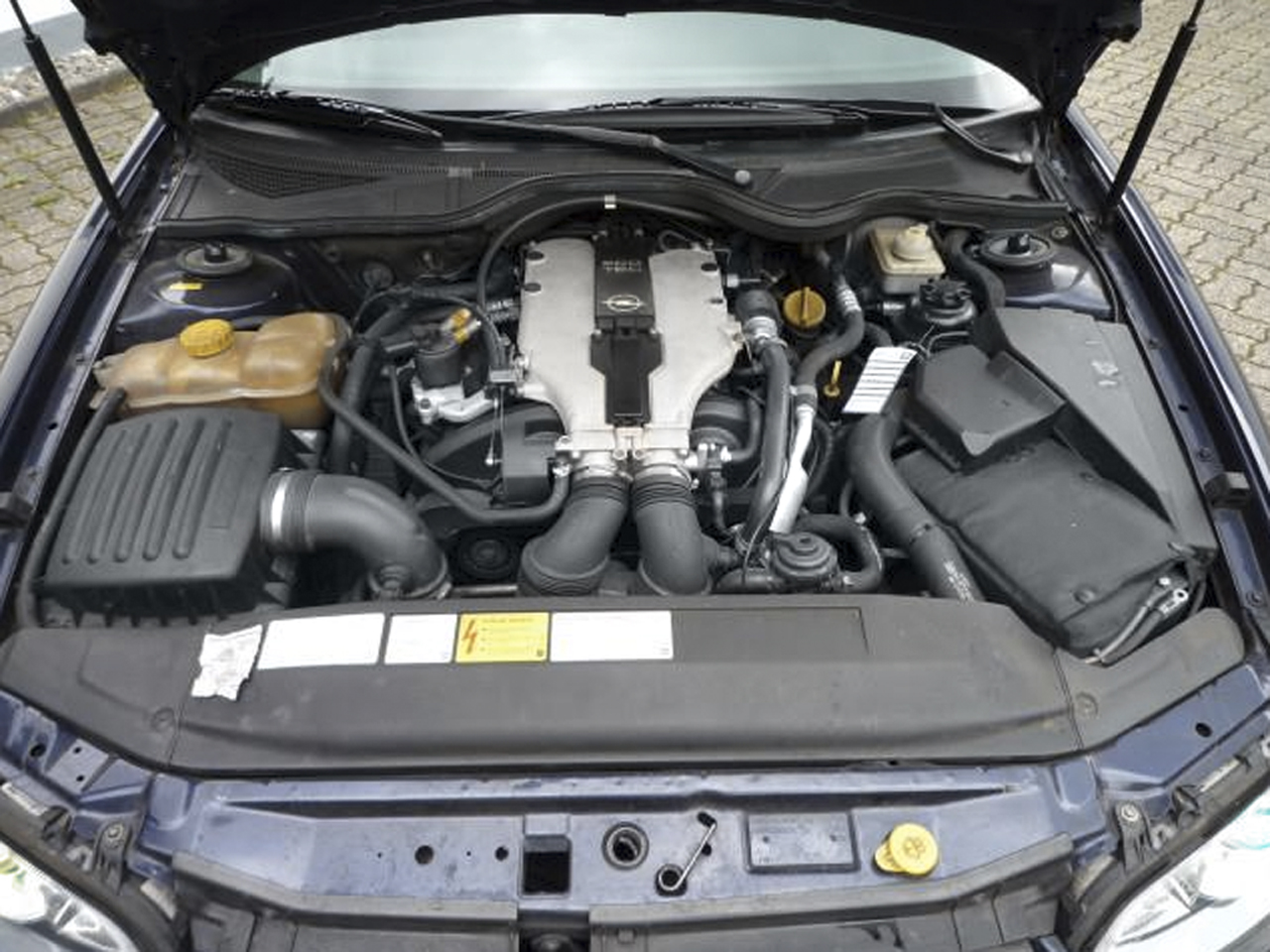
General Motors' Opel subsidiary in Europe designed a compact V6 engine with an unusual 54° vee angle. It was an iron block/aluminum head DOHC design with four valves per cylinder. All 54° engines were assembled at Ellesmere Port in England.
In the early 1990s, Opel identified the need for a modern, lightweight, and compact power plant to replace its aging straight-six engine range. These engines have a cast-iron engine block with cast aluminium alloy cylinder heads. The cylinder heads contain four valves per cylinder actuated by dual overhead camshafts which are driven by a timing belt. These engines, however, differed from many modern V6 engines in that it has a 54-degree cylinder bank angle as opposed to the more conventional 60-degree or 90-degree setup. This added to the engines' compactness which was needed to allow its use in front-wheel-drive applications, as well as rear-wheel-drive cars. Other features of these engines included an oil-to-water heat exchanger mounted within the V of the engine block, Bosch Motronic engine management system with full sequential fuel injection, knock control on each bank, Distributorless Ignition System (DIS), and closed-loop lambda sensor control.
Minor changes were made to the unit during its production, including an uprated oil pump around mid-1997, with the addition of larger oilways in the head machining (T-vents), and modified valve lifters to reduce top-end valve noise, at which point the cam belt arrangement also changed with the lower idler moving. Around 1998, the spin-on metal canister oil filter was changed to a disposable paper element.
The engine was reworked substantially in 2000 in order to meet increasing emissions requirements, with the 2.5L and 3.0L being replaced by lower-compression 2.6L and 3.2L units. While displacement was changed the bore centers and deck height were retained. These later power plants had a revised engine management system setup, which used quad lambda sensor control, coil-per-plug ignition system and drive-by-wire throttles. As a result of these changes, the EGR and secondary air injection system were removed.
In its 3.0 L form, this engine was notable for recalls of all units installed in Cadillac Cateras due to timing belt tensioner bearing failures, which could cause catastrophic damage to the engine because of its interference design.
The C25XE or B258I has an 81.6 mm × 79.6 mm (3.21 in × 3.13 in) bore and stroke which displaces 2.5 L; 152.4 cu in (2,498 cc). It produces a Deutsches Institut für Normung (DIN) rated output of 125 kW (170 PS; 168 bhp) @ 6,000 rpm, and generates 227 N⋅m (167 lb⋅ft) @ 3,200 rpm of torque. It was introduced in the Opel Vectra/Vauxhall Cavalier (both codenamed "Vectra-A") and Opel/Vauxhall Calibra. It features a Bosch Motronic 2.8.1 engine management system (Omega), with later examples featuring M2.8.3 (Calibra 1994, Vectra 1995) and a compression ratio of 10.8:1.
For 1994, in order to meet more stringent emissions requirements, a secondary air injection system and an EGR valve were added to the C25XE and it became the X25XE. The exception being the 1997 Calibras, which due to unavailability of C25XE engine blocks, were produced using the X25XE block but without modifications to the top end of the engine, and without addition of EGR. The X25XE also benefitted from a higher-volume oil pump. Firing order is 1-2-3-4-5-6.
The breakdown of the engine name is as follows:
Hub AI
General Motors 54° V6 engine AI simulator
(@General Motors 54° V6 engine_simulator)
General Motors 54° V6 engine
General Motors' Opel subsidiary in Europe designed a compact V6 engine with an unusual 54° vee angle. It was an iron block/aluminum head DOHC design with four valves per cylinder. All 54° engines were assembled at Ellesmere Port in England.
In the early 1990s, Opel identified the need for a modern, lightweight, and compact power plant to replace its aging straight-six engine range. These engines have a cast-iron engine block with cast aluminium alloy cylinder heads. The cylinder heads contain four valves per cylinder actuated by dual overhead camshafts which are driven by a timing belt. These engines, however, differed from many modern V6 engines in that it has a 54-degree cylinder bank angle as opposed to the more conventional 60-degree or 90-degree setup. This added to the engines' compactness which was needed to allow its use in front-wheel-drive applications, as well as rear-wheel-drive cars. Other features of these engines included an oil-to-water heat exchanger mounted within the V of the engine block, Bosch Motronic engine management system with full sequential fuel injection, knock control on each bank, Distributorless Ignition System (DIS), and closed-loop lambda sensor control.
Minor changes were made to the unit during its production, including an uprated oil pump around mid-1997, with the addition of larger oilways in the head machining (T-vents), and modified valve lifters to reduce top-end valve noise, at which point the cam belt arrangement also changed with the lower idler moving. Around 1998, the spin-on metal canister oil filter was changed to a disposable paper element.
The engine was reworked substantially in 2000 in order to meet increasing emissions requirements, with the 2.5L and 3.0L being replaced by lower-compression 2.6L and 3.2L units. While displacement was changed the bore centers and deck height were retained. These later power plants had a revised engine management system setup, which used quad lambda sensor control, coil-per-plug ignition system and drive-by-wire throttles. As a result of these changes, the EGR and secondary air injection system were removed.
In its 3.0 L form, this engine was notable for recalls of all units installed in Cadillac Cateras due to timing belt tensioner bearing failures, which could cause catastrophic damage to the engine because of its interference design.
The C25XE or B258I has an 81.6 mm × 79.6 mm (3.21 in × 3.13 in) bore and stroke which displaces 2.5 L; 152.4 cu in (2,498 cc). It produces a Deutsches Institut für Normung (DIN) rated output of 125 kW (170 PS; 168 bhp) @ 6,000 rpm, and generates 227 N⋅m (167 lb⋅ft) @ 3,200 rpm of torque. It was introduced in the Opel Vectra/Vauxhall Cavalier (both codenamed "Vectra-A") and Opel/Vauxhall Calibra. It features a Bosch Motronic 2.8.1 engine management system (Omega), with later examples featuring M2.8.3 (Calibra 1994, Vectra 1995) and a compression ratio of 10.8:1.
For 1994, in order to meet more stringent emissions requirements, a secondary air injection system and an EGR valve were added to the C25XE and it became the X25XE. The exception being the 1997 Calibras, which due to unavailability of C25XE engine blocks, were produced using the X25XE block but without modifications to the top end of the engine, and without addition of EGR. The X25XE also benefitted from a higher-volume oil pump. Firing order is 1-2-3-4-5-6.
The breakdown of the engine name is as follows:
Recent media