
Recent from talks
Éric Rohmer
Knowledge base stats:
Talk channels stats:
Members stats:
Éric Rohmer
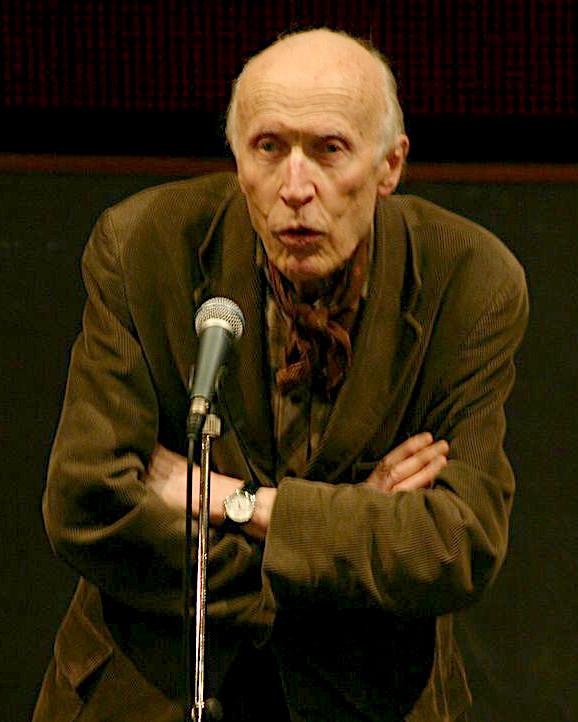
Jean Marie Maurice Schérer or Maurice Henri Joseph Schérer, known as Éric Rohmer (French: [eʁik ʁomɛʁ]; 21 March 1920 – 11 January 2010), was a French film director, film critic, journalist, novelist, screenwriter, and teacher. Rohmer was the last of the post-World War II French New Wave directors to become established. He edited the influential film journal Cahiers du cinéma from 1957 to 1963, while most of his colleagues—among them Jean-Luc Godard and François Truffaut—were making the transition from critics to filmmakers and gaining international attention.
Rohmer gained international acclaim around 1969 when his film My Night at Maud's was nominated at the Academy Awards. He won the San Sebastián International Film Festival with Claire's Knee in 1971 and the Golden Lion at the Venice Film Festival for The Green Ray in 1986. In 2001, Rohmer received the Venice Film Festival's Career Golden Lion. After his death in 2010, his obituary in The Daily Telegraph called him "the most durable filmmaker of the French New Wave", outlasting his peers and "still making movies the public wanted to see" late in his career.
Rohmer was born Jean-Marie Maurice Schérer (or Maurice Henri Joseph Schérer) in Nancy (also listed as Tulle), Meurthe-et-Moselle department, Lorraine, France, the son of Mathilde (née Bucher) and Lucien Schérer. Rohmer was a Catholic. He was secretive about his private life and often gave different dates of birth to reporters. He fashioned his pseudonym from the names of two famous artists: actor and director Erich von Stroheim and writer Sax Rohmer, author of the Fu Manchu series. Rohmer was educated in Paris and received an advanced degree in history, though he seemed equally interested in other subjects, also studying literature, philosophy, and theology.
Rohmer first worked as a teacher in Clermont-Ferrand. In the mid-1940s he quit his teaching job and moved to Paris, where he worked as a freelance journalist. In 1946 he published a novel, Elisabeth (AKA Les Vacances) under the pen name Gilbert Cordier. While living in Paris, Rohmer first began to attend screenings at Henri Langlois's Cinémathèque Française, where he first met and befriended Jean-Luc Godard, François Truffaut, Claude Chabrol, Jacques Rivette and other members of the French New Wave. Rohmer had never been very interested in film, preferring literature, but soon became an intense lover of films and about 1949 switched from journalism to film criticism. Rohmer wrote film reviews for such publications as Révue du Cinéma, Arts, Temps Modernes and La Parisienne.
In 1950, he co-founded the film magazine La Gazette du Cinéma with Rivette and Godard, but it was short-lived. In 1951 Rohmer joined the staff of André Bazin's newly founded film magazine Cahiers du Cinéma, of which he became the editor in 1956. There, Rohmer established himself as a critic with a distinctive voice; fellow Cahiers contributor and French New Wave filmmaker Luc Moullet later remarked that, unlike the more aggressive and personal writings of younger critics like Truffaut and Godard, Rohmer favored a rhetorical style that made extensive use of questions and rarely used the first person singular. Rohmer was known as more politically conservative than most of the Cahiers staff, and his opinions were highly influential on the magazine's direction while he was editor. Rohmer first published articles under his real name but began using "Éric Rohmer" in 1955 so that his family would not find out that he was involved in the film world, as they would have disapproved.
Rohmer's best-known article was "Le Celluloïd et le marbre" ("Celluloid and Marble", 1955), which examines the relationship between film and other arts. In the article, Rohmer writes that in an age of cultural self-consciousness, film is "the last refuge of poetry" and the only contemporary art form from which metaphor can still spring naturally and spontaneously. In 1957, Rohmer and Claude Chabrol wrote Hitchcock (Paris: Éditions Universitaires, 1957), the earliest book-length study of Alfred Hitchcock. It focuses on Hitchcock's Catholic background and has been called "one of the most influential film books since the Second World War, casting new light on a filmmaker hitherto considered a mere entertainer". Hitchcock helped establish the auteur theory as a critical method and contributed to the reevaluation of the American cinema that was central to that method. By 1963, Rohmer was becoming more at odds with some of the more radical left-wing critics at Cahiers du Cinéma. He continued to admire American films while many of the other left-wing critics had rejected them and were championing cinéma vérité and Marxist film criticism. Rohmer resigned that year and was succeeded by Rivette. An anthology of Rohmer's writings on cinema was published in French in 1984 and in English translation in 1989 as The Taste for Beauty.
In 1950 Rohmer made his first 16mm short film, Journal d'un scélérat. The film starred writer Paul Gégauff and was made with a borrowed camera. By 1951 Rohmer had a bigger budget provided by friends and shot the short film Présentation ou Charlotte et son steak. The 12-minute film was co-written by and starred Jean-Luc Godard. The film was not completed until 1961. In 1952 Rohmer began collaborating with Pierre Guilbaud on a one-hour short feature, Les Petites Filles modèles, but the film was never finished. In 1954 Rohmer made and acted in Bérénice, a 15-minute short based on a story by Edgar Allan Poe. In 1956 Rohmer directed, wrote, edited and starred in La Sonate à Kreutzer, a 50-minute film produced by Godard. In 1958 Rohmer made Véronique et son cancre, a 20-minute short produced by Chabrol.
Chabrol's company AJYM produced Rohmer's feature directorial debut, The Sign of Leo (Le Signe du lion) in 1959. In the film an American composer spends the month of August waiting for his inheritance while all his friends are on vacation and gradually becomes impoverished. It included music by Louis Saguer. The Sign of Leo was later recut and rescored by distributors when Chabrol was forced to sell his production company, and Rohmer disowned the recut version. In 1962 Rohmer and Barbet Schroeder co-founded the production company Les Films du Losange (they were later joined by Pierre Coltrell in the late 1960s). Les Films du Losange produced all of Rohmer's work (except his last three features produced by La Compagnie Eric Rohmer).
Hub AI
Éric Rohmer AI simulator
(@Éric Rohmer_simulator)
Éric Rohmer
Jean Marie Maurice Schérer or Maurice Henri Joseph Schérer, known as Éric Rohmer (French: [eʁik ʁomɛʁ]; 21 March 1920 – 11 January 2010), was a French film director, film critic, journalist, novelist, screenwriter, and teacher. Rohmer was the last of the post-World War II French New Wave directors to become established. He edited the influential film journal Cahiers du cinéma from 1957 to 1963, while most of his colleagues—among them Jean-Luc Godard and François Truffaut—were making the transition from critics to filmmakers and gaining international attention.
Rohmer gained international acclaim around 1969 when his film My Night at Maud's was nominated at the Academy Awards. He won the San Sebastián International Film Festival with Claire's Knee in 1971 and the Golden Lion at the Venice Film Festival for The Green Ray in 1986. In 2001, Rohmer received the Venice Film Festival's Career Golden Lion. After his death in 2010, his obituary in The Daily Telegraph called him "the most durable filmmaker of the French New Wave", outlasting his peers and "still making movies the public wanted to see" late in his career.
Rohmer was born Jean-Marie Maurice Schérer (or Maurice Henri Joseph Schérer) in Nancy (also listed as Tulle), Meurthe-et-Moselle department, Lorraine, France, the son of Mathilde (née Bucher) and Lucien Schérer. Rohmer was a Catholic. He was secretive about his private life and often gave different dates of birth to reporters. He fashioned his pseudonym from the names of two famous artists: actor and director Erich von Stroheim and writer Sax Rohmer, author of the Fu Manchu series. Rohmer was educated in Paris and received an advanced degree in history, though he seemed equally interested in other subjects, also studying literature, philosophy, and theology.
Rohmer first worked as a teacher in Clermont-Ferrand. In the mid-1940s he quit his teaching job and moved to Paris, where he worked as a freelance journalist. In 1946 he published a novel, Elisabeth (AKA Les Vacances) under the pen name Gilbert Cordier. While living in Paris, Rohmer first began to attend screenings at Henri Langlois's Cinémathèque Française, where he first met and befriended Jean-Luc Godard, François Truffaut, Claude Chabrol, Jacques Rivette and other members of the French New Wave. Rohmer had never been very interested in film, preferring literature, but soon became an intense lover of films and about 1949 switched from journalism to film criticism. Rohmer wrote film reviews for such publications as Révue du Cinéma, Arts, Temps Modernes and La Parisienne.
In 1950, he co-founded the film magazine La Gazette du Cinéma with Rivette and Godard, but it was short-lived. In 1951 Rohmer joined the staff of André Bazin's newly founded film magazine Cahiers du Cinéma, of which he became the editor in 1956. There, Rohmer established himself as a critic with a distinctive voice; fellow Cahiers contributor and French New Wave filmmaker Luc Moullet later remarked that, unlike the more aggressive and personal writings of younger critics like Truffaut and Godard, Rohmer favored a rhetorical style that made extensive use of questions and rarely used the first person singular. Rohmer was known as more politically conservative than most of the Cahiers staff, and his opinions were highly influential on the magazine's direction while he was editor. Rohmer first published articles under his real name but began using "Éric Rohmer" in 1955 so that his family would not find out that he was involved in the film world, as they would have disapproved.
Rohmer's best-known article was "Le Celluloïd et le marbre" ("Celluloid and Marble", 1955), which examines the relationship between film and other arts. In the article, Rohmer writes that in an age of cultural self-consciousness, film is "the last refuge of poetry" and the only contemporary art form from which metaphor can still spring naturally and spontaneously. In 1957, Rohmer and Claude Chabrol wrote Hitchcock (Paris: Éditions Universitaires, 1957), the earliest book-length study of Alfred Hitchcock. It focuses on Hitchcock's Catholic background and has been called "one of the most influential film books since the Second World War, casting new light on a filmmaker hitherto considered a mere entertainer". Hitchcock helped establish the auteur theory as a critical method and contributed to the reevaluation of the American cinema that was central to that method. By 1963, Rohmer was becoming more at odds with some of the more radical left-wing critics at Cahiers du Cinéma. He continued to admire American films while many of the other left-wing critics had rejected them and were championing cinéma vérité and Marxist film criticism. Rohmer resigned that year and was succeeded by Rivette. An anthology of Rohmer's writings on cinema was published in French in 1984 and in English translation in 1989 as The Taste for Beauty.
In 1950 Rohmer made his first 16mm short film, Journal d'un scélérat. The film starred writer Paul Gégauff and was made with a borrowed camera. By 1951 Rohmer had a bigger budget provided by friends and shot the short film Présentation ou Charlotte et son steak. The 12-minute film was co-written by and starred Jean-Luc Godard. The film was not completed until 1961. In 1952 Rohmer began collaborating with Pierre Guilbaud on a one-hour short feature, Les Petites Filles modèles, but the film was never finished. In 1954 Rohmer made and acted in Bérénice, a 15-minute short based on a story by Edgar Allan Poe. In 1956 Rohmer directed, wrote, edited and starred in La Sonate à Kreutzer, a 50-minute film produced by Godard. In 1958 Rohmer made Véronique et son cancre, a 20-minute short produced by Chabrol.
Chabrol's company AJYM produced Rohmer's feature directorial debut, The Sign of Leo (Le Signe du lion) in 1959. In the film an American composer spends the month of August waiting for his inheritance while all his friends are on vacation and gradually becomes impoverished. It included music by Louis Saguer. The Sign of Leo was later recut and rescored by distributors when Chabrol was forced to sell his production company, and Rohmer disowned the recut version. In 1962 Rohmer and Barbet Schroeder co-founded the production company Les Films du Losange (they were later joined by Pierre Coltrell in the late 1960s). Les Films du Losange produced all of Rohmer's work (except his last three features produced by La Compagnie Eric Rohmer).
Recent media