
Recent from talks
101st Intelligence Squadron
Knowledge base stats:
Talk channels stats:
Members stats:
101st Intelligence Squadron
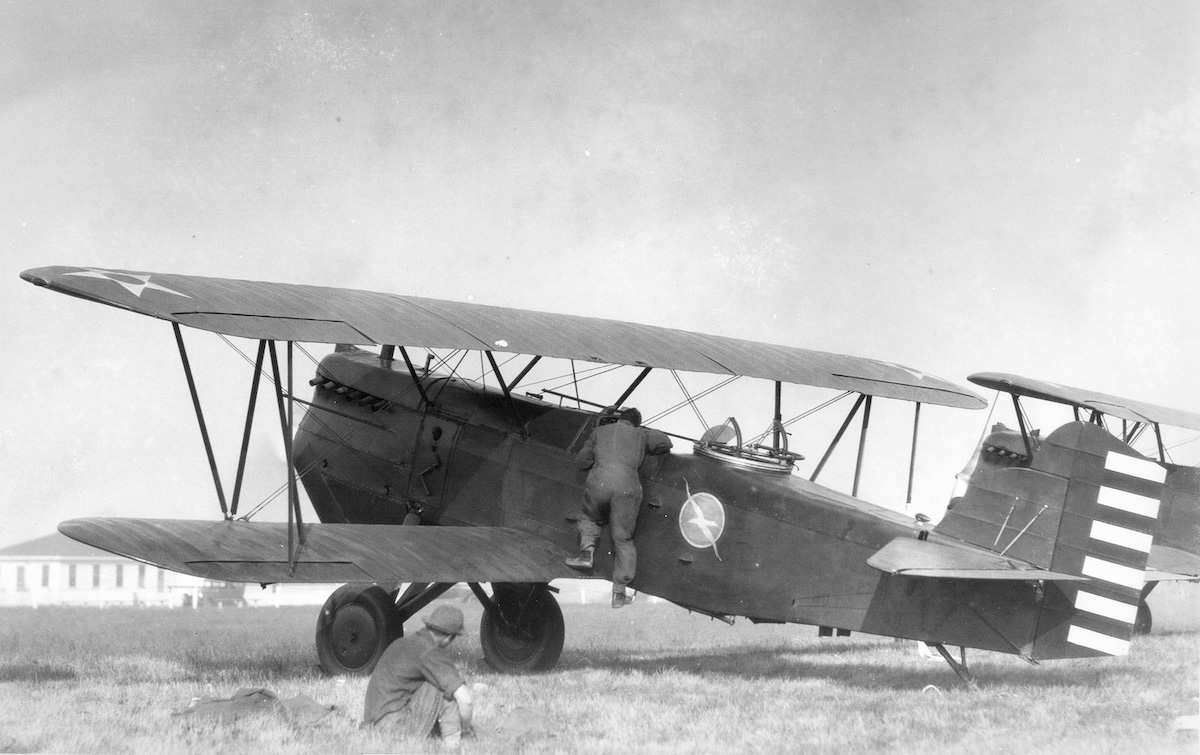
The United States Air Force's 101st Intelligence Squadron (101 IS), Massachusetts Air National Guard, is an intelligence unit assigned to the 102nd Intelligence Wing and located at Otis Air National Guard Base, Massachusetts. From its creation in 1921 to its mission change in 2008, the 101st was the mainstay of aerospace defence for the Northeastern United States. The 101st was deployed during the Berlin Crisis to France and was also deployed to Panama during Operation Coronet Nighthawk. It also participated in Operation Northern Watch. During the September 11 attacks, the 101st was the first Air Force unit to send aircraft toward New York City, but they arrived too late to help stop the attacks.
Base downsizing through the Base Realignment and Closure (BRAC) process removed the wing's F-15C Eagles beginning in 2007, leaving the 101st with an intelligence gathering mission that will be fully active starting in 2010. It is one of three Air National Guard wings that works with the Air Force Intelligence, Surveillance and Reconnaissance Agency.
The squadron has its origins at Kelly Field, Texas, being organized as the 101st Aero Squadron on 22 August 1918. The personnel were composed of new recruits from various Recruit Barracks, including Fort McDowell, Vancouver Barracks, Fort Sam Houston, Columbus Barracks, Fort Williams, Fort Warren and Fort Oglethorpe.
During September 1917, it was found necessary to transfer many of its men. Altogether, 113 men were transferred out and 32 transferred in, leaving the squadron well below its authorized strength. In October, the squadron was again filled up to a required total of 150 recruits.
After basic indoctrination into the military, on 29 October, the squadron was ordered to overseas service, being ordered to report to the Aviation Concentration Center, Garden City, Long Island. Arrived at Camp Mills on 3 November. A wave of measles and mumps plagued the squadron, and it was placed in the Quarantine barracks for several weeks. It received orders to report to the Port of Entry, Philadelphia for immediate transport to France in mid-December 1917, sailing on the SS Northland on 4 December. It arrived in Liverpool, England on Christmas Day, after spending a week at Halifax, Nova Scotia, waiting to form up with a convoy for the cross-Atlantic voyage.
After a few days at a Rest Camp near Winchester, England, the squadron moved to Le Havre, France and then traveled by train to the Replacement Concentration Center, AEF, St. Maixent Replacement Barracks, France, arriving on 1 January 1918. At St. Maixent, the 101st was re-organized according to the vocations of the men. As a consequence, many changes were made with transfers in and out of the squadron. It was designated as a Service Squadron, and assigned to the 3d Air Instructional Center (3d AIC), Issoudun Aerodrome. It was assigned to the main field initially, before being moved to Field Five to take up the duties of the Engineering department. Its primary duty became the repairing and maintaining the conditions of the planes used in the instructional classes, primarily French Nieuports.
The squadron remained at 3d AIC until after the Armistice with Germany in November 1918, then returned to the United States in early April 1918. Arrived at Michel Field where the squadron members were demobilized and returned to civilian life.
After World War I ended, there was a general interest in organizing aviation assets for the National Guard system. At the time, in the US force structure aircraft were organized into infantry units in a fashion similar to other weapons, like artillery. Guard units without their own aircraft units would need units from other forces to be sent to operate with them, a situation no-one thought was promising.
Hub AI
101st Intelligence Squadron AI simulator
(@101st Intelligence Squadron_simulator)
101st Intelligence Squadron
The United States Air Force's 101st Intelligence Squadron (101 IS), Massachusetts Air National Guard, is an intelligence unit assigned to the 102nd Intelligence Wing and located at Otis Air National Guard Base, Massachusetts. From its creation in 1921 to its mission change in 2008, the 101st was the mainstay of aerospace defence for the Northeastern United States. The 101st was deployed during the Berlin Crisis to France and was also deployed to Panama during Operation Coronet Nighthawk. It also participated in Operation Northern Watch. During the September 11 attacks, the 101st was the first Air Force unit to send aircraft toward New York City, but they arrived too late to help stop the attacks.
Base downsizing through the Base Realignment and Closure (BRAC) process removed the wing's F-15C Eagles beginning in 2007, leaving the 101st with an intelligence gathering mission that will be fully active starting in 2010. It is one of three Air National Guard wings that works with the Air Force Intelligence, Surveillance and Reconnaissance Agency.
The squadron has its origins at Kelly Field, Texas, being organized as the 101st Aero Squadron on 22 August 1918. The personnel were composed of new recruits from various Recruit Barracks, including Fort McDowell, Vancouver Barracks, Fort Sam Houston, Columbus Barracks, Fort Williams, Fort Warren and Fort Oglethorpe.
During September 1917, it was found necessary to transfer many of its men. Altogether, 113 men were transferred out and 32 transferred in, leaving the squadron well below its authorized strength. In October, the squadron was again filled up to a required total of 150 recruits.
After basic indoctrination into the military, on 29 October, the squadron was ordered to overseas service, being ordered to report to the Aviation Concentration Center, Garden City, Long Island. Arrived at Camp Mills on 3 November. A wave of measles and mumps plagued the squadron, and it was placed in the Quarantine barracks for several weeks. It received orders to report to the Port of Entry, Philadelphia for immediate transport to France in mid-December 1917, sailing on the SS Northland on 4 December. It arrived in Liverpool, England on Christmas Day, after spending a week at Halifax, Nova Scotia, waiting to form up with a convoy for the cross-Atlantic voyage.
After a few days at a Rest Camp near Winchester, England, the squadron moved to Le Havre, France and then traveled by train to the Replacement Concentration Center, AEF, St. Maixent Replacement Barracks, France, arriving on 1 January 1918. At St. Maixent, the 101st was re-organized according to the vocations of the men. As a consequence, many changes were made with transfers in and out of the squadron. It was designated as a Service Squadron, and assigned to the 3d Air Instructional Center (3d AIC), Issoudun Aerodrome. It was assigned to the main field initially, before being moved to Field Five to take up the duties of the Engineering department. Its primary duty became the repairing and maintaining the conditions of the planes used in the instructional classes, primarily French Nieuports.
The squadron remained at 3d AIC until after the Armistice with Germany in November 1918, then returned to the United States in early April 1918. Arrived at Michel Field where the squadron members were demobilized and returned to civilian life.
After World War I ended, there was a general interest in organizing aviation assets for the National Guard system. At the time, in the US force structure aircraft were organized into infantry units in a fashion similar to other weapons, like artillery. Guard units without their own aircraft units would need units from other forces to be sent to operate with them, a situation no-one thought was promising.
Recent media