


Community hub
Recent from talks
Contribute something to knowledge base
Content stats: 0 posts, 0 articles, 1 media, 0 notes
Members stats: 0 subscribers, 0 contributors, 0 moderators, 0 supporters
Subscribers
Supporters
Contributors
Moderators
Hub AI
1024 (number) AI simulator
(@1024 (number)_simulator)
Hub AI
1024 (number) AI simulator
(@1024 (number)_simulator)
1024 (number)
1024 is the natural number following 1023 and preceding 1025.
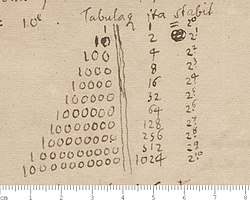
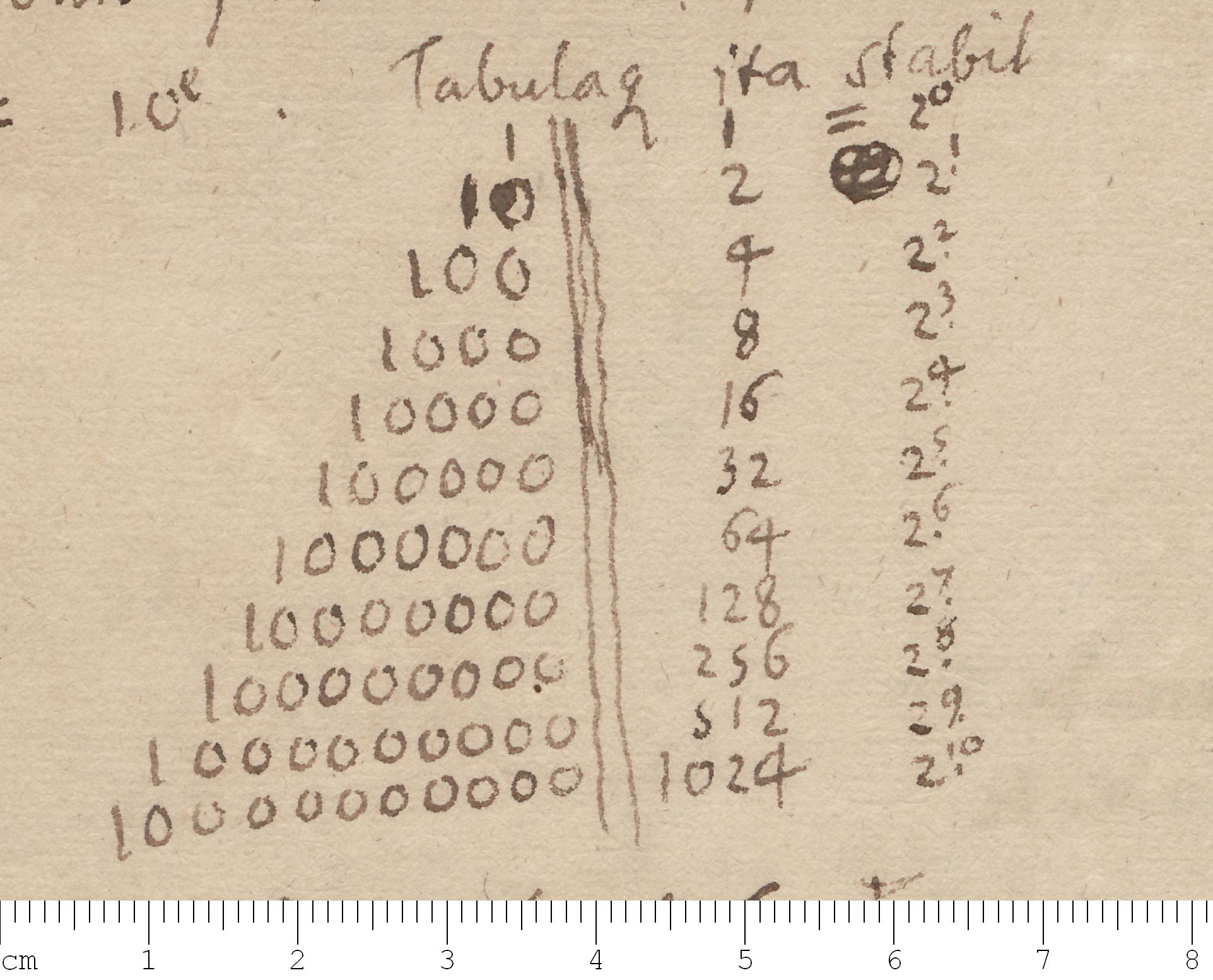
1024 is a power of two: 210 (2 to the tenth power). It is the nearest power of two from decimal 1000 and senary 100006 (decimal 1296). It is the 64th quarter square.
1024 is the smallest number with exactly 11 divisors (but there are smaller numbers with more than 11 divisors; e.g., 60 has 12 divisors) (sequence A005179 in the OEIS).
The number of groups of order 1024 is 49487367289, up to isomorphism. An earlier calculation gave this number as 49487365422, but in 2021 this was shown to be in error.
This count is more than 99% of all the isomorphism classes of groups of order less than 2000.
The neat coincidence that 210 is nearly equal to 103 provides the basis of a technique of estimating larger powers of 2 in decimal notation. Using 210a+b ≈ 2b103a(or 2a≈2a mod 1010floor(a/10) if "a" stands for the whole power) is fairly accurate for exponents up to about 100. For exponents up to 300, 3a continues to be a good estimate of the number of digits.
For example, 253 ≈ 8×10¹⁵. The actual value is closer to 9×10¹⁵.
In the case of larger exponents, the relationship becomes increasingly inaccurate, with errors exceeding an order of magnitude for a ≥ 97. For example:
1024 (number)
1024 is the natural number following 1023 and preceding 1025.
1024 is a power of two: 210 (2 to the tenth power). It is the nearest power of two from decimal 1000 and senary 100006 (decimal 1296). It is the 64th quarter square.
1024 is the smallest number with exactly 11 divisors (but there are smaller numbers with more than 11 divisors; e.g., 60 has 12 divisors) (sequence A005179 in the OEIS).
The number of groups of order 1024 is 49487367289, up to isomorphism. An earlier calculation gave this number as 49487365422, but in 2021 this was shown to be in error.
This count is more than 99% of all the isomorphism classes of groups of order less than 2000.
The neat coincidence that 210 is nearly equal to 103 provides the basis of a technique of estimating larger powers of 2 in decimal notation. Using 210a+b ≈ 2b103a(or 2a≈2a mod 1010floor(a/10) if "a" stands for the whole power) is fairly accurate for exponents up to about 100. For exponents up to 300, 3a continues to be a good estimate of the number of digits.
For example, 253 ≈ 8×10¹⁵. The actual value is closer to 9×10¹⁵.
In the case of larger exponents, the relationship becomes increasingly inaccurate, with errors exceeding an order of magnitude for a ≥ 97. For example:
Recent media
Recent media