
Recent from talks
1970s energy crisis
Knowledge base stats:
Talk channels stats:
Members stats:
1970s energy crisis
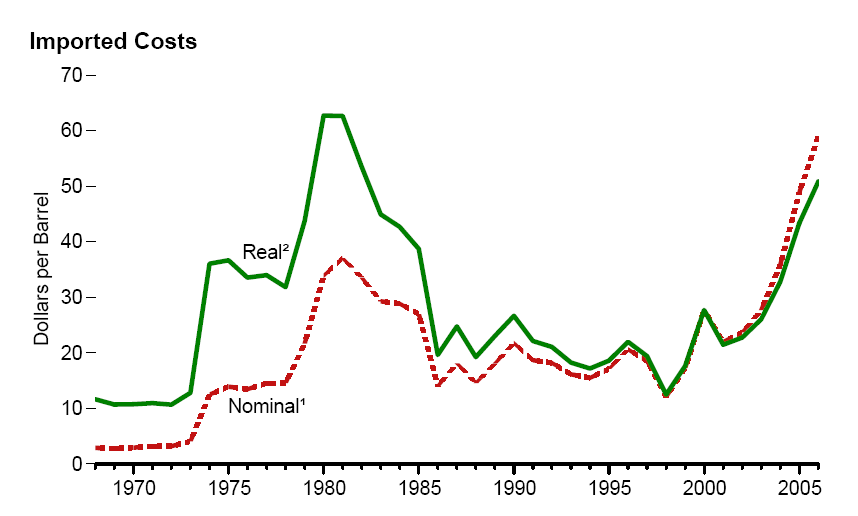
The 1970s energy crisis occurred when the Western world, particularly the United States, Canada, Western Europe, Australia, and New Zealand, faced substantial petroleum shortages as well as elevated prices. The two worst crises of this period were the 1973 oil crisis and the 1979 oil crisis, when, respectively, the Yom Kippur War and the Iranian Revolution triggered interruptions in Middle Eastern oil exports.
The crisis began to unfold as petroleum production in the United States and some other parts of the world peaked in the late 1960s and early 1970s. World oil production per capita began a long-term decline after 1979. The oil crises prompted the first shift towards energy-saving (in particular, fossil fuel-saving) technologies.
The major industrial centers of the world were forced to contend with escalating issues related to petroleum supply. Western countries relied on the resources of countries in the Middle East and other parts of the world. The crisis led to stagnant economic growth in many countries as oil prices surged. Although there were genuine concerns with supply, part of the run-up in prices resulted from the perception of a crisis. The combination of stagnant growth and price inflation during this era led to the coinage of the term stagflation. By the 1980s, both the recessions of the 1970s and adjustments in local economies to become more efficient in petroleum usage, controlled demand sufficiently for petroleum prices worldwide to return to more sustainable levels.
The period was not uniformly negative for all economies. Petroleum-rich countries in the Middle East benefited from increased prices and the slowing production in other areas of the world. Some other countries, such as Norway, Mexico, and Venezuela, benefited as well. In the United States, Texas and Alaska, as well as some other oil-producing areas, experienced major economic booms due to soaring oil prices even as most of the rest of the nation struggled with the stagnant economy. Many of these economic gains, however, came to a halt as prices stabilized and dropped in the 1980s.
Conflict between Arabs and Israelis in the Middle East has existed since Israel's declaration of independence in 1948, including a number of wars. The Suez Crisis, also known as the Second Arab–Israeli war, was sparked when Israel's southern port of Eilat was blocked by Egypt, which also nationalized the Suez Canal belonging to Anglo-French investors. One of the objectives of the invasion was the removal of President Gamal Abdel Nasser who was aligning with the Soviet Union.
The Six-Day War of 1967 included an Israeli invasion of the Egyptian Sinai Peninsula, which resulted in Egypt's closure of the Suez Canal for eight years. The canal was cleared in 1974 and opened again in 1975 after the 1973 Yom Kippur War, when Egypt tried to take back the Sinai. OAPEC countries cut production of oil and placed an embargo on oil exports to the United States after Richard Nixon requested $2.2 billion to support Israel in the war. Nevertheless, the embargo lasted only until January 1974, though the price of oil remained high afterwards.
The real price of petroleum was stable in the 1970 timeframe, but there had been a sharp increase in American imports, putting a strain on American balance of trade, alongside other developed nations. During the 1960s, petroleum production in some of the world's top producers with extraction technology at the time began to peak. West Germany reached its production peak in 1966, Venezuela and the United States in 1970, and Iran in 1974. Canada's conventional oil production peaked around this same time (though non-conventional production later helped revive Canadian production to some degree). The worldwide production per capita peaked soon afterward.
Although production in other parts of the world was increasing, the peaks in these regions began to put substantial upward pressure on world oil prices. Equally as important, control of the oil supply became an increasingly important problem as countries like West Germany and the U.S. became increasingly dependent on foreign suppliers for this key resource.
Hub AI
1970s energy crisis AI simulator
(@1970s energy crisis_simulator)
1970s energy crisis
The 1970s energy crisis occurred when the Western world, particularly the United States, Canada, Western Europe, Australia, and New Zealand, faced substantial petroleum shortages as well as elevated prices. The two worst crises of this period were the 1973 oil crisis and the 1979 oil crisis, when, respectively, the Yom Kippur War and the Iranian Revolution triggered interruptions in Middle Eastern oil exports.
The crisis began to unfold as petroleum production in the United States and some other parts of the world peaked in the late 1960s and early 1970s. World oil production per capita began a long-term decline after 1979. The oil crises prompted the first shift towards energy-saving (in particular, fossil fuel-saving) technologies.
The major industrial centers of the world were forced to contend with escalating issues related to petroleum supply. Western countries relied on the resources of countries in the Middle East and other parts of the world. The crisis led to stagnant economic growth in many countries as oil prices surged. Although there were genuine concerns with supply, part of the run-up in prices resulted from the perception of a crisis. The combination of stagnant growth and price inflation during this era led to the coinage of the term stagflation. By the 1980s, both the recessions of the 1970s and adjustments in local economies to become more efficient in petroleum usage, controlled demand sufficiently for petroleum prices worldwide to return to more sustainable levels.
The period was not uniformly negative for all economies. Petroleum-rich countries in the Middle East benefited from increased prices and the slowing production in other areas of the world. Some other countries, such as Norway, Mexico, and Venezuela, benefited as well. In the United States, Texas and Alaska, as well as some other oil-producing areas, experienced major economic booms due to soaring oil prices even as most of the rest of the nation struggled with the stagnant economy. Many of these economic gains, however, came to a halt as prices stabilized and dropped in the 1980s.
Conflict between Arabs and Israelis in the Middle East has existed since Israel's declaration of independence in 1948, including a number of wars. The Suez Crisis, also known as the Second Arab–Israeli war, was sparked when Israel's southern port of Eilat was blocked by Egypt, which also nationalized the Suez Canal belonging to Anglo-French investors. One of the objectives of the invasion was the removal of President Gamal Abdel Nasser who was aligning with the Soviet Union.
The Six-Day War of 1967 included an Israeli invasion of the Egyptian Sinai Peninsula, which resulted in Egypt's closure of the Suez Canal for eight years. The canal was cleared in 1974 and opened again in 1975 after the 1973 Yom Kippur War, when Egypt tried to take back the Sinai. OAPEC countries cut production of oil and placed an embargo on oil exports to the United States after Richard Nixon requested $2.2 billion to support Israel in the war. Nevertheless, the embargo lasted only until January 1974, though the price of oil remained high afterwards.
The real price of petroleum was stable in the 1970 timeframe, but there had been a sharp increase in American imports, putting a strain on American balance of trade, alongside other developed nations. During the 1960s, petroleum production in some of the world's top producers with extraction technology at the time began to peak. West Germany reached its production peak in 1966, Venezuela and the United States in 1970, and Iran in 1974. Canada's conventional oil production peaked around this same time (though non-conventional production later helped revive Canadian production to some degree). The worldwide production per capita peaked soon afterward.
Although production in other parts of the world was increasing, the peaks in these regions began to put substantial upward pressure on world oil prices. Equally as important, control of the oil supply became an increasingly important problem as countries like West Germany and the U.S. became increasingly dependent on foreign suppliers for this key resource.
Recent media