
Recent from talks
1995 Brazilian Grand Prix
Knowledge base stats:
Talk channels stats:
Members stats:
1995 Brazilian Grand Prix
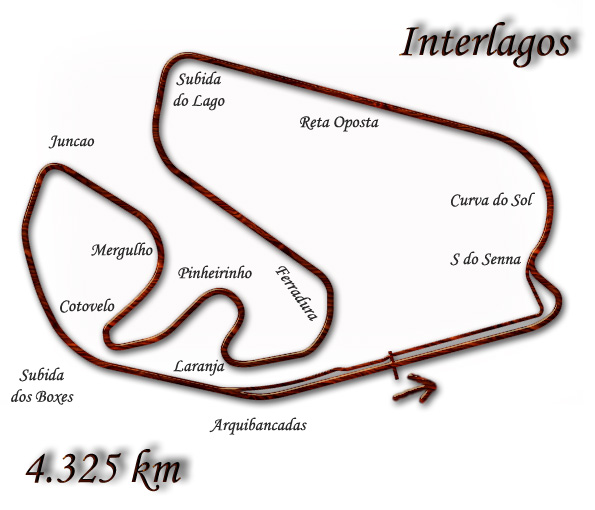
The 1995 Brazilian Grand Prix (formally the XXIV Grande Prêmio do Brasil) was a Formula One motor race held on 26 March 1995 at the Autódromo José Carlos Pace, São Paulo, Brazil. It was the first round of the 1995 Formula One World Championship. Michael Schumacher of the Benetton team won the 71-lap race from second position. David Coulthard finished second in a Williams car, with Gerhard Berger third in a Ferrari. Damon Hill, who started the race from pole position, spun out while leading on lap 30 with an apparent gearbox problem, which was later found to be a suspension failure. Schumacher's win came despite Benetton encountering steering problems with his car during Friday practice, leading to him crashing heavily and necessitating steering component changes for the rest of the event. Despite Schumacher's victory, Hill proved to be faster during the race and seemed to be on course for a comfortable victory before his sudden retirement.
Other notable performances came from Berger, who took the final podium position despite being delayed during one of his routine pit stops due to a problem with a loose wheel nut, from Mika Häkkinen, who finished fourth for the McLaren team despite its new car proving to be uncompetitive in pre-season testing, and from Mika Salo, who drove strongly in the first half of the race to run third in his first Grand Prix for the Tyrrell team, only to suffer from a cramp and drop back to seventh place at the finish. Behind Häkkinen, the other points-scoring finishers were Jean Alesi in the second Ferrari and Mark Blundell, who drove the second McLaren. Blundell was standing in for regular driver Nigel Mansell in the second McLaren until the team could produce a wider chassis in which to accommodate him, as the car's initial cockpit design had proved to be too narrow for him to drive comfortably.
Several hours after the conclusion of the race, Schumacher and Coulthard were excluded from the race result as the chemical "fingerprint" of fuel samples from their cars taken after qualifying and the race did not match the specified sample lodged with the Fédération Internationale de l'Automobile (FIA) prior to the event. Berger was thus declared the winner, but the race stewards' decision to exclude them was overturned at an appeal hearing on April 13. Schumacher and Coulthard were reinstated in first and second places respectively, but the two teams did not receive their respective constructors' points. The Ferrari team was unhappy with the decision made at the appeal hearing; Berger called the sport "a joke". The rule concerning the legality of fuels had been changed for the 1995 season, as had the new standardised equipment used for refuelling during the race, the drivers' weighing-in procedure and the conditions of the drivers' racing licences; all of these changes produced controversies which at times threatened to overshadow the race, as did the excessively bumpy condition of the track. The race also marked the first Brazilian Grand Prix to take place since the death of Brazilian triple World Champion Ayrton Senna the previous year; his death was commemorated in various ways throughout the event.
The race was the first round of the 1995 Formula One World Championship after a four month break since the last race of the 1994 season in Australia. Over the winter months, the Autódromo José Carlos Pace race track was resurfaced in an attempt to reduce its bumpiness. The drivers were unhappy with the resurfacing work, though, as the track became more bumpy than in the previous year. Williams driver David Coulthard described the track as "bumpy as hell, quite unbelievable". He was also concerned about his stamina for the duration of the 71-lap race, as he had suffered from a bout of tonsillitis in the run-up to the event which had disrupted his physical training. Local Jordan driver Rubens Barrichello was even more vocal in his criticism of the track's condition, declaring that the circuit organisers were "a bunch of idiots. The track is three times bumpier than before. It is not by applying layer upon layer of tarmac that they will improve matters." Heinz-Harald Frentzen claimed that the bumping was so bad that he was close to passing out; the Sauber car handled badly over the bumps throughout the weekend.
The race marked the first Brazilian Grand Prix to be held since the death of three-time champion Ayrton Senna the previous year in a racing accident at the 1994 San Marino Grand Prix. As such, various tributes were paid to him throughout the weekend, including a parade lap on the back of a truck with all the drivers waving Brazilian flags; a display from the Brazilian Air Force which resulted in a large "S" trail in the sky; and the renaming of a local highway to Rodovia Ayrton Senna. The São Paulo city authorities had planned to rename the circuit after Senna, but the family of Carlos Pace, the existing dedicatee, objected. Barrichello also sported a special helmet design as a personal tribute to his compatriot. As a result of Senna's death, the event was lower-key than in recent years: fewer spectators turned out to watch practice and qualifying, but the race itself was watched by a capacity crowd.
The threat of a drivers' boycott over the terms of their 1995 FIA Super Licences, which allowed the FIA to demand promotional appearances and forbade the drivers from criticising the championship, was defused by the governing body prior to the race, ensuring full driver participation in the championship. Although the Super License issue was resolved with 14 teams and 28 drivers on the official 1995 entry list, the Larrousse team with drivers Éric Bernard and Christophe Bouchut did not make an appearance at the circuit for any of the on-track sessions. This was due to the team running short of money: in the period prior to the event, with French government aid not forthcoming and a 1995 chassis not yet built, team owner Gérard Larrousse elected to miss the first two rounds of the season in the hope of competing from the San Marino Grand Prix onwards.
The construction of some of the cars was only just completed prior to the beginning of the season; the Footwork FA16 and Simtek S951 chassis arrived at the event with virtually no testing, having been completed shortly beforehand. Of the initial 1995 drivers, Pedro Diniz was the only "complete" rookie, having not been officially entered in any other Formula One race meetings, while Andrea Montermini started his first race after failing to qualify for the 1994 Spanish Grand Prix due to injury. Mika Salo and Domenico Schiattarella had competed in two races, with Taki Inoue competing in one race the previous season.
At the front of the field, Michael Schumacher and Damon Hill in the Benetton and Williams cars respectively were the favourites to battle for the Drivers' Championship, with Schumacher anticipating a "struggle" for the championship. Bernard Dudot, Renault Sport's Chief Engineer, said that he believed Benetton was less well-prepared than Williams, as the former team had changed its engine supplier to Renault, whereas Williams had been in partnership with the company since 1989. Hill arrived at the event with the psychological advantage of having set the fastest time at the final pre-season testing session at the Autódromo do Estoril, 0.35 seconds faster than Schumacher's best around the circuit. The Williams team had also completed 2,500 miles of testing with its FW17 chassis, significantly more than Benetton; the team had encountered some reliability problems with its own B195 chassis.
Hub AI
1995 Brazilian Grand Prix AI simulator
(@1995 Brazilian Grand Prix_simulator)
1995 Brazilian Grand Prix
The 1995 Brazilian Grand Prix (formally the XXIV Grande Prêmio do Brasil) was a Formula One motor race held on 26 March 1995 at the Autódromo José Carlos Pace, São Paulo, Brazil. It was the first round of the 1995 Formula One World Championship. Michael Schumacher of the Benetton team won the 71-lap race from second position. David Coulthard finished second in a Williams car, with Gerhard Berger third in a Ferrari. Damon Hill, who started the race from pole position, spun out while leading on lap 30 with an apparent gearbox problem, which was later found to be a suspension failure. Schumacher's win came despite Benetton encountering steering problems with his car during Friday practice, leading to him crashing heavily and necessitating steering component changes for the rest of the event. Despite Schumacher's victory, Hill proved to be faster during the race and seemed to be on course for a comfortable victory before his sudden retirement.
Other notable performances came from Berger, who took the final podium position despite being delayed during one of his routine pit stops due to a problem with a loose wheel nut, from Mika Häkkinen, who finished fourth for the McLaren team despite its new car proving to be uncompetitive in pre-season testing, and from Mika Salo, who drove strongly in the first half of the race to run third in his first Grand Prix for the Tyrrell team, only to suffer from a cramp and drop back to seventh place at the finish. Behind Häkkinen, the other points-scoring finishers were Jean Alesi in the second Ferrari and Mark Blundell, who drove the second McLaren. Blundell was standing in for regular driver Nigel Mansell in the second McLaren until the team could produce a wider chassis in which to accommodate him, as the car's initial cockpit design had proved to be too narrow for him to drive comfortably.
Several hours after the conclusion of the race, Schumacher and Coulthard were excluded from the race result as the chemical "fingerprint" of fuel samples from their cars taken after qualifying and the race did not match the specified sample lodged with the Fédération Internationale de l'Automobile (FIA) prior to the event. Berger was thus declared the winner, but the race stewards' decision to exclude them was overturned at an appeal hearing on April 13. Schumacher and Coulthard were reinstated in first and second places respectively, but the two teams did not receive their respective constructors' points. The Ferrari team was unhappy with the decision made at the appeal hearing; Berger called the sport "a joke". The rule concerning the legality of fuels had been changed for the 1995 season, as had the new standardised equipment used for refuelling during the race, the drivers' weighing-in procedure and the conditions of the drivers' racing licences; all of these changes produced controversies which at times threatened to overshadow the race, as did the excessively bumpy condition of the track. The race also marked the first Brazilian Grand Prix to take place since the death of Brazilian triple World Champion Ayrton Senna the previous year; his death was commemorated in various ways throughout the event.
The race was the first round of the 1995 Formula One World Championship after a four month break since the last race of the 1994 season in Australia. Over the winter months, the Autódromo José Carlos Pace race track was resurfaced in an attempt to reduce its bumpiness. The drivers were unhappy with the resurfacing work, though, as the track became more bumpy than in the previous year. Williams driver David Coulthard described the track as "bumpy as hell, quite unbelievable". He was also concerned about his stamina for the duration of the 71-lap race, as he had suffered from a bout of tonsillitis in the run-up to the event which had disrupted his physical training. Local Jordan driver Rubens Barrichello was even more vocal in his criticism of the track's condition, declaring that the circuit organisers were "a bunch of idiots. The track is three times bumpier than before. It is not by applying layer upon layer of tarmac that they will improve matters." Heinz-Harald Frentzen claimed that the bumping was so bad that he was close to passing out; the Sauber car handled badly over the bumps throughout the weekend.
The race marked the first Brazilian Grand Prix to be held since the death of three-time champion Ayrton Senna the previous year in a racing accident at the 1994 San Marino Grand Prix. As such, various tributes were paid to him throughout the weekend, including a parade lap on the back of a truck with all the drivers waving Brazilian flags; a display from the Brazilian Air Force which resulted in a large "S" trail in the sky; and the renaming of a local highway to Rodovia Ayrton Senna. The São Paulo city authorities had planned to rename the circuit after Senna, but the family of Carlos Pace, the existing dedicatee, objected. Barrichello also sported a special helmet design as a personal tribute to his compatriot. As a result of Senna's death, the event was lower-key than in recent years: fewer spectators turned out to watch practice and qualifying, but the race itself was watched by a capacity crowd.
The threat of a drivers' boycott over the terms of their 1995 FIA Super Licences, which allowed the FIA to demand promotional appearances and forbade the drivers from criticising the championship, was defused by the governing body prior to the race, ensuring full driver participation in the championship. Although the Super License issue was resolved with 14 teams and 28 drivers on the official 1995 entry list, the Larrousse team with drivers Éric Bernard and Christophe Bouchut did not make an appearance at the circuit for any of the on-track sessions. This was due to the team running short of money: in the period prior to the event, with French government aid not forthcoming and a 1995 chassis not yet built, team owner Gérard Larrousse elected to miss the first two rounds of the season in the hope of competing from the San Marino Grand Prix onwards.
The construction of some of the cars was only just completed prior to the beginning of the season; the Footwork FA16 and Simtek S951 chassis arrived at the event with virtually no testing, having been completed shortly beforehand. Of the initial 1995 drivers, Pedro Diniz was the only "complete" rookie, having not been officially entered in any other Formula One race meetings, while Andrea Montermini started his first race after failing to qualify for the 1994 Spanish Grand Prix due to injury. Mika Salo and Domenico Schiattarella had competed in two races, with Taki Inoue competing in one race the previous season.
At the front of the field, Michael Schumacher and Damon Hill in the Benetton and Williams cars respectively were the favourites to battle for the Drivers' Championship, with Schumacher anticipating a "struggle" for the championship. Bernard Dudot, Renault Sport's Chief Engineer, said that he believed Benetton was less well-prepared than Williams, as the former team had changed its engine supplier to Renault, whereas Williams had been in partnership with the company since 1989. Hill arrived at the event with the psychological advantage of having set the fastest time at the final pre-season testing session at the Autódromo do Estoril, 0.35 seconds faster than Schumacher's best around the circuit. The Williams team had also completed 2,500 miles of testing with its FW17 chassis, significantly more than Benetton; the team had encountered some reliability problems with its own B195 chassis.
Recent media