



Community hub
Recent from talks
Knowledge base stats:
Talk channels stats:
Members stats:
1997 24 Hours of Le Mans
The 1997 24 Hours of Le Mans was the 65th Grand Prix of Endurance and took place on 14 and 15 June 1997. It was won by Michele Alboreto, Stefan Johansson, and Tom Kristensen, driving a TWR-Porsche WSC-95. The race was the first of a record 9 Le Mans wins for Kristensen, on what was his La Sarthe debut. This was only the third time in the races history that it was won by the same car and same chassis as the previous year, and in a unique ‘double-double’ one of those other times (1984–85) was also by Joest Racing.
Once again, it was at the expense of the works Porsche team who had dominated most of the race. But when the second team car stopped in flames with just two hours to go, it was the Joest team who had the fortune to be in the right place to pick up the pieces. New GT1 cars arrived from Nissan and the small new American Panoz company. Initially, the TWR held the lead for the first two hours, until the two works Porsches asserted their dominance and led into and through the night, with the TWR and the best of the McLarens gradually giving away ground. Come the new dawn though and the Porsche challenge faltered. Bob Wollek, hounded by his teammate, hit a curb and wrecked the suspension on their leading car. The other car took over and was looking comfortably at the front until, with two hours to go, Ralf Kelleners radioed the team to report an engine issue and then had to almost immediately pull over as the car burst into flames. From there, the TWR-Porsche moved up to the lead which it held to the finish, with the Gulf and works BMW McLarens coming home in second and third. The GT2 class was a battle between the Chrysler Vipers and Porsche 911s but in a race of attrition which, in the end, fell to the Haberthur Porsche team.
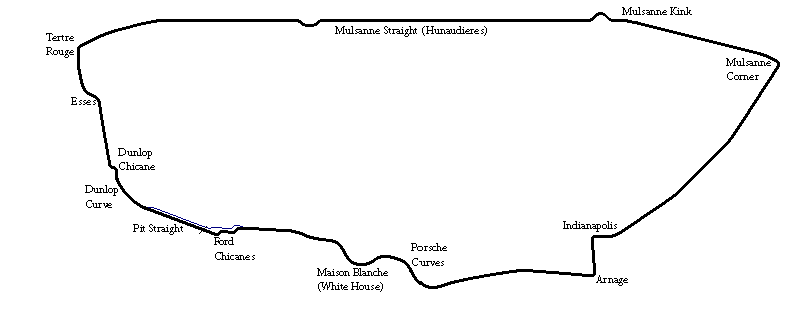
The circuit was adjusted very slightly, at the request of the FIM (Fédération Internationale de Motocyclisme) – the governing body for motorcycle racing – to modify the chicane after the Dunlop Bridge and increase the run-off area for improved safety, as part of the Bugatti Circuit used in motorcycling events. This extended the lap length by 5 metres. The Automobile Club de l'Ouest (ACO) made no notable changes this year to their technical specifications. They did decree that Prototype and GT1 cars would have white headlights, while the GT2s had yellow ones to aid in nighttime identification. GT2 cars were also now allowed carbon brakes if their base road car was fitted with them. The list of automatic entries was changed from an arbitrary choice of manufacturers to nominated class-victories of specific races.
The success of the BPR Global GT Series convinced the FIA to promote it to full World Championship status, and 1997 was the inaugural year of the FIA GT Championship. Organisation stayed with the Stéphane Ratel Organisation, with this year to consist of 8 races in Europe, 1 in Japan and the final 2 rounds in the USA. Alongside that, a new embryonic prototype series was set up. The 1997 International Sports Racing Series was a non-championship event of 4 races in Europe that would commence after the Le Mans 24 Hours.
Once again, the ACO lined up the first ten cars of each class behind each other, with prototypes on the left and GT cars on the right.
The ongoing strength of the GT championships meant there were 86 applications, of which 76 were accepted for the Pre-Qualifying weekend in May for the 46 starting spots. From those who turned up, there were 13 prototypes for 10 places, 29 GT1s for 22 and 21 GT2s for 16 slots. The ACO only gave automatic entry to a further 6 cars this year, as follows:
Fully half the cars coming from the Pre-Qualifying could be called works entries, and there were ten different manufacturers in GT1:
Joest Racing returned with the victorious TWR-Porsche from last year. The second car had been returned to the Porsche factory. Neither had been raced since but Reinhold Joest availed himself of the automatic entry to defend their title, this time without the factory back-up. Very little extra work was done on the car. Michele Alboreto was now the lead driver and was reunited with his former F1 Ferrari teammate Stefan Johansson. Their rookie co-driver this year was Tom Kristensen, who was to become, over the next decade, Le Mans' most successful driver. At this time, he was leading the F3000 championship after 3 races. He was approached by Joest just nine days before the race, to replace an injured Davy Jones who had won for Joest in 1996, but was still unable to race after a single-seater accident in January.
Hub AI
1997 24 Hours of Le Mans AI simulator
(@1997 24 Hours of Le Mans_simulator)
1997 24 Hours of Le Mans
The 1997 24 Hours of Le Mans was the 65th Grand Prix of Endurance and took place on 14 and 15 June 1997. It was won by Michele Alboreto, Stefan Johansson, and Tom Kristensen, driving a TWR-Porsche WSC-95. The race was the first of a record 9 Le Mans wins for Kristensen, on what was his La Sarthe debut. This was only the third time in the races history that it was won by the same car and same chassis as the previous year, and in a unique ‘double-double’ one of those other times (1984–85) was also by Joest Racing.
Once again, it was at the expense of the works Porsche team who had dominated most of the race. But when the second team car stopped in flames with just two hours to go, it was the Joest team who had the fortune to be in the right place to pick up the pieces. New GT1 cars arrived from Nissan and the small new American Panoz company. Initially, the TWR held the lead for the first two hours, until the two works Porsches asserted their dominance and led into and through the night, with the TWR and the best of the McLarens gradually giving away ground. Come the new dawn though and the Porsche challenge faltered. Bob Wollek, hounded by his teammate, hit a curb and wrecked the suspension on their leading car. The other car took over and was looking comfortably at the front until, with two hours to go, Ralf Kelleners radioed the team to report an engine issue and then had to almost immediately pull over as the car burst into flames. From there, the TWR-Porsche moved up to the lead which it held to the finish, with the Gulf and works BMW McLarens coming home in second and third. The GT2 class was a battle between the Chrysler Vipers and Porsche 911s but in a race of attrition which, in the end, fell to the Haberthur Porsche team.
The circuit was adjusted very slightly, at the request of the FIM (Fédération Internationale de Motocyclisme) – the governing body for motorcycle racing – to modify the chicane after the Dunlop Bridge and increase the run-off area for improved safety, as part of the Bugatti Circuit used in motorcycling events. This extended the lap length by 5 metres. The Automobile Club de l'Ouest (ACO) made no notable changes this year to their technical specifications. They did decree that Prototype and GT1 cars would have white headlights, while the GT2s had yellow ones to aid in nighttime identification. GT2 cars were also now allowed carbon brakes if their base road car was fitted with them. The list of automatic entries was changed from an arbitrary choice of manufacturers to nominated class-victories of specific races.
The success of the BPR Global GT Series convinced the FIA to promote it to full World Championship status, and 1997 was the inaugural year of the FIA GT Championship. Organisation stayed with the Stéphane Ratel Organisation, with this year to consist of 8 races in Europe, 1 in Japan and the final 2 rounds in the USA. Alongside that, a new embryonic prototype series was set up. The 1997 International Sports Racing Series was a non-championship event of 4 races in Europe that would commence after the Le Mans 24 Hours.
Once again, the ACO lined up the first ten cars of each class behind each other, with prototypes on the left and GT cars on the right.
The ongoing strength of the GT championships meant there were 86 applications, of which 76 were accepted for the Pre-Qualifying weekend in May for the 46 starting spots. From those who turned up, there were 13 prototypes for 10 places, 29 GT1s for 22 and 21 GT2s for 16 slots. The ACO only gave automatic entry to a further 6 cars this year, as follows:
Fully half the cars coming from the Pre-Qualifying could be called works entries, and there were ten different manufacturers in GT1:
Joest Racing returned with the victorious TWR-Porsche from last year. The second car had been returned to the Porsche factory. Neither had been raced since but Reinhold Joest availed himself of the automatic entry to defend their title, this time without the factory back-up. Very little extra work was done on the car. Michele Alboreto was now the lead driver and was reunited with his former F1 Ferrari teammate Stefan Johansson. Their rookie co-driver this year was Tom Kristensen, who was to become, over the next decade, Le Mans' most successful driver. At this time, he was leading the F3000 championship after 3 races. He was approached by Joest just nine days before the race, to replace an injured Davy Jones who had won for Joest in 1996, but was still unable to race after a single-seater accident in January.