
Recent from talks
1997 Stanley Cup playoffs
Knowledge base stats:
Talk channels stats:
Members stats:
1997 Stanley Cup playoffs
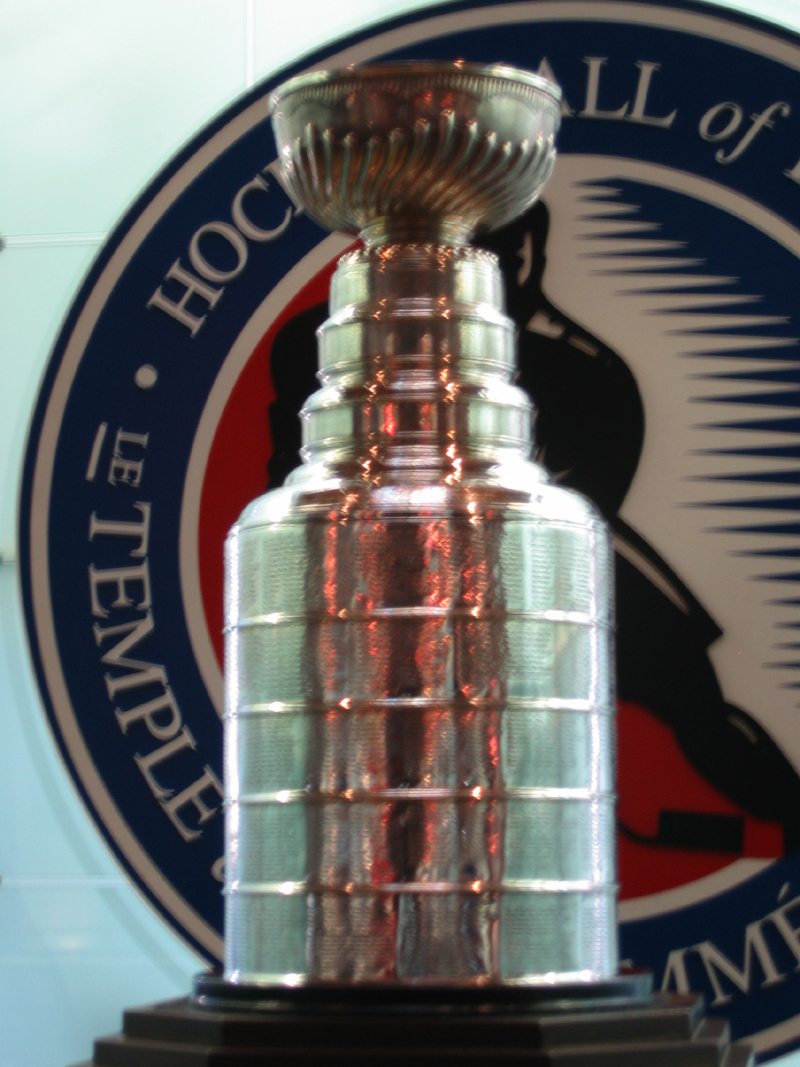
The 1997 Stanley Cup playoffs, the playoff tournament of the National Hockey League (NHL), began on April 16, 1997, following the completion of the 1996–97 NHL season. The sixteen teams that qualified, eight from each conference, played best-of-seven series for conference quarterfinals, semifinals and championships, and then the conference champions played a best-of-seven series for the Stanley Cup.
The playoffs ended on June 7, with the Detroit Red Wings defeating the Philadelphia Flyers in a four-game sweep to win their eighth Stanley Cup championship in their history, and their first in 42 years. Red Wings goaltender Mike Vernon was awarded the Conn Smythe Trophy as the playoff's Most Valuable Player. This was the only time Ray Bourque missed the playoffs in his career. His team, the Boston Bruins, missed the playoffs for the first time since 1967, ending their 29-year consecutive playoffs appearances record. The longest active appearance streak moved to the Chicago Blackhawks at 28 consecutive seasons.
The top eight teams in each conference qualified for the playoffs. The top two seeds in each conference were awarded to the division winners; while the six remaining spots were awarded to the highest finishers in their respective conferences.
The following teams qualified for the playoffs:
In each round, teams competed in a best-of-seven series, following a 2–2–1–1–1 format (scores in the bracket indicate the number of games won in each best-of-seven series). The team with home ice advantage played at home for games one and two (and games five and seven, if necessary), and the other team played at home for games three and four (and game six, if necessary). For any series played between Central and Pacific Division teams, the team with home ice advantage had the option of using a 2–3–2 format to reduce travel, with the sites for games five and six switched; if the 2–3–2 format was chosen, the team with home ice advantage then had the additional option to start the series on the road instead of at home. The top eight teams in each conference made the playoffs, with the two division winners seeded 1–2 based on regular season record, and the six remaining teams seeded 3–8.
The NHL used "re-seeding" instead of a fixed bracket playoff system. During the first three rounds, the highest remaining seed in each conference was matched against the lowest remaining seed, the second-highest remaining seed played the second-lowest remaining seed, and so forth. The higher-seeded team was awarded home ice advantage. The two conference winners then advanced to the Stanley Cup Final, where home ice advantage was awarded to the team that had the better regular season record.
This was the first playoff meeting between these two teams.
Martin Brodeur became the fourth goaltender in league history to score a goal in game one, marking the second time in NHL history that a goaltender had scored a goal in the Stanley Cup playoffs, and the fifth time overall.
Hub AI
1997 Stanley Cup playoffs AI simulator
(@1997 Stanley Cup playoffs_simulator)
1997 Stanley Cup playoffs
The 1997 Stanley Cup playoffs, the playoff tournament of the National Hockey League (NHL), began on April 16, 1997, following the completion of the 1996–97 NHL season. The sixteen teams that qualified, eight from each conference, played best-of-seven series for conference quarterfinals, semifinals and championships, and then the conference champions played a best-of-seven series for the Stanley Cup.
The playoffs ended on June 7, with the Detroit Red Wings defeating the Philadelphia Flyers in a four-game sweep to win their eighth Stanley Cup championship in their history, and their first in 42 years. Red Wings goaltender Mike Vernon was awarded the Conn Smythe Trophy as the playoff's Most Valuable Player. This was the only time Ray Bourque missed the playoffs in his career. His team, the Boston Bruins, missed the playoffs for the first time since 1967, ending their 29-year consecutive playoffs appearances record. The longest active appearance streak moved to the Chicago Blackhawks at 28 consecutive seasons.
The top eight teams in each conference qualified for the playoffs. The top two seeds in each conference were awarded to the division winners; while the six remaining spots were awarded to the highest finishers in their respective conferences.
The following teams qualified for the playoffs:
In each round, teams competed in a best-of-seven series, following a 2–2–1–1–1 format (scores in the bracket indicate the number of games won in each best-of-seven series). The team with home ice advantage played at home for games one and two (and games five and seven, if necessary), and the other team played at home for games three and four (and game six, if necessary). For any series played between Central and Pacific Division teams, the team with home ice advantage had the option of using a 2–3–2 format to reduce travel, with the sites for games five and six switched; if the 2–3–2 format was chosen, the team with home ice advantage then had the additional option to start the series on the road instead of at home. The top eight teams in each conference made the playoffs, with the two division winners seeded 1–2 based on regular season record, and the six remaining teams seeded 3–8.
The NHL used "re-seeding" instead of a fixed bracket playoff system. During the first three rounds, the highest remaining seed in each conference was matched against the lowest remaining seed, the second-highest remaining seed played the second-lowest remaining seed, and so forth. The higher-seeded team was awarded home ice advantage. The two conference winners then advanced to the Stanley Cup Final, where home ice advantage was awarded to the team that had the better regular season record.
This was the first playoff meeting between these two teams.
Martin Brodeur became the fourth goaltender in league history to score a goal in game one, marking the second time in NHL history that a goaltender had scored a goal in the Stanley Cup playoffs, and the fifth time overall.
Recent media