



Community hub
Recent from talks
Knowledge base stats:
Talk channels stats:
Members stats:
2008 IndyCar Series
The 2008 IndyCar Series was the 13th season of the IndyCar Series. It was the 97th recognized season of top-level American open wheel racing. It began on March 29, 2008, and ended on September 7 after 17 point-scoring races, plus a non-championship event on October 26.
The season was historically significant, as IndyCar became the single major open wheel racing series in the United States. After 12 years of direct competition, the managements of Indy Racing League and Champ Car announced an agreement to become a single entity in February, which led to the cancellation of the 2008 Champ Car World Series. A number of teams, drivers and race events joined the series, bolstering numbers and signaling a new era for open wheel racing in the United States after years of sporting and financial hardship.
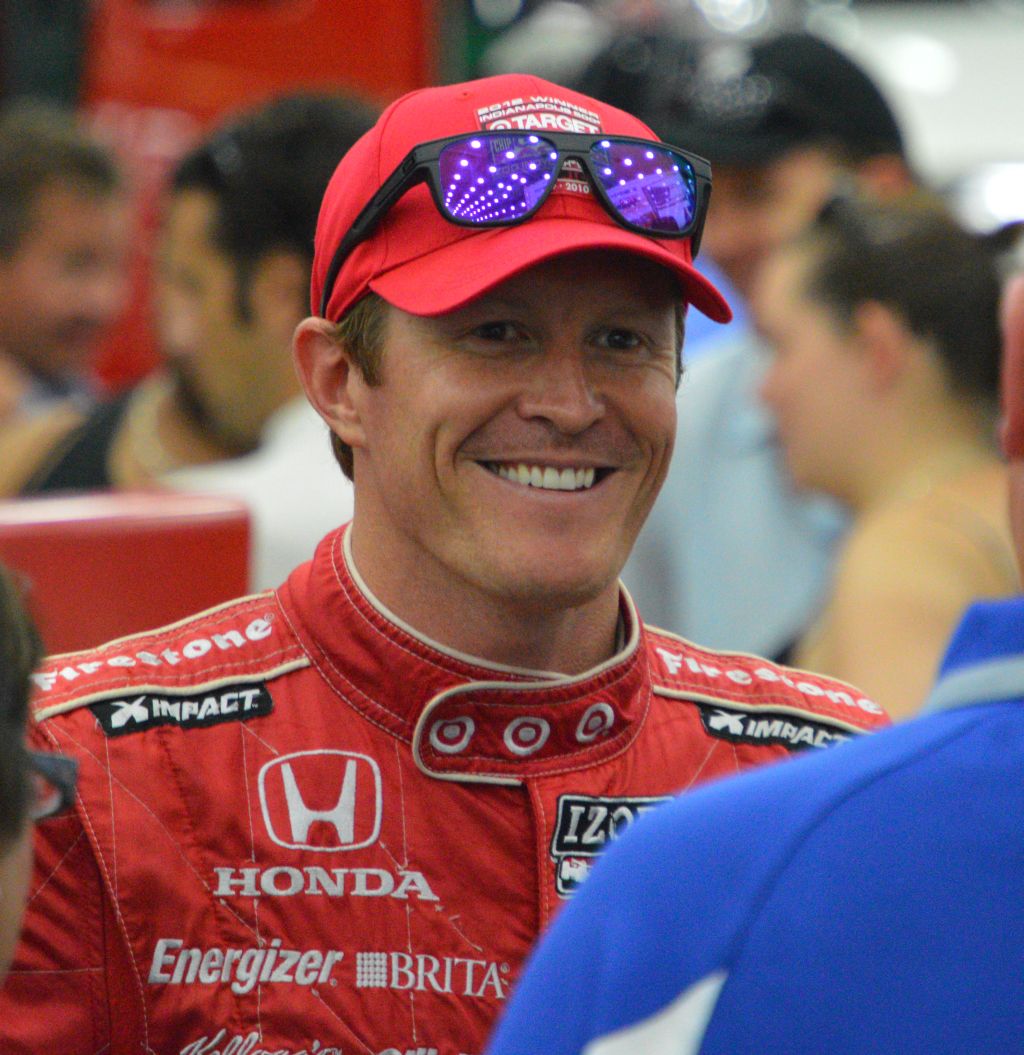
Scott Dixon, driving for Chip Ganassi Racing, achieved his second championship and the first 'unified' title by winning six races, including his first victory at the Indianapolis 500, becoming the third driver in a row to complete the IndyCar–Indy 500 double in the same season. Hideki Mutoh, driving for Andretti Green Racing, won Rookie of the Year honors.
On January 23, 2008, Robin Miller reported that Tony George had offered to Champ Car management a proposal that included free cars and engine leases to Champ Car teams willing to run the entire 2008 IndyCar Series schedule in exchange for adding Champ Car's dates at Long Beach, Toronto, Edmonton, Mexico City, and Australia to the IndyCar Series schedule, effectively uniting American open wheel racing. The offer was initially made in November 2007. On February 10, 2008, Tony George, along with IRL representatives Terry Angstadt and Brian Barnhart, plus former Honda executive Robert Clarke, traveled to Japan to discuss moving the Indy Japan 300 at Twin Ring Motegi. Moving that race, or postponing it, would be required in order to accommodate the Long Beach Grand Prix, which was scheduled for the same weekend. Optimism following the meeting was high.
On February 19, 2008, Robin Miller reported on SPEED and Curt Cavin blogged on IndyStar.com that the managements of Indy Racing League and Champ Car had come to an agreement to become one entity. The move would effectively end a 12-year split and unite American Open Wheel racing. Meanwhile, Brian Barnhart announced that Tony George was negotiating the unification, and an inventory of available IndyCar chassis and equipment for the Champ Car teams was underway. On February 22, Cavin initially reported that no deal had been reached between the IRL and CCWS in a lengthy dinner meeting between George and CCWS president Kevin Kalkhoven the previous evening. Later in the day, however, the unification agreement was finally announced by IndyCar, with final details being provided in a press conference on February 27.
The new unified series was centered around IndyCar Series' existing schedule, car and engine/tires suppliers, signifying the end of the Champ Car World Series as a stand-alone series. It was also the end for the Panoz DP01 after just one year of service, and for Cosworth as an engine supplier in Indy car racing. Under the offer of free cars and engines, plus technical assistance from existing IndyCar teams, six of the nine teams scheduled to compete in Champ Car were able to continue operations in the series. The unification agreement enjoyed massive support from both sides of the Split and other racing competitors, though some criticism was levied over the late timing for Champ Car teams, the costly and forced obsolescence of the Panoz DP01, the loss of many staple Champ Car events and the perceived masquerading of a 'takeover' by IndyCar as a 'merger' deal.
Prior to the unification, the bigger news surrounding IndyCar on the sporting side was the departure of its two most recent champions and Indianapolis 500 winners to the NASCAR Sprint Cup Series. Reigning champion Dario Franchitti and three-time champion Sam Hornish Jr. elected to race in the popular stock car circuit, following in the steps of other former open-wheel drivers such as Juan Pablo Montoya, Jacques Villeneuve, Patrick Carpentier, A. J. Allmendinger, Scott Speed and Max Papis. At the same time, four-time Champ Car champion Sébastien Bourdais had departed the rival series to join Formula 1, a year after Allmendinger went the NASCAR route that teammate Paul Tracy almost followed.
The field also lost Scott Sharp, the 1996 co-champion of the Indy Racing League, who departed the series after 12 seasons to drive in the American Le Mans Series after an acrimonious split with Rahal Letterman Racing. Franchitti, Hornish and Sharp combined for five championships, 46 wins and 36 pole positions during their open-wheel careers.
Hub AI
2008 IndyCar Series AI simulator
(@2008 IndyCar Series_simulator)
2008 IndyCar Series
The 2008 IndyCar Series was the 13th season of the IndyCar Series. It was the 97th recognized season of top-level American open wheel racing. It began on March 29, 2008, and ended on September 7 after 17 point-scoring races, plus a non-championship event on October 26.
The season was historically significant, as IndyCar became the single major open wheel racing series in the United States. After 12 years of direct competition, the managements of Indy Racing League and Champ Car announced an agreement to become a single entity in February, which led to the cancellation of the 2008 Champ Car World Series. A number of teams, drivers and race events joined the series, bolstering numbers and signaling a new era for open wheel racing in the United States after years of sporting and financial hardship.
Scott Dixon, driving for Chip Ganassi Racing, achieved his second championship and the first 'unified' title by winning six races, including his first victory at the Indianapolis 500, becoming the third driver in a row to complete the IndyCar–Indy 500 double in the same season. Hideki Mutoh, driving for Andretti Green Racing, won Rookie of the Year honors.
On January 23, 2008, Robin Miller reported that Tony George had offered to Champ Car management a proposal that included free cars and engine leases to Champ Car teams willing to run the entire 2008 IndyCar Series schedule in exchange for adding Champ Car's dates at Long Beach, Toronto, Edmonton, Mexico City, and Australia to the IndyCar Series schedule, effectively uniting American open wheel racing. The offer was initially made in November 2007. On February 10, 2008, Tony George, along with IRL representatives Terry Angstadt and Brian Barnhart, plus former Honda executive Robert Clarke, traveled to Japan to discuss moving the Indy Japan 300 at Twin Ring Motegi. Moving that race, or postponing it, would be required in order to accommodate the Long Beach Grand Prix, which was scheduled for the same weekend. Optimism following the meeting was high.
On February 19, 2008, Robin Miller reported on SPEED and Curt Cavin blogged on IndyStar.com that the managements of Indy Racing League and Champ Car had come to an agreement to become one entity. The move would effectively end a 12-year split and unite American Open Wheel racing. Meanwhile, Brian Barnhart announced that Tony George was negotiating the unification, and an inventory of available IndyCar chassis and equipment for the Champ Car teams was underway. On February 22, Cavin initially reported that no deal had been reached between the IRL and CCWS in a lengthy dinner meeting between George and CCWS president Kevin Kalkhoven the previous evening. Later in the day, however, the unification agreement was finally announced by IndyCar, with final details being provided in a press conference on February 27.
The new unified series was centered around IndyCar Series' existing schedule, car and engine/tires suppliers, signifying the end of the Champ Car World Series as a stand-alone series. It was also the end for the Panoz DP01 after just one year of service, and for Cosworth as an engine supplier in Indy car racing. Under the offer of free cars and engines, plus technical assistance from existing IndyCar teams, six of the nine teams scheduled to compete in Champ Car were able to continue operations in the series. The unification agreement enjoyed massive support from both sides of the Split and other racing competitors, though some criticism was levied over the late timing for Champ Car teams, the costly and forced obsolescence of the Panoz DP01, the loss of many staple Champ Car events and the perceived masquerading of a 'takeover' by IndyCar as a 'merger' deal.
Prior to the unification, the bigger news surrounding IndyCar on the sporting side was the departure of its two most recent champions and Indianapolis 500 winners to the NASCAR Sprint Cup Series. Reigning champion Dario Franchitti and three-time champion Sam Hornish Jr. elected to race in the popular stock car circuit, following in the steps of other former open-wheel drivers such as Juan Pablo Montoya, Jacques Villeneuve, Patrick Carpentier, A. J. Allmendinger, Scott Speed and Max Papis. At the same time, four-time Champ Car champion Sébastien Bourdais had departed the rival series to join Formula 1, a year after Allmendinger went the NASCAR route that teammate Paul Tracy almost followed.
The field also lost Scott Sharp, the 1996 co-champion of the Indy Racing League, who departed the series after 12 seasons to drive in the American Le Mans Series after an acrimonious split with Rahal Letterman Racing. Franchitti, Hornish and Sharp combined for five championships, 46 wins and 36 pole positions during their open-wheel careers.