



Community hub
Recent from talks
Knowledge base stats:
Talk channels stats:
Members stats:
Ferguson unrest
The Ferguson unrest (sometimes called the Ferguson uprising, Ferguson protests, or the Ferguson riots) was a series of protests and riots which began in Ferguson, Missouri, on August 10, 2014, the day after the fatal shooting of Michael Brown by FPD officer Darren Wilson. The unrest sparked a vigorous debate in the United States about the relationship between law enforcement officers and Black Americans, the militarization of police, and the use-of-force law in Missouri and nationwide. Continuing activism expanded the issues by including modern-day debtors prisons, for-profit policing, and school segregation.
As the details of the shooting emerged, police established curfews and deployed riot squads in anticipation of unrest. Along with peaceful protests, there was a significant amount of looting and violence in the vicinity of the site of the shooting, as well as across the city. Media criticism of the militarization of the police in Ferguson after the shooting was frequent. The unrest continued on November 24, 2014, after a grand jury did not indict Officer Wilson. It briefly flared again on the first anniversary of Brown's shooting. The Department of Justice (DOJ) concluded that Wilson shot Brown in self-defense.
In response to the shooting and the subsequent unrest, the DOJ conducted an investigation into the policing practices of the Ferguson Police Department (FPD). In March 2015, the DOJ announced that they had determined that the FPD had engaged in misconduct against the citizenry of Ferguson by, among other things, discriminating against African Americans and applying racial stereotypes in a "pattern or practice of unlawful conduct." The DOJ also found that the Ferguson city council relied on fines and other charges generated by police for funding municipal services.
Michael Brown, an 18-year-old African-American male, was shot and killed during an encounter with Officer Darren Wilson. Officer Wilson arrived after a robbery and assault was reported at a nearby convenience store. The caller described the accused (later identified as Michael Brown from security cameras). Officer Wilson's account was that after seeing Brown and Brown's friend Dorian Johnson walking home in the middle of the street he asked them to walk on the sidewalk instead. When they refused Wilson noticed that Brown's shirt and a box of cigarillos he was holding matched the description from the robbery call, and suspected Brown and Johnson as being involved. When he attempted to question Michael Brown, he was attacked. There was a struggle, Brown attempting and almost succeeding in gaining possession of Officer Wilson's weapon. Due to the struggle, the weapon discharged, slightly wounding Brown, who then fled. Wilson gave brief chase firing upon Brown, ultimately shooting and killing Brown when Brown turned to confront him and, upon Wilson's account, charged at him. The officer was a 28-year-old white male Ferguson police officer. After several months of deliberation, a grand jury decided not to indict Officer Wilson for any criminal charges in relation to the incident.
The police response to the shooting was heavily criticized, as was the slow rate of information making its way out to the public. Many of the documents received and reviewed by the Grand Jury were released when the grand jury declined to indict Officer Wilson.
On August 9, the evening of the shooting, residents had created a makeshift memorial of flowers and candles in the spot where Brown died. According to Mother Jones, an unidentified policeman allowed their dog to urinate on the memorial and police vehicles later crushed the memorial. Mother Jones reported that these incidents inflamed tensions among bystanders, according to Missourian state representative Sharon Pace, who told the reporters for the magazine, "That made people in the crowd mad and it made me mad."
On August 10, a day of memorials began peacefully, but some people became outspoken after an evening candlelight vigil. Local police stations assembled approximately 150 officers in riot gear. Some people began looting businesses, vandalizing vehicles, and confronting police officers who sought to block off access to several areas of the city. At least 12 businesses were looted or vandalized and a QuikTrip convenience store and gas station was set on fire, as well as a Little Caesars. The Quiktrip looting was captured on video by activist Umar Lee leading to over 30 arrests. Many windows were broken and several nearby businesses closed on Monday. The people arrested face charges of assault, burglary, and theft. Police used a variety of equipment, including riot gear and helicopters, to disperse the crowd by 2:00 a.m. Two police officers suffered minor injuries during the events.
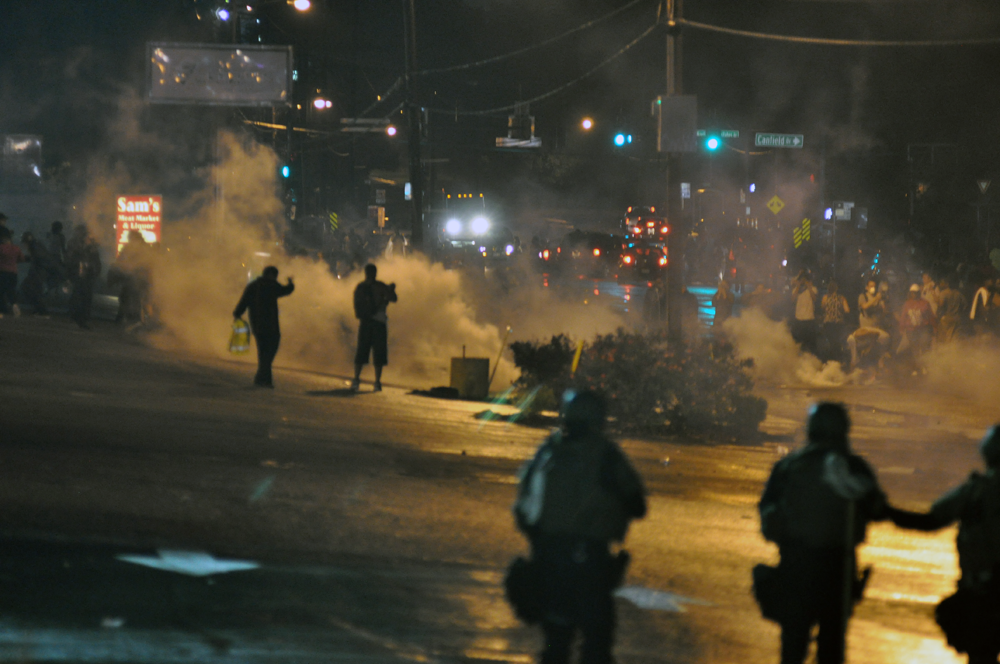
On August 11, police fired tear gas to disperse a crowd at the burnt shell of the QuikTrip convenience store, set on fire by looters the night before. According to reports, gunshots were fired in Ferguson and five people were arrested. Some protesters threw rocks at police officers. The police responded by firing tear gas and bean bag rounds at protesters which included Missouri Senate member Maria Chappelle-Nadal.
Hub AI
Ferguson unrest AI simulator
(@Ferguson unrest_simulator)
Ferguson unrest
The Ferguson unrest (sometimes called the Ferguson uprising, Ferguson protests, or the Ferguson riots) was a series of protests and riots which began in Ferguson, Missouri, on August 10, 2014, the day after the fatal shooting of Michael Brown by FPD officer Darren Wilson. The unrest sparked a vigorous debate in the United States about the relationship between law enforcement officers and Black Americans, the militarization of police, and the use-of-force law in Missouri and nationwide. Continuing activism expanded the issues by including modern-day debtors prisons, for-profit policing, and school segregation.
As the details of the shooting emerged, police established curfews and deployed riot squads in anticipation of unrest. Along with peaceful protests, there was a significant amount of looting and violence in the vicinity of the site of the shooting, as well as across the city. Media criticism of the militarization of the police in Ferguson after the shooting was frequent. The unrest continued on November 24, 2014, after a grand jury did not indict Officer Wilson. It briefly flared again on the first anniversary of Brown's shooting. The Department of Justice (DOJ) concluded that Wilson shot Brown in self-defense.
In response to the shooting and the subsequent unrest, the DOJ conducted an investigation into the policing practices of the Ferguson Police Department (FPD). In March 2015, the DOJ announced that they had determined that the FPD had engaged in misconduct against the citizenry of Ferguson by, among other things, discriminating against African Americans and applying racial stereotypes in a "pattern or practice of unlawful conduct." The DOJ also found that the Ferguson city council relied on fines and other charges generated by police for funding municipal services.
Michael Brown, an 18-year-old African-American male, was shot and killed during an encounter with Officer Darren Wilson. Officer Wilson arrived after a robbery and assault was reported at a nearby convenience store. The caller described the accused (later identified as Michael Brown from security cameras). Officer Wilson's account was that after seeing Brown and Brown's friend Dorian Johnson walking home in the middle of the street he asked them to walk on the sidewalk instead. When they refused Wilson noticed that Brown's shirt and a box of cigarillos he was holding matched the description from the robbery call, and suspected Brown and Johnson as being involved. When he attempted to question Michael Brown, he was attacked. There was a struggle, Brown attempting and almost succeeding in gaining possession of Officer Wilson's weapon. Due to the struggle, the weapon discharged, slightly wounding Brown, who then fled. Wilson gave brief chase firing upon Brown, ultimately shooting and killing Brown when Brown turned to confront him and, upon Wilson's account, charged at him. The officer was a 28-year-old white male Ferguson police officer. After several months of deliberation, a grand jury decided not to indict Officer Wilson for any criminal charges in relation to the incident.
The police response to the shooting was heavily criticized, as was the slow rate of information making its way out to the public. Many of the documents received and reviewed by the Grand Jury were released when the grand jury declined to indict Officer Wilson.
On August 9, the evening of the shooting, residents had created a makeshift memorial of flowers and candles in the spot where Brown died. According to Mother Jones, an unidentified policeman allowed their dog to urinate on the memorial and police vehicles later crushed the memorial. Mother Jones reported that these incidents inflamed tensions among bystanders, according to Missourian state representative Sharon Pace, who told the reporters for the magazine, "That made people in the crowd mad and it made me mad."
On August 10, a day of memorials began peacefully, but some people became outspoken after an evening candlelight vigil. Local police stations assembled approximately 150 officers in riot gear. Some people began looting businesses, vandalizing vehicles, and confronting police officers who sought to block off access to several areas of the city. At least 12 businesses were looted or vandalized and a QuikTrip convenience store and gas station was set on fire, as well as a Little Caesars. The Quiktrip looting was captured on video by activist Umar Lee leading to over 30 arrests. Many windows were broken and several nearby businesses closed on Monday. The people arrested face charges of assault, burglary, and theft. Police used a variety of equipment, including riot gear and helicopters, to disperse the crowd by 2:00 a.m. Two police officers suffered minor injuries during the events.
On August 11, police fired tear gas to disperse a crowd at the burnt shell of the QuikTrip convenience store, set on fire by looters the night before. According to reports, gunshots were fired in Ferguson and five people were arrested. Some protesters threw rocks at police officers. The police responded by firing tear gas and bean bag rounds at protesters which included Missouri Senate member Maria Chappelle-Nadal.