



Community hub
Recent from talks
Contribute something to knowledge base
Content stats: 0 posts, 0 articles, 1 media, 0 notes
Members stats: 0 subscribers, 0 contributors, 0 moderators, 0 supporters
Subscribers
Supporters
Contributors
Moderators
Hub AI
2020 Assam floods AI simulator
(@2020 Assam floods_simulator)
Hub AI
2020 Assam floods AI simulator
(@2020 Assam floods_simulator)
2020 Assam floods
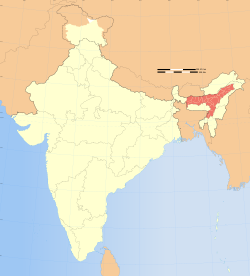
2020 Assam floods refers to the significant flood event of the Brahmaputra River in the Indian north-eastern state of Assam and coincided with the COVID-19 pandemic. Initial flooding started in May 2020 due to heavy rainfall affecting 30,000 and destroying crops across 5 districts. As of October 2020 the floods affected over five million people, claiming the lives of 123 people, with an additional 26 deaths due to landslides, 5474 villages were affected and over one hundred and fifty thousand people found refuge in relief camps.
Due to its tropical monsoon climate, the state of Assam is prone to annual flooding. While the monsoons are important for the largely agriculture dependent regional economy, they now cause annually recurring destruction of infrastructure, crops, livelihoods and loss of lives. Although annual precipitation is declining, daily rainfall data shows an increase in extreme rainfall events, leading to extreme flooding in Assam. Higher temporal and spatial variability of rainfall across the regions has been attributed to the impact of climate change.
During the 2020 monsoon season, particularly high rainfall was experienced across central, north, and northeast India, with 15 centimeters more rainfall than usual by the middle of July. The reason for the excess rainfall is attributed to Madden–Julian oscillation, thereby causing prolonged break-monsoon conditions which decreases the rainfall in North West India and increases it in North East India.
By 21 July, the meteorological subdivision of Assam and Meghalaya had received rainfall of 1,164mm as compared to normal rainfall of 894mm during the period, an excess of nearly 30%. The catchment areas of nearby states, Arunachal Pradesh and Sikkim also received excess rainfall nearly to the tune of 16% and 45% respectively aggravating the flood situation.
Into October 2020, although the situation began to improve with the number of people affected reduced to 135,000 the state was still affected by prolonged flooding, with 315 villages still submerged.
Flooding and subsequent landslides have caused damage to bridges, government buildings, roads, embankments and schools. The government has announced funding of 3.46 billion Indian Rupees ($42 million) for repairs and aid to the region. In addition to this aid, the central government, according to then Chief Minister Sarbananda Sonowal, has "committed to passing an ordinance to set up North East Water Management Authority, to address flood and erosion problems" with more permanent solutions as an attempt to stop future monsoon seasons from being so devastating.
Millions of people living in the flooded area rely on crops and livestock to provide for their families. The flooding began just before harvest and has caused destruction to more than 267,203 hectares of crops and more than 45,000 domesticated animals have been forced to flee or be abandoned.
Assam is home to important wildlife sanctuaries and World Heritage sites which have been damaged by the flooding. Pobitora Wildlife Sanctuary has India's highest population of rhinoceroses and at the height of the flooding 90% was impacted by flood waters. Kaziranga National Park has also been affected with more than 150 wild animals rescued and 125 animals, including 12 rhinoceros have died.
2020 Assam floods
2020 Assam floods refers to the significant flood event of the Brahmaputra River in the Indian north-eastern state of Assam and coincided with the COVID-19 pandemic. Initial flooding started in May 2020 due to heavy rainfall affecting 30,000 and destroying crops across 5 districts. As of October 2020 the floods affected over five million people, claiming the lives of 123 people, with an additional 26 deaths due to landslides, 5474 villages were affected and over one hundred and fifty thousand people found refuge in relief camps.
Due to its tropical monsoon climate, the state of Assam is prone to annual flooding. While the monsoons are important for the largely agriculture dependent regional economy, they now cause annually recurring destruction of infrastructure, crops, livelihoods and loss of lives. Although annual precipitation is declining, daily rainfall data shows an increase in extreme rainfall events, leading to extreme flooding in Assam. Higher temporal and spatial variability of rainfall across the regions has been attributed to the impact of climate change.
During the 2020 monsoon season, particularly high rainfall was experienced across central, north, and northeast India, with 15 centimeters more rainfall than usual by the middle of July. The reason for the excess rainfall is attributed to Madden–Julian oscillation, thereby causing prolonged break-monsoon conditions which decreases the rainfall in North West India and increases it in North East India.
By 21 July, the meteorological subdivision of Assam and Meghalaya had received rainfall of 1,164mm as compared to normal rainfall of 894mm during the period, an excess of nearly 30%. The catchment areas of nearby states, Arunachal Pradesh and Sikkim also received excess rainfall nearly to the tune of 16% and 45% respectively aggravating the flood situation.
Into October 2020, although the situation began to improve with the number of people affected reduced to 135,000 the state was still affected by prolonged flooding, with 315 villages still submerged.
Flooding and subsequent landslides have caused damage to bridges, government buildings, roads, embankments and schools. The government has announced funding of 3.46 billion Indian Rupees ($42 million) for repairs and aid to the region. In addition to this aid, the central government, according to then Chief Minister Sarbananda Sonowal, has "committed to passing an ordinance to set up North East Water Management Authority, to address flood and erosion problems" with more permanent solutions as an attempt to stop future monsoon seasons from being so devastating.
Millions of people living in the flooded area rely on crops and livestock to provide for their families. The flooding began just before harvest and has caused destruction to more than 267,203 hectares of crops and more than 45,000 domesticated animals have been forced to flee or be abandoned.
Assam is home to important wildlife sanctuaries and World Heritage sites which have been damaged by the flooding. Pobitora Wildlife Sanctuary has India's highest population of rhinoceroses and at the height of the flooding 90% was impacted by flood waters. Kaziranga National Park has also been affected with more than 150 wild animals rescued and 125 animals, including 12 rhinoceros have died.
Recent media
Recent media