



Community hub
Recent from talks
Knowledge base stats:
Talk channels stats:
Members stats:
24-pounder long gun
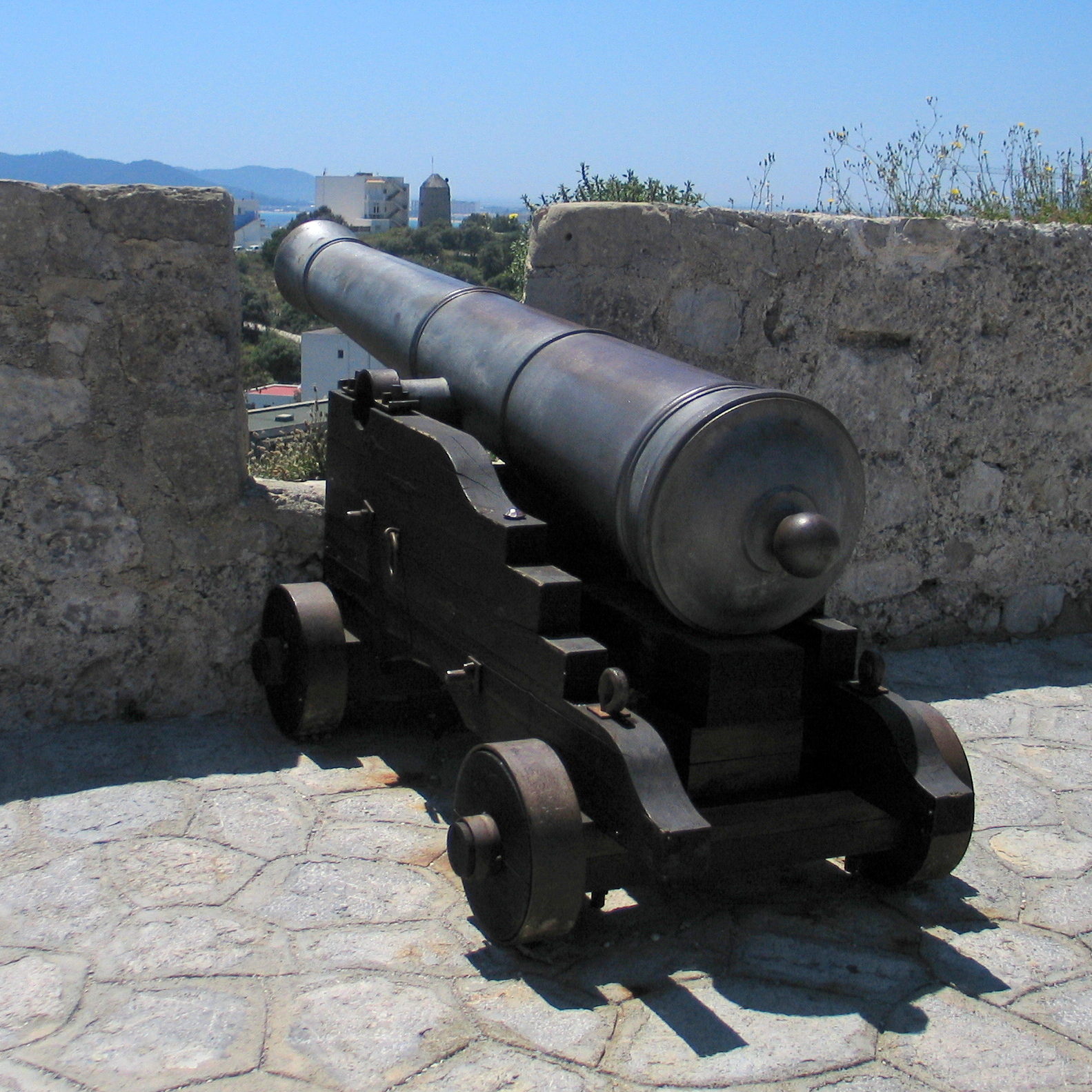
The 24-pounder long gun was a heavy calibre piece of artillery mounted on warships of the Age of Sail. 24-pounders were in service in the navies of France, Spain, Great Britain, the Netherlands, Sweden, and the United States. They were comparable to the Canon de 24 Gribeauval used by the French Army as its largest piece of siege artillery. 24-pounders were used as main guns on the heaviest frigates of the early 19th century and on fourth-rate ships of the line, on the second deck of first-rate ships of the line, and on the second deck of a few large third-rates.
The 24-pounder calibre was consistent with both the French and the British calibre systems, and was a widespread gun amongst nations between the 17th and the 19th century.
From the late 18th century, the French Navy used the 24-pounder in two capacities: as main gun on frigates and 64-guns, or as secondary artillery on three-deckers and even enlarged versions two-deckers. Under Louis XV, a typical heavy frigate would carry 12-pounder long guns until 1772, when the two vessels of the Pourvoyeuse class were built to carry 24-pounders; these proved too heavy in practical use, however, and the vessels were re-equipped with 18-pounders, heralding the coming of the 18-pounder frigate that would become the standard in many navies of the late 18th century. The experiment was tried again in 1785 with Pomone, a successful design that opened the way to a standardisation on the 24-pounder frigate exemplified by the Romaine class. Overall, 14 of these heavy frigates were built between Pomone in 1785, and Poursuivante in 1798, each carrying between 24 and 30 24-pounders. After the Bourbon Restoration, frigates were built using a different artillery system, carrying 30-pounders.
Two-deckers used the 24-pounder in two capacities: on the smallest two-deckers of 64 guns, the 24-pounder constituted the main artillery, with 26 pieces. Typical 74-gun vessels carried a 36-pounder main battery and an 18-pounder secondary battery, until the enlarged variant of the Téméraire class appeared in 1803, comprising Vétéran and Cassard. More significantly, the 24-pounder armed the secondary battery of all 80-gun ships of the line from 1749, when the Soleil-Royal introduced the practice, resulting in a two-decker with enough firepower to challenge a three-decker of the time.
During the reign of Louis XIV, three-deckers were standardised on a 36-pounder main artillery and an 18-pounder secondary battery. From the mid-18th century, under Louis XV, the secondary battery was strengthened to 24-pounders, beginning with the Sans-Pareil design that yielded Royal Louis. The other capital ships of the era, Ville de Paris, flagship of François Joseph Paul de Grasse during the American War of Independence, and Bretagne, flagship at the Battle of Ushant, similarly carried 24-pounders as secondary batteries. The practices was continued with the Océan class and the Commerce de Paris class. During the First French Empire, 24-pounders would also arm Type 1 Model Towers for coastal defence.
In the Royal Navy, the 24-pounder was similarly used on some heavy frigates, which carried 26 guns. Fourth-rate ships carried 22 on their secondary batteries, and third-rates carried 32. First-rates carried thirty-four 24-pounders on their middle deck.
Four lengths of iron 24-pounders are mentioned in a notebook from the 1720s: 10 ft (3.0 m), 9+1⁄2 ft (2.9 m), 9 ft (2.7 m), and 8+1⁄2 ft (2.6 m) long. Ten surviving guns which are likely examples of the 91⁄2-foot version weigh between 48 and 493⁄4 hundredweight. These guns are very similar to the gun of 91⁄2 feet and 491⁄4 hundredweight which was detailed in the mensuration of 1743.
In the establishment of 1764, two new iron 24-pounders were specified (1 source specifies both guns were 91⁄2 feet long, but this is likely an error):
Hub AI
24-pounder long gun AI simulator
(@24-pounder long gun_simulator)
24-pounder long gun
The 24-pounder long gun was a heavy calibre piece of artillery mounted on warships of the Age of Sail. 24-pounders were in service in the navies of France, Spain, Great Britain, the Netherlands, Sweden, and the United States. They were comparable to the Canon de 24 Gribeauval used by the French Army as its largest piece of siege artillery. 24-pounders were used as main guns on the heaviest frigates of the early 19th century and on fourth-rate ships of the line, on the second deck of first-rate ships of the line, and on the second deck of a few large third-rates.
The 24-pounder calibre was consistent with both the French and the British calibre systems, and was a widespread gun amongst nations between the 17th and the 19th century.
From the late 18th century, the French Navy used the 24-pounder in two capacities: as main gun on frigates and 64-guns, or as secondary artillery on three-deckers and even enlarged versions two-deckers. Under Louis XV, a typical heavy frigate would carry 12-pounder long guns until 1772, when the two vessels of the Pourvoyeuse class were built to carry 24-pounders; these proved too heavy in practical use, however, and the vessels were re-equipped with 18-pounders, heralding the coming of the 18-pounder frigate that would become the standard in many navies of the late 18th century. The experiment was tried again in 1785 with Pomone, a successful design that opened the way to a standardisation on the 24-pounder frigate exemplified by the Romaine class. Overall, 14 of these heavy frigates were built between Pomone in 1785, and Poursuivante in 1798, each carrying between 24 and 30 24-pounders. After the Bourbon Restoration, frigates were built using a different artillery system, carrying 30-pounders.
Two-deckers used the 24-pounder in two capacities: on the smallest two-deckers of 64 guns, the 24-pounder constituted the main artillery, with 26 pieces. Typical 74-gun vessels carried a 36-pounder main battery and an 18-pounder secondary battery, until the enlarged variant of the Téméraire class appeared in 1803, comprising Vétéran and Cassard. More significantly, the 24-pounder armed the secondary battery of all 80-gun ships of the line from 1749, when the Soleil-Royal introduced the practice, resulting in a two-decker with enough firepower to challenge a three-decker of the time.
During the reign of Louis XIV, three-deckers were standardised on a 36-pounder main artillery and an 18-pounder secondary battery. From the mid-18th century, under Louis XV, the secondary battery was strengthened to 24-pounders, beginning with the Sans-Pareil design that yielded Royal Louis. The other capital ships of the era, Ville de Paris, flagship of François Joseph Paul de Grasse during the American War of Independence, and Bretagne, flagship at the Battle of Ushant, similarly carried 24-pounders as secondary batteries. The practices was continued with the Océan class and the Commerce de Paris class. During the First French Empire, 24-pounders would also arm Type 1 Model Towers for coastal defence.
In the Royal Navy, the 24-pounder was similarly used on some heavy frigates, which carried 26 guns. Fourth-rate ships carried 22 on their secondary batteries, and third-rates carried 32. First-rates carried thirty-four 24-pounders on their middle deck.
Four lengths of iron 24-pounders are mentioned in a notebook from the 1720s: 10 ft (3.0 m), 9+1⁄2 ft (2.9 m), 9 ft (2.7 m), and 8+1⁄2 ft (2.6 m) long. Ten surviving guns which are likely examples of the 91⁄2-foot version weigh between 48 and 493⁄4 hundredweight. These guns are very similar to the gun of 91⁄2 feet and 491⁄4 hundredweight which was detailed in the mensuration of 1743.
In the establishment of 1764, two new iron 24-pounders were specified (1 source specifies both guns were 91⁄2 feet long, but this is likely an error):