



Community hub
Recent from talks
Knowledge base stats:
Talk channels stats:
Members stats:
24th Pursuit Group
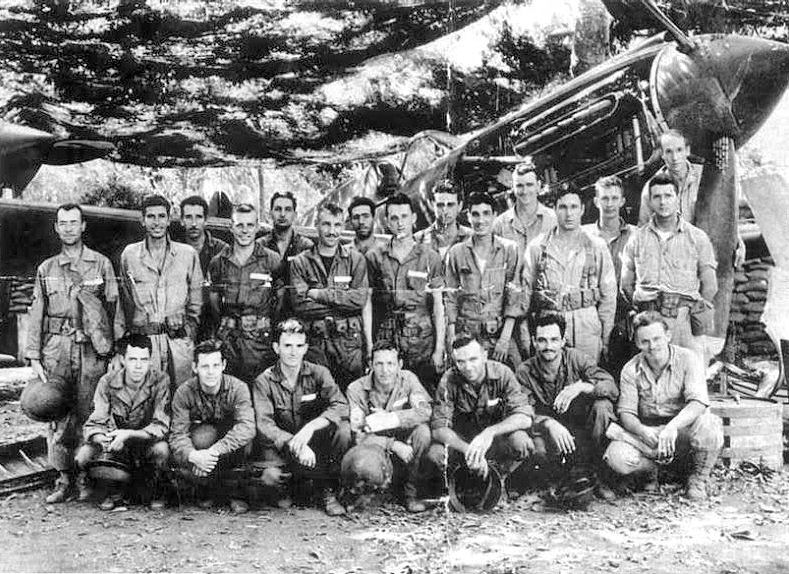
The 24th Pursuit Group is an inactive United States Air Force unit. It was wiped out in the Battle of the Philippines (1941–42). The survivors fought as infantry during Battle of Bataan and after their surrender, were subjected to the Bataan Death March, although some did escape to Australia. The unit was never remanned or equipped. It was carried as an active unit until 2 April 1946.
The Group was activated in the Philippine Islands on 1 October 1941, taking over the three pursuit squadrons (3d, 17th and 20th) of the inactivated 4th Composite Group. The group was equipped with Seversky P-35As and several models of Curtiss P-40s, this group comprised the only pursuit force in the Philippines in December 1941.
During the month of October, 35 new pilots arrived from Randolph Field, Texas which brought the 24th up to full strength. These pilots were sent to Pursuit transition unit at Clark which trained them for combat duty. In November 1941, the 24th was augmented by two attached squadrons (21st and 34th) which were sent from the 35th Pursuit Group at Hamilton Field, California. Also in November, a number of additional P-40Es were sent to the Group, which equipped the 3d, 17th and 21st Squadrons. The 34th Pursuit Squadron was assigned P-35A, the remainder of the P-35s being sent to the Philippines Air Corps.
Notice was received by the group on 15 November that due to the tense international situation between the United States and the Japanese Empire, all pursuit aircraft on the flight line would be placed on alert 24 hours each day, be armed, and be fully fueled with pilots available on 30 minutes' notice. During the period 30 November to 6 December all squadrons underwent intensive training in day and night enemy interception and air-to-air gunnery. Also training in escorting B-17 Flying Fortresses of the 19th Bombardment Group was undertaken.
During the first days of December, on four consecutive nights (2d-6th) an unidentified aircraft was sighted over Clark Field at approximately 05:30. After the first sighting, instructions were given to force the aircraft to land or destroy it. On three succeeding nights it was impossible to make the interception, due to the inability to see the aircraft in the dark or the aircraft not getting close enough to be picked up by the ground searchlights. On the fifth morning all aircraft were kept on the ground and the anti-aircraft batteries were alerted for the interception; however the aircraft was not located. During this same period, many other undetermined aircraft were tracked by Iba Radar.
On the night of 7 December 1941, the 24th Pursuit Group status was reported to Far East Air Force as follows:
On 8 December at about 03:30 the commercial radio station at Clark Field intercepted a message from Pearl Harbor, Hawaii about the Japanese attack there. However the group was unable to verify this interception through official channels, no other action was taken other than notifying the Base Commander. However, all squadrons were put on alert.
At about 04:00 the radar at Iba Field reported a formation of unidentified aircraft approximately 75 miles off the West Coast of Luzon heading towards Corregidor. The 3d Pursuit Squadron was dispatched to intercept the formation, but no planes were sighted and the squadron returned to Iba. However, the radar tracks showed the interception was successful and the unidentified aircraft swung off to the west out of the range of the Radar. It was believed that the 3d went underneath the formation. At 04:45 notification was received of a state of war between the United States and the Japanese Empire.
Hub AI
24th Pursuit Group AI simulator
(@24th Pursuit Group_simulator)
24th Pursuit Group
The 24th Pursuit Group is an inactive United States Air Force unit. It was wiped out in the Battle of the Philippines (1941–42). The survivors fought as infantry during Battle of Bataan and after their surrender, were subjected to the Bataan Death March, although some did escape to Australia. The unit was never remanned or equipped. It was carried as an active unit until 2 April 1946.
The Group was activated in the Philippine Islands on 1 October 1941, taking over the three pursuit squadrons (3d, 17th and 20th) of the inactivated 4th Composite Group. The group was equipped with Seversky P-35As and several models of Curtiss P-40s, this group comprised the only pursuit force in the Philippines in December 1941.
During the month of October, 35 new pilots arrived from Randolph Field, Texas which brought the 24th up to full strength. These pilots were sent to Pursuit transition unit at Clark which trained them for combat duty. In November 1941, the 24th was augmented by two attached squadrons (21st and 34th) which were sent from the 35th Pursuit Group at Hamilton Field, California. Also in November, a number of additional P-40Es were sent to the Group, which equipped the 3d, 17th and 21st Squadrons. The 34th Pursuit Squadron was assigned P-35A, the remainder of the P-35s being sent to the Philippines Air Corps.
Notice was received by the group on 15 November that due to the tense international situation between the United States and the Japanese Empire, all pursuit aircraft on the flight line would be placed on alert 24 hours each day, be armed, and be fully fueled with pilots available on 30 minutes' notice. During the period 30 November to 6 December all squadrons underwent intensive training in day and night enemy interception and air-to-air gunnery. Also training in escorting B-17 Flying Fortresses of the 19th Bombardment Group was undertaken.
During the first days of December, on four consecutive nights (2d-6th) an unidentified aircraft was sighted over Clark Field at approximately 05:30. After the first sighting, instructions were given to force the aircraft to land or destroy it. On three succeeding nights it was impossible to make the interception, due to the inability to see the aircraft in the dark or the aircraft not getting close enough to be picked up by the ground searchlights. On the fifth morning all aircraft were kept on the ground and the anti-aircraft batteries were alerted for the interception; however the aircraft was not located. During this same period, many other undetermined aircraft were tracked by Iba Radar.
On the night of 7 December 1941, the 24th Pursuit Group status was reported to Far East Air Force as follows:
On 8 December at about 03:30 the commercial radio station at Clark Field intercepted a message from Pearl Harbor, Hawaii about the Japanese attack there. However the group was unable to verify this interception through official channels, no other action was taken other than notifying the Base Commander. However, all squadrons were put on alert.
At about 04:00 the radar at Iba Field reported a formation of unidentified aircraft approximately 75 miles off the West Coast of Luzon heading towards Corregidor. The 3d Pursuit Squadron was dispatched to intercept the formation, but no planes were sighted and the squadron returned to Iba. However, the radar tracks showed the interception was successful and the unidentified aircraft swung off to the west out of the range of the Radar. It was believed that the 3d went underneath the formation. At 04:45 notification was received of a state of war between the United States and the Japanese Empire.