



Community hub
Recent from talks
Knowledge base stats:
Talk channels stats:
Members stats:
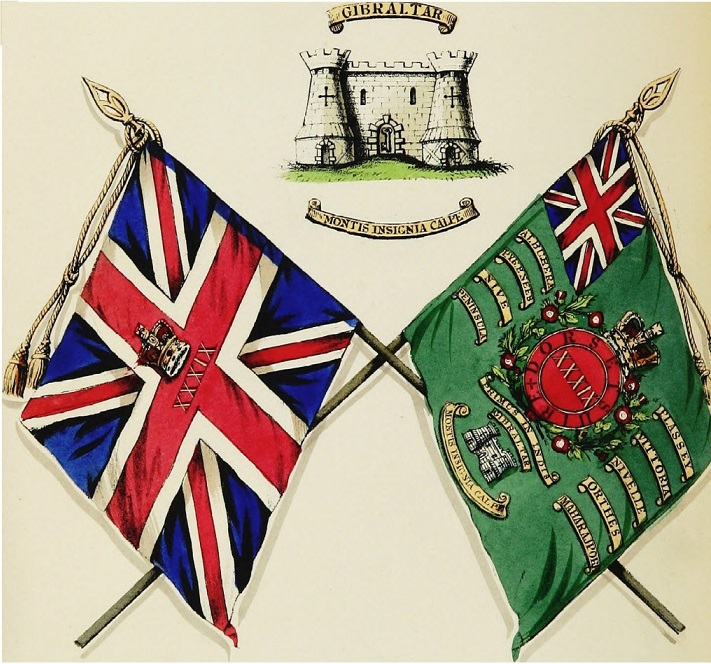
39th (Dorsetshire) Regiment of Foot
The 39th (Dorsetshire) Regiment of Foot was an infantry regiment of the British Army, raised in 1702. Under the Childers Reforms it amalgamated with the 54th (West Norfolk) Regiment of Foot to form the Dorsetshire Regiment in 1881.
The regiment was first raised by Adam Loftus, 1st Viscount Lisburne as Viscount Lisburne's Regiment of Foot in 1689 but was disbanded in 1697. It was re-raised in Ireland, without lineal connection to the previous regiment, by Colonel Richard Coote as Richard Coote's Regiment of Foot in August 1702. The regiment landed at Lisbon in June 1707 for service in the War of the Spanish Succession. It saw action at the Battle of La Gudina in May 1709 and then remained in Portugal until 1713 when it embarked for Gibraltar and then moved to Menorca later in the year. It was posted to Ireland in 1719 and sailed to Gibraltar in 1726 to reinforce the garrison. The regiment sailed for Jamaica in 1729 and then returned to Ireland in 1732.
The regiment served as marines from March 1744 to September 1746 when it took part in the Raid on Lorient during the War of the Austrian Succession. The regiment then spent another two years serving as marines and then returned to Ireland. On 1 July 1751 a royal warrant was issued which provided that in future regiments would no longer be known by their colonel's name, but would bear a regimental number based on their precedence: the regiment became the 39th Regiment of Foot. The regiment was posted to India in 1754 and saw action at the Battle of Chandannagar in March 1757 during the Seven Years' War. Under the command of Major Eyre Coote, the regiment played a major part in capturing the fort of Katwa at the Battle of Plassey in June 1757. The regiment returned to Ireland in autumn 1758 and was engaged in the Great Siege of Gibraltar in 1779 and the following three years.
In 1782 the regiment took a county title as the 39th (East Middlesex) Regiment of Foot.
In 1787 the regiment was involved in the Calton Weavers Strike in Glasgow, commanded by Lieutenant Colonel Kellet. A volley of musket fire killed three of the weavers. Three other weavers were mortally wounded. Further disturbances later in the day were quickly suppressed by the troops. A dark day in the history of the British Army.
The regiment sailed for the West Indies took part in the capture of Martinique in March 1794, the capture of Saint Lucia in April 1794 and the attack on Guadeloupe in June 1794 during the French Revolutionary Wars. The British troops at Guadeloupe were forced to surrender in December 1794 and were held in captivity for over a year. The regiment was reformed in Ireland the following year by absorbing the short-lived 104th Regiment of Foot (Royal Manchester Volunteers). The regiment participated in a task force under Major-General John Whyte to capture the Dutch settlements of Demerara, Essequibo, and Berbice in April and May 1796. The regiment moved to Suriname in October 1800 to Barbados in December 1802 and then returned to England in March 1803.
In 1803 a 2nd battalion was raised. The 1st battalion moved in Naples in January 1806 and to Sicily shortly thereafter. In 1807 a number of regiments had their territorial affiliations shuffled, with the East Middlesex title passing to the 77th Foot and the 39th taking the Dorsetshire title previously held by the 35th (Sussex) Regiment of Foot to become the 39th (Dorsetshire) Regiment of Foot.
The 2nd battalion deployed to the Peninsula to support General Sir Arthur Wellesley in June 1809 and fought at the Battle of Talavera in July 1809, the Battle of Bussaco in September 1810 and the Siege of Badajoz in May 1811 as well as the Battle of Albuera in May 1811 and the Battle of Arroyo dos Molinos in October 1811.
Hub AI
39th (Dorsetshire) Regiment of Foot AI simulator
(@39th (Dorsetshire) Regiment of Foot_simulator)
39th (Dorsetshire) Regiment of Foot
The 39th (Dorsetshire) Regiment of Foot was an infantry regiment of the British Army, raised in 1702. Under the Childers Reforms it amalgamated with the 54th (West Norfolk) Regiment of Foot to form the Dorsetshire Regiment in 1881.
The regiment was first raised by Adam Loftus, 1st Viscount Lisburne as Viscount Lisburne's Regiment of Foot in 1689 but was disbanded in 1697. It was re-raised in Ireland, without lineal connection to the previous regiment, by Colonel Richard Coote as Richard Coote's Regiment of Foot in August 1702. The regiment landed at Lisbon in June 1707 for service in the War of the Spanish Succession. It saw action at the Battle of La Gudina in May 1709 and then remained in Portugal until 1713 when it embarked for Gibraltar and then moved to Menorca later in the year. It was posted to Ireland in 1719 and sailed to Gibraltar in 1726 to reinforce the garrison. The regiment sailed for Jamaica in 1729 and then returned to Ireland in 1732.
The regiment served as marines from March 1744 to September 1746 when it took part in the Raid on Lorient during the War of the Austrian Succession. The regiment then spent another two years serving as marines and then returned to Ireland. On 1 July 1751 a royal warrant was issued which provided that in future regiments would no longer be known by their colonel's name, but would bear a regimental number based on their precedence: the regiment became the 39th Regiment of Foot. The regiment was posted to India in 1754 and saw action at the Battle of Chandannagar in March 1757 during the Seven Years' War. Under the command of Major Eyre Coote, the regiment played a major part in capturing the fort of Katwa at the Battle of Plassey in June 1757. The regiment returned to Ireland in autumn 1758 and was engaged in the Great Siege of Gibraltar in 1779 and the following three years.
In 1782 the regiment took a county title as the 39th (East Middlesex) Regiment of Foot.
In 1787 the regiment was involved in the Calton Weavers Strike in Glasgow, commanded by Lieutenant Colonel Kellet. A volley of musket fire killed three of the weavers. Three other weavers were mortally wounded. Further disturbances later in the day were quickly suppressed by the troops. A dark day in the history of the British Army.
The regiment sailed for the West Indies took part in the capture of Martinique in March 1794, the capture of Saint Lucia in April 1794 and the attack on Guadeloupe in June 1794 during the French Revolutionary Wars. The British troops at Guadeloupe were forced to surrender in December 1794 and were held in captivity for over a year. The regiment was reformed in Ireland the following year by absorbing the short-lived 104th Regiment of Foot (Royal Manchester Volunteers). The regiment participated in a task force under Major-General John Whyte to capture the Dutch settlements of Demerara, Essequibo, and Berbice in April and May 1796. The regiment moved to Suriname in October 1800 to Barbados in December 1802 and then returned to England in March 1803.
In 1803 a 2nd battalion was raised. The 1st battalion moved in Naples in January 1806 and to Sicily shortly thereafter. In 1807 a number of regiments had their territorial affiliations shuffled, with the East Middlesex title passing to the 77th Foot and the 39th taking the Dorsetshire title previously held by the 35th (Sussex) Regiment of Foot to become the 39th (Dorsetshire) Regiment of Foot.
The 2nd battalion deployed to the Peninsula to support General Sir Arthur Wellesley in June 1809 and fought at the Battle of Talavera in July 1809, the Battle of Bussaco in September 1810 and the Siege of Badajoz in May 1811 as well as the Battle of Albuera in May 1811 and the Battle of Arroyo dos Molinos in October 1811.