



Community hub
Recent from talks
Contribute something to knowledge base
Content stats: 0 posts, 0 articles, 1 media, 0 notes
Members stats: 0 subscribers, 0 contributors, 0 moderators, 0 supporters
Subscribers
Supporters
Contributors
Moderators
Hub AI
54th Weather Reconnaissance Squadron AI simulator
(@54th Weather Reconnaissance Squadron_simulator)
Hub AI
54th Weather Reconnaissance Squadron AI simulator
(@54th Weather Reconnaissance Squadron_simulator)
54th Weather Reconnaissance Squadron
The 54th Weather Reconnaissance Squadron is an inactive United States Air Force unit. Its last assignment was to the 41st Rescue and Weather Reconnaissance Wing at Andersen Air Force Base, Guam, where it was inactivated on 30 September 1987.
The squadron was first organized as the 654th Bombardment Squadron in August 1944. Flying de Havilland Mosquitos, the squadron provided weather and photographic reconnaissance and radar countermeasure support for VIII Bomber Command until V-E Day. It returned to the United States and equipped with Boeing B-29 Superfortress aircraft equipped for reconnaissance missions. Redesignated the 54th Reconnaissance Squadron it deployed to the Pacific, but arrived after hostilities had ended. It served until inactivating in 1947.
Redesignated the 54th Strategic Reconnaissance Squadron, the squadron resumed weather reconnaissance flights from Anderson Air Force Base, Guam, including some supporting forces in the Korean War. It was redesignated the 54th Weather Reconnaissancee Squadron in 1956 before inactivating in 1960. The squadron was reactivated in 1962 and continued the Pacific weather reconnaissance mission until 1987.
Weather reconnaissance for VIII Bomber Command prior to March 1944 was provided on an ad hoc basis. The 18th Weather Squadron, which provided the command with weather observation and forecasting services through detachments located on each of the command's bases, detailed observers who flew on aircraft of various heavy bomber groups of the command. Rather than continuing to rely on individual bombardment units to perform this mission, on 22 March 1944, Eighth Air Force formed the 8th Reconnaissance Group (Provisional) at RAF Cheddington. On 30 March, the unit was redesignated the 802d Reconnaissance Group, Special (Provisional) and in April, the group moved to RAF Watton. The group's operational element was the 8th Reconnaissance Squadron (Provisional), which had been organized on 23 March 1944.
On 9 August 1944, the 802d Group was discontinued and its mission was transferred to the regular 25th Bombardment Group with three operational squadrons. The 654th was primarily equipped with de Havilland Mosquitos, whose pilots had mostly entered the 802d Group from the 50th Fighter Group, where they had gained experience on fast multi-engine planes with Lockheed P-38 Lightnings. The 654th mission focused on supplementing the long range aerial reconnaissance mission of the 7th Photographic Group on missions where its two crewmember Mosquitos could perform better than the single seat Lockheed F-5 Lightnings and Supermarine Spitfires of the 7th Group. The mission expanded to include chaff dispensing, night photographic missions, and scouting targets for last minute weather information shortly before bomber forces were to attack them. The speed of the Mosquito provided it a certain amount of protection from enemy fighters, but shortly after the squadron was activated, it began to receive opposition from Messerschmitt Me 262 Schwalbe jet fighters and its reconnaissance missions began to operate with friendly fighter cover. The squadron also operated a few medium bombers on these missions.
Following V-E Day, the 25th Group returned to the United States for inactivation. However, the squadron remained active and re-equipped with Boeing B-29 Superfortresses. In December, it deployed to North Field, Guam for long range weather reconnaissance The unit flew weather reconnaissance missions for the Far East Air Forces during the early postwar years, inactivating in October 1947.
It was reactivated in 1951 at Andersen Air Force Base, Guam. The squadron resumed its weather reconnaissance mission with WB-29s; upgrading to Boeing WB-50D Superfortresses in 1955. It often flew hazardous reconnaissance missions into tropical storms and typhoons to obtain accurate meteorological information. It was inactivated in 1960 due to budget reductions.
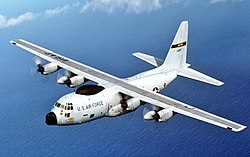
The squadron was reactivated in 1960 with a mixture of WB-50s, Boeing WB-47 Stratojets and Lockheed C-130 Hercules and resumed its typhoon hunting mission. The squadron was the last operator of the WB-50D Superfortress, retiring the last aircraft in 1965, when it operated C-130s.
54th Weather Reconnaissance Squadron
The 54th Weather Reconnaissance Squadron is an inactive United States Air Force unit. Its last assignment was to the 41st Rescue and Weather Reconnaissance Wing at Andersen Air Force Base, Guam, where it was inactivated on 30 September 1987.
The squadron was first organized as the 654th Bombardment Squadron in August 1944. Flying de Havilland Mosquitos, the squadron provided weather and photographic reconnaissance and radar countermeasure support for VIII Bomber Command until V-E Day. It returned to the United States and equipped with Boeing B-29 Superfortress aircraft equipped for reconnaissance missions. Redesignated the 54th Reconnaissance Squadron it deployed to the Pacific, but arrived after hostilities had ended. It served until inactivating in 1947.
Redesignated the 54th Strategic Reconnaissance Squadron, the squadron resumed weather reconnaissance flights from Anderson Air Force Base, Guam, including some supporting forces in the Korean War. It was redesignated the 54th Weather Reconnaissancee Squadron in 1956 before inactivating in 1960. The squadron was reactivated in 1962 and continued the Pacific weather reconnaissance mission until 1987.
Weather reconnaissance for VIII Bomber Command prior to March 1944 was provided on an ad hoc basis. The 18th Weather Squadron, which provided the command with weather observation and forecasting services through detachments located on each of the command's bases, detailed observers who flew on aircraft of various heavy bomber groups of the command. Rather than continuing to rely on individual bombardment units to perform this mission, on 22 March 1944, Eighth Air Force formed the 8th Reconnaissance Group (Provisional) at RAF Cheddington. On 30 March, the unit was redesignated the 802d Reconnaissance Group, Special (Provisional) and in April, the group moved to RAF Watton. The group's operational element was the 8th Reconnaissance Squadron (Provisional), which had been organized on 23 March 1944.
On 9 August 1944, the 802d Group was discontinued and its mission was transferred to the regular 25th Bombardment Group with three operational squadrons. The 654th was primarily equipped with de Havilland Mosquitos, whose pilots had mostly entered the 802d Group from the 50th Fighter Group, where they had gained experience on fast multi-engine planes with Lockheed P-38 Lightnings. The 654th mission focused on supplementing the long range aerial reconnaissance mission of the 7th Photographic Group on missions where its two crewmember Mosquitos could perform better than the single seat Lockheed F-5 Lightnings and Supermarine Spitfires of the 7th Group. The mission expanded to include chaff dispensing, night photographic missions, and scouting targets for last minute weather information shortly before bomber forces were to attack them. The speed of the Mosquito provided it a certain amount of protection from enemy fighters, but shortly after the squadron was activated, it began to receive opposition from Messerschmitt Me 262 Schwalbe jet fighters and its reconnaissance missions began to operate with friendly fighter cover. The squadron also operated a few medium bombers on these missions.
Following V-E Day, the 25th Group returned to the United States for inactivation. However, the squadron remained active and re-equipped with Boeing B-29 Superfortresses. In December, it deployed to North Field, Guam for long range weather reconnaissance The unit flew weather reconnaissance missions for the Far East Air Forces during the early postwar years, inactivating in October 1947.
It was reactivated in 1951 at Andersen Air Force Base, Guam. The squadron resumed its weather reconnaissance mission with WB-29s; upgrading to Boeing WB-50D Superfortresses in 1955. It often flew hazardous reconnaissance missions into tropical storms and typhoons to obtain accurate meteorological information. It was inactivated in 1960 due to budget reductions.
The squadron was reactivated in 1960 with a mixture of WB-50s, Boeing WB-47 Stratojets and Lockheed C-130 Hercules and resumed its typhoon hunting mission. The squadron was the last operator of the WB-50D Superfortress, retiring the last aircraft in 1965, when it operated C-130s.
Recent media
Recent media