



Community hub
Recent from talks
Knowledge base stats:
Talk channels stats:
Members stats:
62nd Operations Group
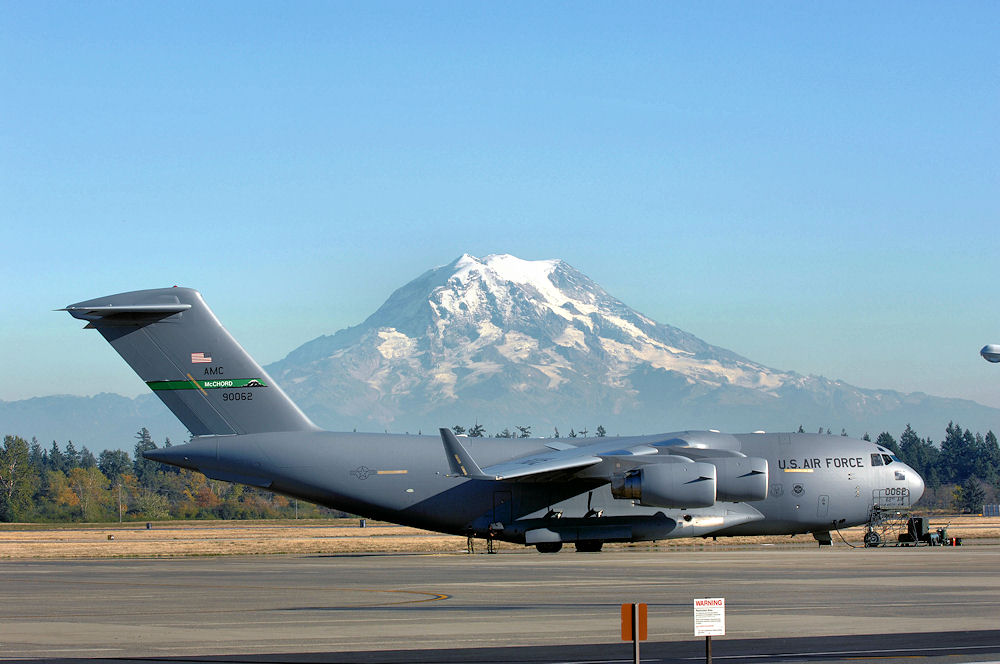
The 62d Operations Group (62 OG) is a United States Air Force unit assigned to the 62d Airlift Wing. It is stationed at McChord Air Force Base, Joint Base Lewis-McChord, Washington.
The 62d Operations Group is the flying component of the 62 AW. The group provides a large part of Air Mobility Command's Global Reach airlift capability. This adaptable and reactive air mobility promotes stability in regions by keeping America's competency and character highly visible. The group's tasking requirements range from supplying humanitarian airlift relief to victims of disasters, to airdropping troops into the heart of contingency operations in hostile areas.
Established prior to World War II, its predecessor unit, the 62d Transport (later Troop Carrier) Group engaged in combat operations, first with the Eighth Air Force and primarily with Twelfth Air Force during the war.
First constituted as the 62d Transport Group on 20 November 1940, the Group activated on 11 December at McClellan Field, California, bringing together three of the oldest, most experienced airlift squadrons in history. The 7th and 8th Transport Squadrons, constituted on 1 October 1933, and the 4th Transport Squadron on 1 March 1935 existed only on paper until the 4th was activated on 8 July 1935, the 7th on 14 October 1939, and the 8th on 1 February 1940.
Redesignated 62d Troop Carrier Group in July 1942. After intensive training for the Atlantic crossing, the redesignated 62d Troop Carrier Group (TCG), now composed of the 4th, 7th, 8th, and 51st Troop Carrier Squadrons, arrived at its temporary home, Keevil, England, on 3 October 1942 (their support personnel followed, arriving in country via the luxury ocean liner Queen Elizabeth) and assigned to VIII Air Support Command for further training.
Reassigned to Twelfth Air Force, it moved to North Africa on 15 November 1942 to support Allied ground forces in the campaign to wrest Tunisia from Axis control. After resupplying troops for a couple of weeks, the 62d got its first taste of combat when, on 29 November 1942, it joined the 64th Troop Carrier Group for a combat airdrop of 530 British airborne troops on German held airfields at Depienne, Pont-du-Fahs, and Oudna, Tunisia in an unsuccessful attempt to capture Tunis when German resistance to the advance of the British First Army appeared to be crumbling.
Trained with gliders for several months, then towed gliders to Syracuse and also dropped paratroops behind enemy lines at Catania during the Allied invasion of Sicily. On the night of 9 July 1943, a total of 51 C-47s and C-53s towed the first of these gliders into combat over Sicily. Their key objective was to capture a bridge south of Syracuse, and keep it open for use by allied forces. It took the huge formation 40 minutes to take off. They flew 500 feet above the Mediterranean Sea, at 120 miles per hour. An unforeseen headwind sent some Group planes off course, whereby some gliders were released up to 30 minutes late. Battling against bad weather, darkness, friendly naval fire, flak, and inexperience, the 62d crews did their best to keep their gliders on target. In the end, 36 gliders went down at sea, 12 made land, 2 were unaccounted for, and 2 never cast off over their landing zones.
Operated from bases in Sicily and Italy from September 1943 until after the war. Dropped paratroops in northern Italy in June 1944 to harass the retreating enemy and to prevent the Germans from destroying bridges over which their forces had withdrawn. Flew two missions in connection with the invasion of Southern France in August 1944, releasing gliders and paratroops in the battle area. Transported paratroops and towed gliders to Greece during the Allied assault in October 1944. In addition to the airborne operations, the group transported men and supplies in the Mediterranean theater and to the front lines during the campaigns for Tunisia, Italy, and southern France. Also evacuated wounded personnel and flew missions behind enemy lines in Italy and the Balkans to haul guns, ammunition, food, clothing, medical supplies, and other materials to the partisans and to drop propaganda leaflets. Aided in the redeployment of personnel after the war and also hauled freight and mail.
Hub AI
62nd Operations Group AI simulator
(@62nd Operations Group_simulator)
62nd Operations Group
The 62d Operations Group (62 OG) is a United States Air Force unit assigned to the 62d Airlift Wing. It is stationed at McChord Air Force Base, Joint Base Lewis-McChord, Washington.
The 62d Operations Group is the flying component of the 62 AW. The group provides a large part of Air Mobility Command's Global Reach airlift capability. This adaptable and reactive air mobility promotes stability in regions by keeping America's competency and character highly visible. The group's tasking requirements range from supplying humanitarian airlift relief to victims of disasters, to airdropping troops into the heart of contingency operations in hostile areas.
Established prior to World War II, its predecessor unit, the 62d Transport (later Troop Carrier) Group engaged in combat operations, first with the Eighth Air Force and primarily with Twelfth Air Force during the war.
First constituted as the 62d Transport Group on 20 November 1940, the Group activated on 11 December at McClellan Field, California, bringing together three of the oldest, most experienced airlift squadrons in history. The 7th and 8th Transport Squadrons, constituted on 1 October 1933, and the 4th Transport Squadron on 1 March 1935 existed only on paper until the 4th was activated on 8 July 1935, the 7th on 14 October 1939, and the 8th on 1 February 1940.
Redesignated 62d Troop Carrier Group in July 1942. After intensive training for the Atlantic crossing, the redesignated 62d Troop Carrier Group (TCG), now composed of the 4th, 7th, 8th, and 51st Troop Carrier Squadrons, arrived at its temporary home, Keevil, England, on 3 October 1942 (their support personnel followed, arriving in country via the luxury ocean liner Queen Elizabeth) and assigned to VIII Air Support Command for further training.
Reassigned to Twelfth Air Force, it moved to North Africa on 15 November 1942 to support Allied ground forces in the campaign to wrest Tunisia from Axis control. After resupplying troops for a couple of weeks, the 62d got its first taste of combat when, on 29 November 1942, it joined the 64th Troop Carrier Group for a combat airdrop of 530 British airborne troops on German held airfields at Depienne, Pont-du-Fahs, and Oudna, Tunisia in an unsuccessful attempt to capture Tunis when German resistance to the advance of the British First Army appeared to be crumbling.
Trained with gliders for several months, then towed gliders to Syracuse and also dropped paratroops behind enemy lines at Catania during the Allied invasion of Sicily. On the night of 9 July 1943, a total of 51 C-47s and C-53s towed the first of these gliders into combat over Sicily. Their key objective was to capture a bridge south of Syracuse, and keep it open for use by allied forces. It took the huge formation 40 minutes to take off. They flew 500 feet above the Mediterranean Sea, at 120 miles per hour. An unforeseen headwind sent some Group planes off course, whereby some gliders were released up to 30 minutes late. Battling against bad weather, darkness, friendly naval fire, flak, and inexperience, the 62d crews did their best to keep their gliders on target. In the end, 36 gliders went down at sea, 12 made land, 2 were unaccounted for, and 2 never cast off over their landing zones.
Operated from bases in Sicily and Italy from September 1943 until after the war. Dropped paratroops in northern Italy in June 1944 to harass the retreating enemy and to prevent the Germans from destroying bridges over which their forces had withdrawn. Flew two missions in connection with the invasion of Southern France in August 1944, releasing gliders and paratroops in the battle area. Transported paratroops and towed gliders to Greece during the Allied assault in October 1944. In addition to the airborne operations, the group transported men and supplies in the Mediterranean theater and to the front lines during the campaigns for Tunisia, Italy, and southern France. Also evacuated wounded personnel and flew missions behind enemy lines in Italy and the Balkans to haul guns, ammunition, food, clothing, medical supplies, and other materials to the partisans and to drop propaganda leaflets. Aided in the redeployment of personnel after the war and also hauled freight and mail.