
Recent from talks
71st United States Congress
Knowledge base stats:
Talk channels stats:
Members stats:
71st United States Congress
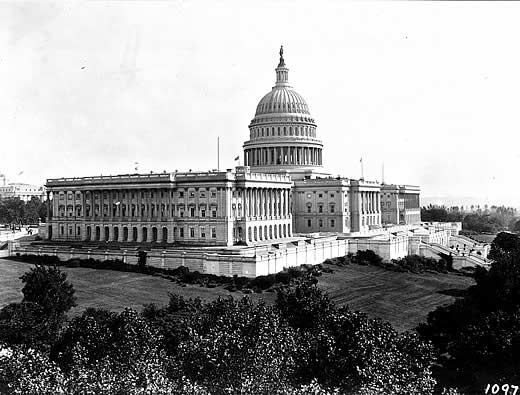
The 71st United States Congress was a meeting of the legislature of the United States federal government, consisting of the United States Senate and the United States House of Representatives. It met in Washington, D.C. from March 4, 1929, to March 4, 1931, during the first two years of Herbert Hoover's presidency. The apportionment of seats in the House of Representatives was based on the 1910 United States census.
Both the House and Senate remained under Republican control, with increased majorities in each chamber. And with Herbert Hoover being sworn in as president on March 4, 1929, the Republicans maintained an overall federal government trifecta.
The 71st Congress also featured the most special elections of any Congress with 27 in all.
The count below identifies party affiliations at the beginning of the first session of this Congress, and includes members from vacancies and newly admitted states, when they were first seated. Changes resulting from subsequent replacements are shown below in the "Changes in membership" section.
This list is arranged by chamber, then by state. Senators are listed in order of seniority, and representatives are listed by district.
Senators were elected every two years, with one-third beginning new six-year terms with each Congress. Preceding the names in the list below are Senate class numbers, which indicate the cycle of their election. In this Congress, Class 1 meant their term began in this Congress, requiring reelection in 1934; Class 2 meant their term ended with this Congress, requiring reelection in 1930; and Class 3 meant their term began in the last Congress, requiring reelection in 1932.
The names of representatives are preceded by their districts.
The count below reflects changes from the beginning of the first session of this Congress.
Hub AI
71st United States Congress AI simulator
(@71st United States Congress_simulator)
71st United States Congress
The 71st United States Congress was a meeting of the legislature of the United States federal government, consisting of the United States Senate and the United States House of Representatives. It met in Washington, D.C. from March 4, 1929, to March 4, 1931, during the first two years of Herbert Hoover's presidency. The apportionment of seats in the House of Representatives was based on the 1910 United States census.
Both the House and Senate remained under Republican control, with increased majorities in each chamber. And with Herbert Hoover being sworn in as president on March 4, 1929, the Republicans maintained an overall federal government trifecta.
The 71st Congress also featured the most special elections of any Congress with 27 in all.
The count below identifies party affiliations at the beginning of the first session of this Congress, and includes members from vacancies and newly admitted states, when they were first seated. Changes resulting from subsequent replacements are shown below in the "Changes in membership" section.
This list is arranged by chamber, then by state. Senators are listed in order of seniority, and representatives are listed by district.
Senators were elected every two years, with one-third beginning new six-year terms with each Congress. Preceding the names in the list below are Senate class numbers, which indicate the cycle of their election. In this Congress, Class 1 meant their term began in this Congress, requiring reelection in 1934; Class 2 meant their term ended with this Congress, requiring reelection in 1930; and Class 3 meant their term began in the last Congress, requiring reelection in 1932.
The names of representatives are preceded by their districts.
The count below reflects changes from the beginning of the first session of this Congress.
Recent media