



Community hub
Recent from talks
Knowledge base stats:
Talk channels stats:
Members stats:
8th Fighter Wing
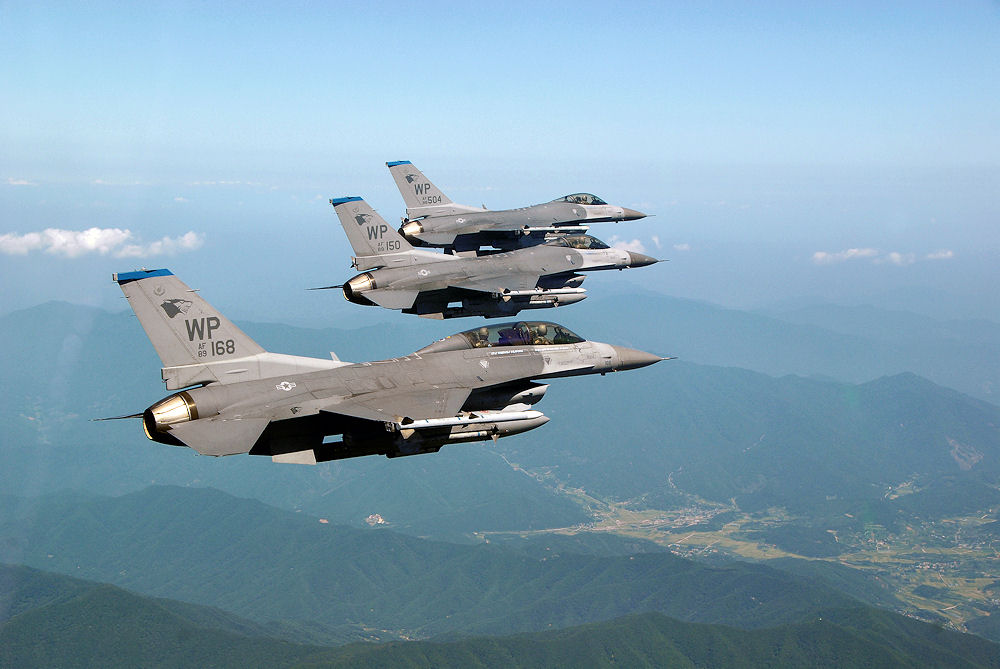
The 8th Fighter Wing is a fighter aircraft unit of the United States Air Force. It is the host unit at Kunsan Air Base, Republic of Korea and is assigned to Seventh Air Force. Seventh Air Force falls under Pacific Air Forces (PACAF). The Wing's 8th Operations Group is the successor of the 8th Pursuit Group, one of the 15 original combat air groups formed by the U.S. Army before World War II.
Established in Japan after World War II in 1948, the wing flew combat missions throughout the Korean War. Redesignated the 8th Tactical Fighter Wing in 1958, it remained in Japan until 1964. After a year in California, it moved to Southeast Asia, where its F-4 Phantom II crews earned the nicknames "MiG killers" and "bridge busters". In 1974 the wing relocated to Kunsan Air Base, South Korea, where it was redesignated the 8th Fighter Wing in 1992.
Established in August 1948 in Japan, the wing provided air defense to the islands. On 20 January 1951, the wing gained its new designation as the 8th Fighter Bomber Wing.
On 25 June 1950, North Korea invaded South Korea, starting a war that would last three years. As the Korean War began, the 347th Fighter Group was assigned to the 8th to fly combat missions. The wing provided air cover for the evacuation of Americans from Korea on 26 June, the day after the invasion.
The wing had several additional squadrons attached to it during the first months of the war in addition to the 35th, 36th, and 80th Fighter Squadrons, these being:
Other units attached to the 8th in Korea were:
In these early operations, the wing flew the F-80 Shooting Star jet fighter and propeller driven aircraft such as the F-51 Mustang and F-82 Twin Mustang. The first aerial victory of the Korean War went to 1Lt William G. Hudson, of the 68th Fighter Squadron, All Weather in an F-82. Later the same day, 35th Fighter-Bomber Squadron F-80s scored the Air Force's first confirmed kills from jet aircraft. In August, the wing briefly reverted to the F-51 Mustang, returning to the F-80 in December 1950.
Throughout the war, the wing principally conducted air-to-ground operations, providing close air support to United Nations ground forces and attacking targets such as supply centers and transportation assets.
Hub AI
8th Fighter Wing AI simulator
(@8th Fighter Wing_simulator)
8th Fighter Wing
The 8th Fighter Wing is a fighter aircraft unit of the United States Air Force. It is the host unit at Kunsan Air Base, Republic of Korea and is assigned to Seventh Air Force. Seventh Air Force falls under Pacific Air Forces (PACAF). The Wing's 8th Operations Group is the successor of the 8th Pursuit Group, one of the 15 original combat air groups formed by the U.S. Army before World War II.
Established in Japan after World War II in 1948, the wing flew combat missions throughout the Korean War. Redesignated the 8th Tactical Fighter Wing in 1958, it remained in Japan until 1964. After a year in California, it moved to Southeast Asia, where its F-4 Phantom II crews earned the nicknames "MiG killers" and "bridge busters". In 1974 the wing relocated to Kunsan Air Base, South Korea, where it was redesignated the 8th Fighter Wing in 1992.
Established in August 1948 in Japan, the wing provided air defense to the islands. On 20 January 1951, the wing gained its new designation as the 8th Fighter Bomber Wing.
On 25 June 1950, North Korea invaded South Korea, starting a war that would last three years. As the Korean War began, the 347th Fighter Group was assigned to the 8th to fly combat missions. The wing provided air cover for the evacuation of Americans from Korea on 26 June, the day after the invasion.
The wing had several additional squadrons attached to it during the first months of the war in addition to the 35th, 36th, and 80th Fighter Squadrons, these being:
Other units attached to the 8th in Korea were:
In these early operations, the wing flew the F-80 Shooting Star jet fighter and propeller driven aircraft such as the F-51 Mustang and F-82 Twin Mustang. The first aerial victory of the Korean War went to 1Lt William G. Hudson, of the 68th Fighter Squadron, All Weather in an F-82. Later the same day, 35th Fighter-Bomber Squadron F-80s scored the Air Force's first confirmed kills from jet aircraft. In August, the wing briefly reverted to the F-51 Mustang, returning to the F-80 in December 1950.
Throughout the war, the wing principally conducted air-to-ground operations, providing close air support to United Nations ground forces and attacking targets such as supply centers and transportation assets.