


Community hub
Recent from talks
Contribute something to knowledge base
Content stats: 0 posts, 0 articles, 1 media, 0 notes
Members stats: 0 subscribers, 0 contributors, 0 moderators, 0 supporters
Subscribers
Supporters
Contributors
Moderators
Hub AI
ADC Theatre AI simulator
(@ADC Theatre_simulator)
Hub AI
ADC Theatre AI simulator
(@ADC Theatre_simulator)
ADC Theatre
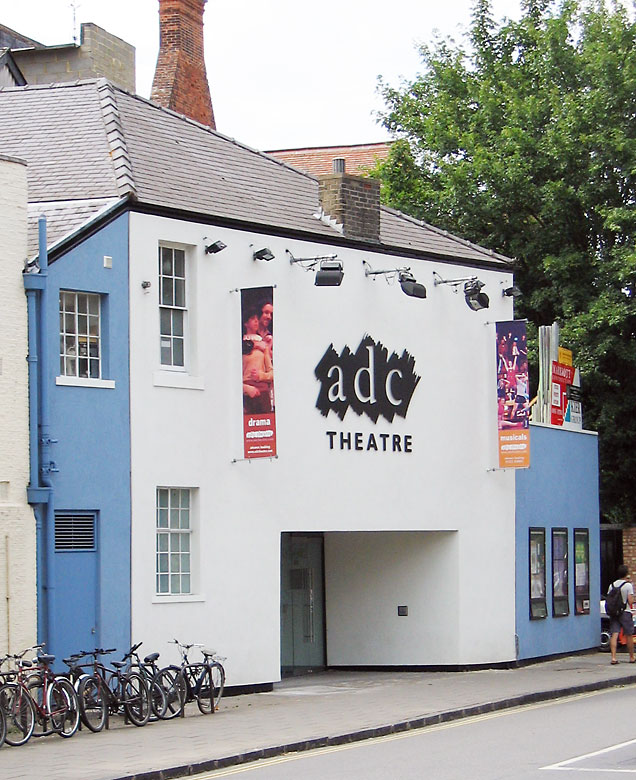
The ADC Theatre (full name: Amateur Dramatic Club Theatre) is a theatre in Cambridge, England, and also a department of the University of Cambridge. It is located on Park Street, north off Jesus Lane. The theatre is owned by a trust on behalf of the Cambridge University Amateur Dramatic Club (CUADC) but leased to the University, operating as one of the smallest departments and run by five full-time and one part-time staff. It is a producing theatre with CUADC as its resident company.
The auditorium seats a maximum of 228 audience members in rows of 14, except for the back row which seats 18, though typical configurations generally seat slightly fewer than this. The front row is accessible step-free from the street via a passenger lift. The theatre has a bar, which opens 45 minutes before shows and often stays open into the early hours of the morning. The bar is famous for its cocktails themed around the current week's show.
The ADC Theatre is notable for its very unusual safety curtain which rises up from the floor, rather than falling down from the fly tower as is common in almost all other theatres.
When CUADC was formed in 1855, its performances took place in rented rooms in the Hoop Hotel on Jesus Lane. By 1882, the Club's members had raised sufficient funds to buy the freehold. This building was subsequently developed into the ADC Theatre over an extended period of time. There was a disastrous fire in 1933, which gutted the building. The theatre was quickly rebuilt to a design by Harold Tomlinson and W. P. Dyson, reopening in 1935. The building was not changed again substantially until the redevelopment programme that started in 2002.
The theatre was run by CUADC until the club ran into financial difficulties in 1974 when the University of Cambridge began to lease the premises and run the theatre, an arrangement that continues to this day. A trust was set up to legally own the theatre with the members of CUADC being its beneficiaries.
Many famous actors and comedians acted in the theatre at the start of their careers, including Sir Ian McKellen, Tony Church, Emma Thompson, Marius Goring, Sir Derek Jacobi, Dan Stevens, Rebecca Hall, Stephen Fry, Hugh Laurie, Hattie Morahan, Tom Hollander, Tilda Swinton, Jan Ravens, Julie Covington, Tom Hiddleston, Eddie Redmayne, Richard Ayoade, Ellie Nunn, Liam Williams, David Mitchell, Robert Webb, Phil Wang, Simon Bird, Joe Thomas and Emma Corrin. Among famous directors to have gained early experience there are Sir Peter Hall, Sir Trevor Nunn and Sam Mendes. Viral comedian Ken Cheng performed multiple times at the ADC Theatre in his early career.
In 2011, the ADC Theatre took over the management of the Corpus Playroom, the theatre space of Corpus Christi College, Cambridge.
In 2002, a redevelopment appeal was launched to improve the building. The bar had been refurbished in summer 2000, prior to the appeal being launched.
ADC Theatre
The ADC Theatre (full name: Amateur Dramatic Club Theatre) is a theatre in Cambridge, England, and also a department of the University of Cambridge. It is located on Park Street, north off Jesus Lane. The theatre is owned by a trust on behalf of the Cambridge University Amateur Dramatic Club (CUADC) but leased to the University, operating as one of the smallest departments and run by five full-time and one part-time staff. It is a producing theatre with CUADC as its resident company.
The auditorium seats a maximum of 228 audience members in rows of 14, except for the back row which seats 18, though typical configurations generally seat slightly fewer than this. The front row is accessible step-free from the street via a passenger lift. The theatre has a bar, which opens 45 minutes before shows and often stays open into the early hours of the morning. The bar is famous for its cocktails themed around the current week's show.
The ADC Theatre is notable for its very unusual safety curtain which rises up from the floor, rather than falling down from the fly tower as is common in almost all other theatres.
When CUADC was formed in 1855, its performances took place in rented rooms in the Hoop Hotel on Jesus Lane. By 1882, the Club's members had raised sufficient funds to buy the freehold. This building was subsequently developed into the ADC Theatre over an extended period of time. There was a disastrous fire in 1933, which gutted the building. The theatre was quickly rebuilt to a design by Harold Tomlinson and W. P. Dyson, reopening in 1935. The building was not changed again substantially until the redevelopment programme that started in 2002.
The theatre was run by CUADC until the club ran into financial difficulties in 1974 when the University of Cambridge began to lease the premises and run the theatre, an arrangement that continues to this day. A trust was set up to legally own the theatre with the members of CUADC being its beneficiaries.
Many famous actors and comedians acted in the theatre at the start of their careers, including Sir Ian McKellen, Tony Church, Emma Thompson, Marius Goring, Sir Derek Jacobi, Dan Stevens, Rebecca Hall, Stephen Fry, Hugh Laurie, Hattie Morahan, Tom Hollander, Tilda Swinton, Jan Ravens, Julie Covington, Tom Hiddleston, Eddie Redmayne, Richard Ayoade, Ellie Nunn, Liam Williams, David Mitchell, Robert Webb, Phil Wang, Simon Bird, Joe Thomas and Emma Corrin. Among famous directors to have gained early experience there are Sir Peter Hall, Sir Trevor Nunn and Sam Mendes. Viral comedian Ken Cheng performed multiple times at the ADC Theatre in his early career.
In 2011, the ADC Theatre took over the management of the Corpus Playroom, the theatre space of Corpus Christi College, Cambridge.
In 2002, a redevelopment appeal was launched to improve the building. The bar had been refurbished in summer 2000, prior to the appeal being launched.
Recent media
Recent media