
Recent from talks
APR-1400
Knowledge base stats:
Talk channels stats:
Members stats:
APR-1400
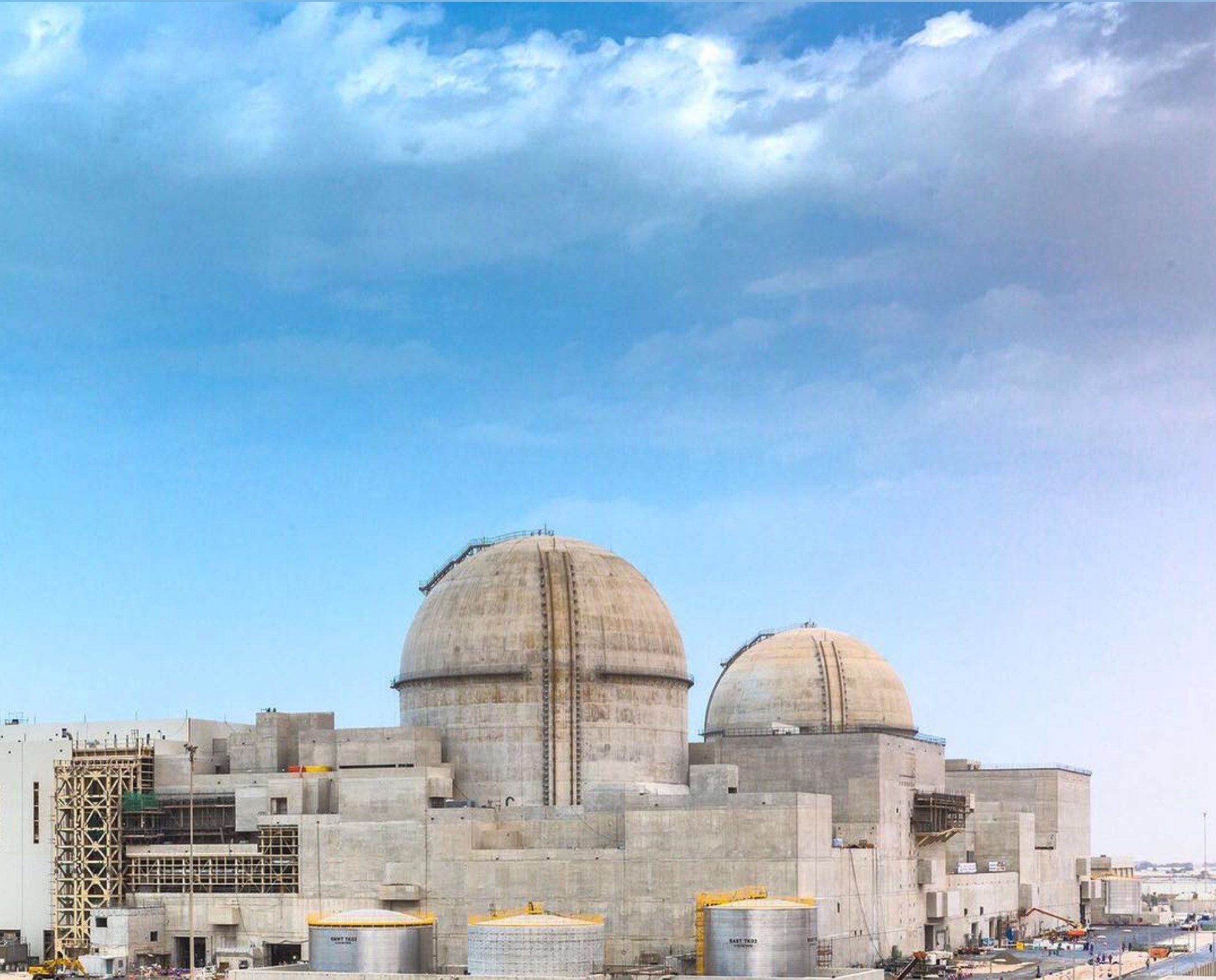
The APR-1400 (for Advanced Power Reactor 1400 MW electricity) is an advanced pressurized water nuclear reactor designed by the Korea Electric Power Corporation (KEPCO). Originally known as the Korean Next Generation Reactor (KNGR), this Generation III reactor was developed from the earlier OPR-1000 design and also incorporates features from the US Combustion Engineering (C-E) System 80+ design. Currently in South Korea there are 4 units in operation (Shin Kori unit 3 and 4, Shin Hanul units 1 and 2), and 2 units in construction (Shin Kori unit 5 and 6). Four units are completed and in commercial operation in the United Arab Emirates at Barakah.
APR-1400 design began in 1992 and was awarded certification by the Korean Institute of Nuclear Safety in May 2002. The design certification application was submitted to the US Nuclear Regulatory Commission (NRC) in December 2014 and in March 2015, it was accepted for technical review to determine if the reactor design meets basic US safety requirements.
In October 2017, European Utility Requirements (EUR) organization approved changes to the APR-1400 design for emergency cooling, allowing the design to be built in countries outside Europe to EUR certification.
As of September 2018, the NRC issued its final safety evaluation report and standard design approval finding the design technically acceptable and valid for 15 years. In April 2019, the NRC approved a rule to certify the APR-1400 standard design. In September 2018, the U.S. Nuclear Regulatory Commission gave the APR-1400 Standard Design Approval, and in September 2019 it received a design certificate valid for 15 years.
In 2022, Westinghouse Electric Company, which had acquired Combustion Engineering in 2000, filed a lawsuit in a U.S. federal court against KHNP and Kepco alleging that the APR-1400 was copied from the System 80 reactor. This had the indirect effect that the U.S. government rejected a request for necessary APR-1400 permission to export to a third country while the case is resolved.
The first commercial APR-1400 reactors at Shin Kori were approved in September 2007, with construction starting in October 2008 (Unit 3) and August 2009 (Unit 4). Shin Kori-3 was initially scheduled to commence operation by the end of 2013, but the schedules for both Units 3 & 4 were delayed by approximately one year to replace safety-related control cabling, which had failed some tests. Construction of two more APR-1400 units at Shin Kori, Korea (Units 5 and 6) had been expected to begin in 2014, but as of December 2016 plans had not been finalised.
Construction of two new APR-1400s, Shin Hanul Units 1 & 2, began in May 2012 (Unit 1) and June 2013 (Unit 2), with Unit 1 expected to be completed in April 2017. Two more APR-1400s at Shin Hanul were approved in 2014, with construction to start in 2017.
After the election of President Moon Jae-in in May 2017, Korea Hydro & Nuclear Power (KHNP) suspended design work on Shin Hanul-3 and -4, and construction work was suspended on Shin Kori-5 and -6 in July 2017 for a three-month period while a government-appointed committee met to discuss the country's future nuclear power policy. President Moon had signed an agreement in March 2017 calling for the phase-out of nuclear energy while campaigning for president. In October 2017, the committee recommended proceeding with the construction of Shin Kori-5 and -6. President Moon announced he supported the committee's decision, but added that no new construction would be allowed, throwing doubt on the fate of Shin Hanul-3 and -4.
Hub AI
APR-1400 AI simulator
(@APR-1400_simulator)
APR-1400
The APR-1400 (for Advanced Power Reactor 1400 MW electricity) is an advanced pressurized water nuclear reactor designed by the Korea Electric Power Corporation (KEPCO). Originally known as the Korean Next Generation Reactor (KNGR), this Generation III reactor was developed from the earlier OPR-1000 design and also incorporates features from the US Combustion Engineering (C-E) System 80+ design. Currently in South Korea there are 4 units in operation (Shin Kori unit 3 and 4, Shin Hanul units 1 and 2), and 2 units in construction (Shin Kori unit 5 and 6). Four units are completed and in commercial operation in the United Arab Emirates at Barakah.
APR-1400 design began in 1992 and was awarded certification by the Korean Institute of Nuclear Safety in May 2002. The design certification application was submitted to the US Nuclear Regulatory Commission (NRC) in December 2014 and in March 2015, it was accepted for technical review to determine if the reactor design meets basic US safety requirements.
In October 2017, European Utility Requirements (EUR) organization approved changes to the APR-1400 design for emergency cooling, allowing the design to be built in countries outside Europe to EUR certification.
As of September 2018, the NRC issued its final safety evaluation report and standard design approval finding the design technically acceptable and valid for 15 years. In April 2019, the NRC approved a rule to certify the APR-1400 standard design. In September 2018, the U.S. Nuclear Regulatory Commission gave the APR-1400 Standard Design Approval, and in September 2019 it received a design certificate valid for 15 years.
In 2022, Westinghouse Electric Company, which had acquired Combustion Engineering in 2000, filed a lawsuit in a U.S. federal court against KHNP and Kepco alleging that the APR-1400 was copied from the System 80 reactor. This had the indirect effect that the U.S. government rejected a request for necessary APR-1400 permission to export to a third country while the case is resolved.
The first commercial APR-1400 reactors at Shin Kori were approved in September 2007, with construction starting in October 2008 (Unit 3) and August 2009 (Unit 4). Shin Kori-3 was initially scheduled to commence operation by the end of 2013, but the schedules for both Units 3 & 4 were delayed by approximately one year to replace safety-related control cabling, which had failed some tests. Construction of two more APR-1400 units at Shin Kori, Korea (Units 5 and 6) had been expected to begin in 2014, but as of December 2016 plans had not been finalised.
Construction of two new APR-1400s, Shin Hanul Units 1 & 2, began in May 2012 (Unit 1) and June 2013 (Unit 2), with Unit 1 expected to be completed in April 2017. Two more APR-1400s at Shin Hanul were approved in 2014, with construction to start in 2017.
After the election of President Moon Jae-in in May 2017, Korea Hydro & Nuclear Power (KHNP) suspended design work on Shin Hanul-3 and -4, and construction work was suspended on Shin Kori-5 and -6 in July 2017 for a three-month period while a government-appointed committee met to discuss the country's future nuclear power policy. President Moon had signed an agreement in March 2017 calling for the phase-out of nuclear energy while campaigning for president. In October 2017, the committee recommended proceeding with the construction of Shin Kori-5 and -6. President Moon announced he supported the committee's decision, but added that no new construction would be allowed, throwing doubt on the fate of Shin Hanul-3 and -4.
Recent media