
Recent from talks
Abernethy, Perth and Kinross
Knowledge base stats:
Talk channels stats:
Members stats:
Abernethy, Perth and Kinross
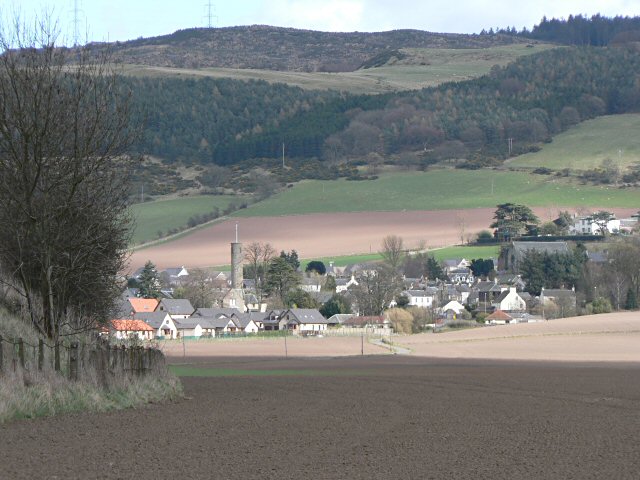
Abernethy is a village and former burgh in the Perth and Kinross council area and historic county of Perthshire, in the east central Lowlands of Scotland. The village is situated in rural Strathearn, 8 miles (13 km) south-east of the city of Perth, near the River Earn's confluence with the River Tay and on the northern edge of the Ochil Hills.
Formerly the site of a number of Roman encampments, Abernethy became an important Pictish religious and political centre. The village was the setting for the Treaty of Abernethy, where Malcolm Canmore gave allegiance to William the Conqueror and its mediaeval round tower marks the site of a former abbey and, later, collegiate church.
The civil parish of Abernethy also contains the nearby settlement of Aberargie and traditionally extends to Mugdrum Island in the Firth of Tay. It is part of the Almond and Earn ward for elections to Perth and Kinross Council
Abernethy, recorded in the 10th century as Aburnethige, means 'mouth of the river Nethy'. The first element of the name is the Pictish word aber 'river mouth'. The river-name Nethy is from the Celtic root nect- 'pure, clean'. The Nethy Burn flows down from the Ochil Hills past the present village. The Gaelic form of the name is Obar Neithich.
Near to Abernethy lies the small settlement of Catochil, whose name is first attested in a sixteenth-century copy of a text from 1295, as Cathehill, and again in 1508 as Catoichill. This place-name too is thought to be from Pictish, or its close relative Common Brittonic, from the elements *ced ("woodland") and *ogel ("high", its form influenced by the name of the Ochil Hills among which it lies).
There is evidence of early settlement in the area, with a Bronze Age log boat being discovered at Carpow in 2001, believed to date from around 1,000 BC. The Carpow boat is one of the best-preserved examples in Britain, and the second-oldest example of a boat recovered in Scotland. Remains of suspected pre-historic stone circles have been discovered to the north and south of the village. Castle Law was the site of an Iron Age hillfort, first excavated in the late 19th century.
A group of Roman sites within the village have been given the name "the Abernethy complex", including later use of the fortress at Castle Law and the site of the former Carpow Roman Fort to the east of the village.
The village was once the "capital" (or at least a major religious and political centre) of the kingdom of the Picts. The parish church, which sits on land given by Nechtan,a king of the Picts, is dedicated to Saint Brigid of Kildare (fl. 451–525), and the church is said to have been founded by Dairlugdach, second abbess of Kildare, one of early Christian Ireland's major monasteries.
Hub AI
Abernethy, Perth and Kinross AI simulator
(@Abernethy, Perth and Kinross_simulator)
Abernethy, Perth and Kinross
Abernethy is a village and former burgh in the Perth and Kinross council area and historic county of Perthshire, in the east central Lowlands of Scotland. The village is situated in rural Strathearn, 8 miles (13 km) south-east of the city of Perth, near the River Earn's confluence with the River Tay and on the northern edge of the Ochil Hills.
Formerly the site of a number of Roman encampments, Abernethy became an important Pictish religious and political centre. The village was the setting for the Treaty of Abernethy, where Malcolm Canmore gave allegiance to William the Conqueror and its mediaeval round tower marks the site of a former abbey and, later, collegiate church.
The civil parish of Abernethy also contains the nearby settlement of Aberargie and traditionally extends to Mugdrum Island in the Firth of Tay. It is part of the Almond and Earn ward for elections to Perth and Kinross Council
Abernethy, recorded in the 10th century as Aburnethige, means 'mouth of the river Nethy'. The first element of the name is the Pictish word aber 'river mouth'. The river-name Nethy is from the Celtic root nect- 'pure, clean'. The Nethy Burn flows down from the Ochil Hills past the present village. The Gaelic form of the name is Obar Neithich.
Near to Abernethy lies the small settlement of Catochil, whose name is first attested in a sixteenth-century copy of a text from 1295, as Cathehill, and again in 1508 as Catoichill. This place-name too is thought to be from Pictish, or its close relative Common Brittonic, from the elements *ced ("woodland") and *ogel ("high", its form influenced by the name of the Ochil Hills among which it lies).
There is evidence of early settlement in the area, with a Bronze Age log boat being discovered at Carpow in 2001, believed to date from around 1,000 BC. The Carpow boat is one of the best-preserved examples in Britain, and the second-oldest example of a boat recovered in Scotland. Remains of suspected pre-historic stone circles have been discovered to the north and south of the village. Castle Law was the site of an Iron Age hillfort, first excavated in the late 19th century.
A group of Roman sites within the village have been given the name "the Abernethy complex", including later use of the fortress at Castle Law and the site of the former Carpow Roman Fort to the east of the village.
The village was once the "capital" (or at least a major religious and political centre) of the kingdom of the Picts. The parish church, which sits on land given by Nechtan,a king of the Picts, is dedicated to Saint Brigid of Kildare (fl. 451–525), and the church is said to have been founded by Dairlugdach, second abbess of Kildare, one of early Christian Ireland's major monasteries.
Recent media