
Recent from talks
Acacia Fraternity
Knowledge base stats:
Talk channels stats:
Members stats:
Acacia Fraternity
Acacia Fraternity is a social fraternity founded in 1904 at the University of Michigan in Ann Arbor, Michigan. The fraternity has 20 active chapters and 3 associate chapters throughout Canada and the United States. The fraternity was founded by undergraduate Freemasons and was originally open only to men who had taken the Masonic obligations, but in 1933 the International Conclave elected to dispense with the Masonic prerequisite. In 1988, at the 45th Conclave, the fraternity elected to use "International" rather than "National" when referring to the fraternity.
Acacia Fraternity was founded on May 12, 1904, by a group of fourteen Freemasons attending the University of Michigan in Ann Arbor, Michigan. Its founders were James M. Cooper, Benjamin E. DeRoy, Edward E. Gallup, Jared W. Hawkins, Clarence G. Hill, Harvey J. Howard, George A. Malcolm, Ernest R. Ringo, William J. Marshall, Harlan P. Rowe, Ralph B. Scatterday, Charles A. Sink, Harry B. Washburn, and Walter S. Wheeler. Acacia is the only general fraternity to be founded in Michigan.
Since its founding, members of other fraternities have been eligible for membership in Acacia. However, the fraternity's rapid growth allowed it to stand on its own as a separate and co-equal fraternity, and in 1921 it dropped the provision that allowed men of other fraternities to join.
During the first two decades of the 20th century, Acacia was evolving from its roots as a successful Masonic club into the more standardized model of the other collegiate fraternities of the day. While maintaining its history and the symbolism derived from the Masonic fraternity, because of what Baird's cites (pIII-1) as a decline in the number of student Masons in undergraduate schools, Acacia opted in 1931 to relax the requirement that members must be Masons, removing the provision entirely in 1933.
Early chapters were named alphabetically using Hebrew letters; these first 26 chapters at their option continue to use their historical designations today, while younger chapters are named after the institution at which they are located.
The fraternity officially became International in 1988 at the 45th Conclave after the addition of the University of Western Ontario Chapter and the petition of the Carleton University Chapter.
The Sprig of Acacia represents immortality and is one of many Acacia symbols with roots in the Masonic Brotherhood. It is used by that organization during or after a funeral service, to honor a brother who has died. According to tradition, the symbol also reminds participants of the obligation that Masons must provide for the widow and children of their fallen brother. The Acacia fraternity has adopted this and other Masonic symbols, retaining them in linkage to its heritage.
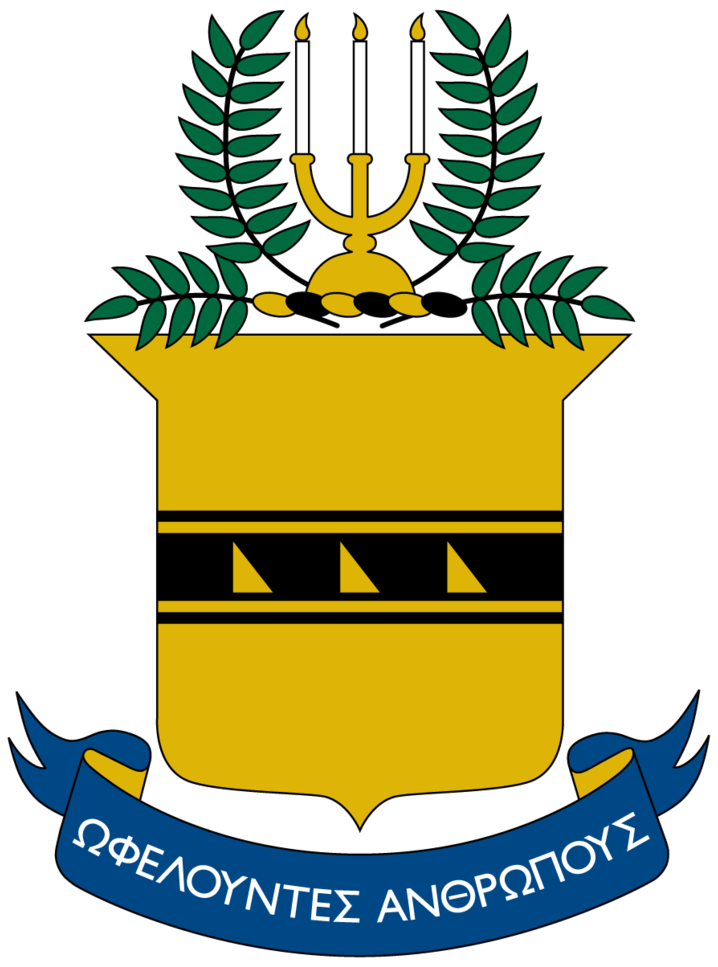
The Acacia flag was adopted in 1950. It consists of a vertical triband of gold-black-gold with the fraternity coat of arms in the center (or on a fess cotised sable three right triangles of the field) and the name in gold Old English lettering in an arc at the top.
Hub AI
Acacia Fraternity AI simulator
(@Acacia Fraternity_simulator)
Acacia Fraternity
Acacia Fraternity is a social fraternity founded in 1904 at the University of Michigan in Ann Arbor, Michigan. The fraternity has 20 active chapters and 3 associate chapters throughout Canada and the United States. The fraternity was founded by undergraduate Freemasons and was originally open only to men who had taken the Masonic obligations, but in 1933 the International Conclave elected to dispense with the Masonic prerequisite. In 1988, at the 45th Conclave, the fraternity elected to use "International" rather than "National" when referring to the fraternity.
Acacia Fraternity was founded on May 12, 1904, by a group of fourteen Freemasons attending the University of Michigan in Ann Arbor, Michigan. Its founders were James M. Cooper, Benjamin E. DeRoy, Edward E. Gallup, Jared W. Hawkins, Clarence G. Hill, Harvey J. Howard, George A. Malcolm, Ernest R. Ringo, William J. Marshall, Harlan P. Rowe, Ralph B. Scatterday, Charles A. Sink, Harry B. Washburn, and Walter S. Wheeler. Acacia is the only general fraternity to be founded in Michigan.
Since its founding, members of other fraternities have been eligible for membership in Acacia. However, the fraternity's rapid growth allowed it to stand on its own as a separate and co-equal fraternity, and in 1921 it dropped the provision that allowed men of other fraternities to join.
During the first two decades of the 20th century, Acacia was evolving from its roots as a successful Masonic club into the more standardized model of the other collegiate fraternities of the day. While maintaining its history and the symbolism derived from the Masonic fraternity, because of what Baird's cites (pIII-1) as a decline in the number of student Masons in undergraduate schools, Acacia opted in 1931 to relax the requirement that members must be Masons, removing the provision entirely in 1933.
Early chapters were named alphabetically using Hebrew letters; these first 26 chapters at their option continue to use their historical designations today, while younger chapters are named after the institution at which they are located.
The fraternity officially became International in 1988 at the 45th Conclave after the addition of the University of Western Ontario Chapter and the petition of the Carleton University Chapter.
The Sprig of Acacia represents immortality and is one of many Acacia symbols with roots in the Masonic Brotherhood. It is used by that organization during or after a funeral service, to honor a brother who has died. According to tradition, the symbol also reminds participants of the obligation that Masons must provide for the widow and children of their fallen brother. The Acacia fraternity has adopted this and other Masonic symbols, retaining them in linkage to its heritage.
The Acacia flag was adopted in 1950. It consists of a vertical triband of gold-black-gold with the fraternity coat of arms in the center (or on a fess cotised sable three right triangles of the field) and the name in gold Old English lettering in an arc at the top.
Recent media