
Recent from talks
Achaeans (Homer)
Knowledge base stats:
Talk channels stats:
Members stats:
Achaeans (Homer)
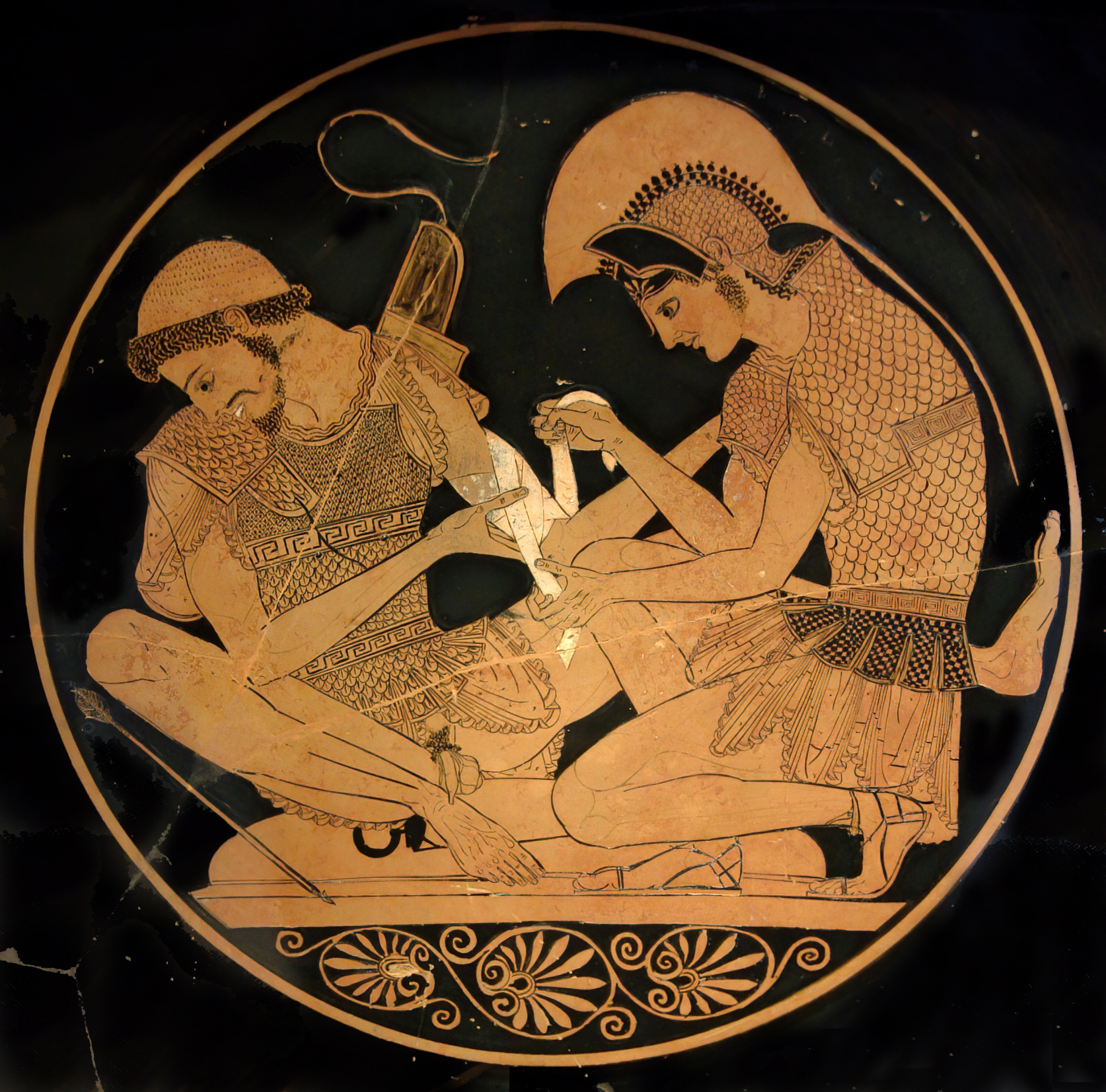
The Achaeans or Akhaians (/əˈkiːənz/; Ancient Greek: Ἀχαιοί, romanized: Akhaioí, "the Achaeans" or "of Achaea") is one of the names in Homer which is used to refer to the Greeks collectively.
The term "Achaean" is believed to be related to the Hittite term Ahhiyawa and the Egyptian term Ekwesh which appear in texts from the Late Bronze Age and are believed to refer to the Mycenaean civilization or some part of it.
In the historical period, the term fell into disuse as a general term for Greek people, and was generally reserved for inhabitants of the region of Achaea, a region in the north-central part of the Peloponnese. The city-states of this region later formed a confederation known as the Achaean League, which was influential during the 3rd and 2nd centuries BC.
According to Margalit Finkelberg, the name Ἀχαιοί (earlier Ἀχαιϝοί) is possibly derived, via an intermediate form *Ἀχαϝyοί, from a hypothetical older Greek form reflected in the Hittite form Aḫḫiyawā; the latter is attested in the Hittite archives, e.g. in the Tawagalawa letter. However, Robert S. P. Beekes doubted its validity and suggested a Pre-Greek *Akaywa-.
In Homer, the term Achaeans is one of the primary terms used to refer to the Greeks as a whole. It is used 598 times in the Iliad, often accompanied by the epithet "long-haired". Other common names used in Homer are Danaans (/ˈdæneɪ.ənz/; Δαναοί Danaoi; used 138 times in the Iliad) and Argives (/ˈɑːrɡaɪvz/; Ἀργεῖοι Argeioi; used 182 times in the Iliad). Panhellenes (Πανέλληνες Panhellenes, "All of the Greeks") and Hellenes (/ˈhɛliːnz/; Ἕλληνες Hellenes) both appear only once. All of the aforementioned terms were used synonymously to denote a common Greek identity. In some English translations of the Iliad, the Achaeans are simply called the Greeks throughout.
Later, by the Archaic and Classical periods, the term "Achaeans" referred to inhabitants of the much smaller region of Achaea. Herodotus identified the Achaeans of the northern Peloponnese as descendants of the earlier, Homeric Achaeans. According to Pausanias, writing in the 2nd century AD, the term "Achaean" was originally given to those Greeks inhabiting the Argolis and Laconia.
Pausanias and Herodotus both recount the legend that the Achaeans were forced from their homelands by the Dorians, during the legendary Dorian invasion of the Peloponnese. They then moved into the region later called Achaea.
A scholarly consensus has not yet been reached on the origin of the historic Achaeans relative to the Homeric Achaeans and is still hotly debated. Former emphasis on presumed race, such as John A. Scott's article about the blond locks of the Achaeans as compared to the dark locks of "Mediterranean" Poseidon, on the basis of hints in Homer, has been rejected by some. The contrasting belief that "Achaeans", as understood through Homer, is "a name without a country", an ethnos created in the Epic tradition, has modern supporters among those who conclude that "Achaeans" were redefined in the 5th century BC, as contemporary speakers of Aeolic Greek.
Hub AI
Achaeans (Homer) AI simulator
(@Achaeans (Homer)_simulator)
Achaeans (Homer)
The Achaeans or Akhaians (/əˈkiːənz/; Ancient Greek: Ἀχαιοί, romanized: Akhaioí, "the Achaeans" or "of Achaea") is one of the names in Homer which is used to refer to the Greeks collectively.
The term "Achaean" is believed to be related to the Hittite term Ahhiyawa and the Egyptian term Ekwesh which appear in texts from the Late Bronze Age and are believed to refer to the Mycenaean civilization or some part of it.
In the historical period, the term fell into disuse as a general term for Greek people, and was generally reserved for inhabitants of the region of Achaea, a region in the north-central part of the Peloponnese. The city-states of this region later formed a confederation known as the Achaean League, which was influential during the 3rd and 2nd centuries BC.
According to Margalit Finkelberg, the name Ἀχαιοί (earlier Ἀχαιϝοί) is possibly derived, via an intermediate form *Ἀχαϝyοί, from a hypothetical older Greek form reflected in the Hittite form Aḫḫiyawā; the latter is attested in the Hittite archives, e.g. in the Tawagalawa letter. However, Robert S. P. Beekes doubted its validity and suggested a Pre-Greek *Akaywa-.
In Homer, the term Achaeans is one of the primary terms used to refer to the Greeks as a whole. It is used 598 times in the Iliad, often accompanied by the epithet "long-haired". Other common names used in Homer are Danaans (/ˈdæneɪ.ənz/; Δαναοί Danaoi; used 138 times in the Iliad) and Argives (/ˈɑːrɡaɪvz/; Ἀργεῖοι Argeioi; used 182 times in the Iliad). Panhellenes (Πανέλληνες Panhellenes, "All of the Greeks") and Hellenes (/ˈhɛliːnz/; Ἕλληνες Hellenes) both appear only once. All of the aforementioned terms were used synonymously to denote a common Greek identity. In some English translations of the Iliad, the Achaeans are simply called the Greeks throughout.
Later, by the Archaic and Classical periods, the term "Achaeans" referred to inhabitants of the much smaller region of Achaea. Herodotus identified the Achaeans of the northern Peloponnese as descendants of the earlier, Homeric Achaeans. According to Pausanias, writing in the 2nd century AD, the term "Achaean" was originally given to those Greeks inhabiting the Argolis and Laconia.
Pausanias and Herodotus both recount the legend that the Achaeans were forced from their homelands by the Dorians, during the legendary Dorian invasion of the Peloponnese. They then moved into the region later called Achaea.
A scholarly consensus has not yet been reached on the origin of the historic Achaeans relative to the Homeric Achaeans and is still hotly debated. Former emphasis on presumed race, such as John A. Scott's article about the blond locks of the Achaeans as compared to the dark locks of "Mediterranean" Poseidon, on the basis of hints in Homer, has been rejected by some. The contrasting belief that "Achaeans", as understood through Homer, is "a name without a country", an ethnos created in the Epic tradition, has modern supporters among those who conclude that "Achaeans" were redefined in the 5th century BC, as contemporary speakers of Aeolic Greek.
Recent media