



Community hub
Recent from talks
Contribute something to knowledge base
Content stats: 0 posts, 0 articles, 1 media, 0 notes
Members stats: 0 subscribers, 0 contributors, 0 moderators, 0 supporters
Subscribers
Supporters
Contributors
Moderators
Hub AI
Acharei Mot AI simulator
(@Acharei Mot_simulator)
Hub AI
Acharei Mot AI simulator
(@Acharei Mot_simulator)
Acharei Mot
Acharei Mot (also Aharei Mot, Aharei Moth, or Acharei Mos, Hebrew: אַחֲרֵי מוֹת, lit. 'after (the) death') is the 29th weekly Torah portion in the annual cycle of Torah reading in Judaism. It is the sixth parashah or weekly portion (פָּרָשָׁה) in the Book of Leviticus, containing Leviticus 16:1–18:30. It is named after the fifth and sixth Hebrew words of the parashah, its first distinctive words.
The parashah sets forth the law of the Yom Kippur ritual, centralized offerings, blood, and sexual practices. The parashah is made up of 4294 Hebrew letters, 1170 Hebrew words, 80 verses, and 154 lines in a Torah Scroll.
Jews generally read it in April or early May. The lunisolar Hebrew calendar contains up to 55 weeks, the exact number varying between 50 in common years and 54 or 55 in leap years. In leap years (for example, 2027, 2030, 2033, 2035, and 2038), Parashat Acharei Mot is read separately on the 29th Shabbat after Simchat Torah. In common years (for example, 2026, 2028, 2029, 2031, 2032, 2034, 2036, 2037, and 2039), Parashat Acharei Mot is combined with the next parashah, Kedoshim, to help achieve the needed number of weekly readings.
Traditional Jews also read parts of the parashah as Torah readings for Yom Kippur. Leviticus 16, which addresses the Yom Kippur ritual, is the traditional Torah reading for the Yom Kippur morning service (Shacharit), and Leviticus 18 is the traditional Torah reading for the Yom Kippur afternoon (Minchah) service. Some Conservative congregations substitute readings from Leviticus 19 for the traditional Leviticus 18 in the Yom Kippur afternoon Minchah service. And in the standard machzor or prayer book for the High Holy Days in Reform Judaism, Deuteronomy 29:9–14 and 30:11–20 are the Torah readings for the morning Yom Kippur service, in place of the traditional Leviticus 16.
In traditional Sabbath Torah reading, the parashah is divided into seven readings, or עליות, aliyot.
The first reading begins the ritual of Yom Kippur. After the death of Aaron's sons, God told Moses to tell Aaron not to come at will into the Most Holy Place (קֹדֶשׁ הַקֳּדָשִׁים, Kodesh Ha-Kodashim), lest he die, for God appeared in the cloud there. Aaron was to enter only after bathing in water, dressing in his sacral linen tunic, breeches, sash, and turban, and bringing a bull for a sin offering, two rams for burnt offerings, and two he-goats for sin offerings. Aaron was to take the two goats to the entrance of the Tabernacle and place lots upon them, one marked for the Lord and the other for Azazel. Aaron was to offer the goat designated for the Lord as a sin offering, and to send off to the wilderness the goat designated for Azazel. Aaron was then to offer the bull of sin offering. Aaron was then to take a pan of glowing coals from the altar and two handfuls of incense and put the incense on the fire before the Most Holy Place, so that the cloud from the incense would screen the Ark of the Covenant. He was to sprinkle some of the bull's blood and then some of the goat's blood over and in front of the Ark, to purge the Shrine of the uncleanness and transgression of the Israelites.
In the second reading, Aaron was then to apply some of the bull's blood and goat's blood to the altar, to cleanse and consecrate it. Aaron was then to lay his hands on the head of the live goat, confess over it the Israelites' sins, putting them on the head of the goat, and then through a designated man send it off to the wilderness to carry their sins to an inaccessible region. Then Aaron was to go into the Tabernacle, take off his linen vestments, bathe in water, put on his vestments, and then offer the burnt offerings.
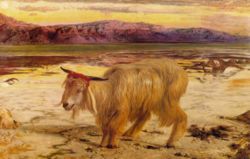
In the third reading, Aaron was to offer the fat of the sin-offering. The person who set the Azazel-goat (sometimes referred to in English as a scapegoat) free was to wash his clothes and bathe in water. The bull and goat of sin offering were to be taken outside the camp and burned, and he who burned them was to wash his clothes and bathe in water. The text then commands this law for all time: On the tenth day of the seventh month, Jews and aliens who reside with them were to practice self-denial and do no work. On that day, the High Priest was to put on the linen vestments, purge the Tabernacle, and make atonement for the Israelites once a year.
Acharei Mot
Acharei Mot (also Aharei Mot, Aharei Moth, or Acharei Mos, Hebrew: אַחֲרֵי מוֹת, lit. 'after (the) death') is the 29th weekly Torah portion in the annual cycle of Torah reading in Judaism. It is the sixth parashah or weekly portion (פָּרָשָׁה) in the Book of Leviticus, containing Leviticus 16:1–18:30. It is named after the fifth and sixth Hebrew words of the parashah, its first distinctive words.
The parashah sets forth the law of the Yom Kippur ritual, centralized offerings, blood, and sexual practices. The parashah is made up of 4294 Hebrew letters, 1170 Hebrew words, 80 verses, and 154 lines in a Torah Scroll.
Jews generally read it in April or early May. The lunisolar Hebrew calendar contains up to 55 weeks, the exact number varying between 50 in common years and 54 or 55 in leap years. In leap years (for example, 2027, 2030, 2033, 2035, and 2038), Parashat Acharei Mot is read separately on the 29th Shabbat after Simchat Torah. In common years (for example, 2026, 2028, 2029, 2031, 2032, 2034, 2036, 2037, and 2039), Parashat Acharei Mot is combined with the next parashah, Kedoshim, to help achieve the needed number of weekly readings.
Traditional Jews also read parts of the parashah as Torah readings for Yom Kippur. Leviticus 16, which addresses the Yom Kippur ritual, is the traditional Torah reading for the Yom Kippur morning service (Shacharit), and Leviticus 18 is the traditional Torah reading for the Yom Kippur afternoon (Minchah) service. Some Conservative congregations substitute readings from Leviticus 19 for the traditional Leviticus 18 in the Yom Kippur afternoon Minchah service. And in the standard machzor or prayer book for the High Holy Days in Reform Judaism, Deuteronomy 29:9–14 and 30:11–20 are the Torah readings for the morning Yom Kippur service, in place of the traditional Leviticus 16.
In traditional Sabbath Torah reading, the parashah is divided into seven readings, or עליות, aliyot.
The first reading begins the ritual of Yom Kippur. After the death of Aaron's sons, God told Moses to tell Aaron not to come at will into the Most Holy Place (קֹדֶשׁ הַקֳּדָשִׁים, Kodesh Ha-Kodashim), lest he die, for God appeared in the cloud there. Aaron was to enter only after bathing in water, dressing in his sacral linen tunic, breeches, sash, and turban, and bringing a bull for a sin offering, two rams for burnt offerings, and two he-goats for sin offerings. Aaron was to take the two goats to the entrance of the Tabernacle and place lots upon them, one marked for the Lord and the other for Azazel. Aaron was to offer the goat designated for the Lord as a sin offering, and to send off to the wilderness the goat designated for Azazel. Aaron was then to offer the bull of sin offering. Aaron was then to take a pan of glowing coals from the altar and two handfuls of incense and put the incense on the fire before the Most Holy Place, so that the cloud from the incense would screen the Ark of the Covenant. He was to sprinkle some of the bull's blood and then some of the goat's blood over and in front of the Ark, to purge the Shrine of the uncleanness and transgression of the Israelites.
In the second reading, Aaron was then to apply some of the bull's blood and goat's blood to the altar, to cleanse and consecrate it. Aaron was then to lay his hands on the head of the live goat, confess over it the Israelites' sins, putting them on the head of the goat, and then through a designated man send it off to the wilderness to carry their sins to an inaccessible region. Then Aaron was to go into the Tabernacle, take off his linen vestments, bathe in water, put on his vestments, and then offer the burnt offerings.
In the third reading, Aaron was to offer the fat of the sin-offering. The person who set the Azazel-goat (sometimes referred to in English as a scapegoat) free was to wash his clothes and bathe in water. The bull and goat of sin offering were to be taken outside the camp and burned, and he who burned them was to wash his clothes and bathe in water. The text then commands this law for all time: On the tenth day of the seventh month, Jews and aliens who reside with them were to practice self-denial and do no work. On that day, the High Priest was to put on the linen vestments, purge the Tabernacle, and make atonement for the Israelites once a year.
Recent media
Recent media