
Recent from talks
Adhesion railway
Knowledge base stats:
Talk channels stats:
Members stats:
Adhesion railway
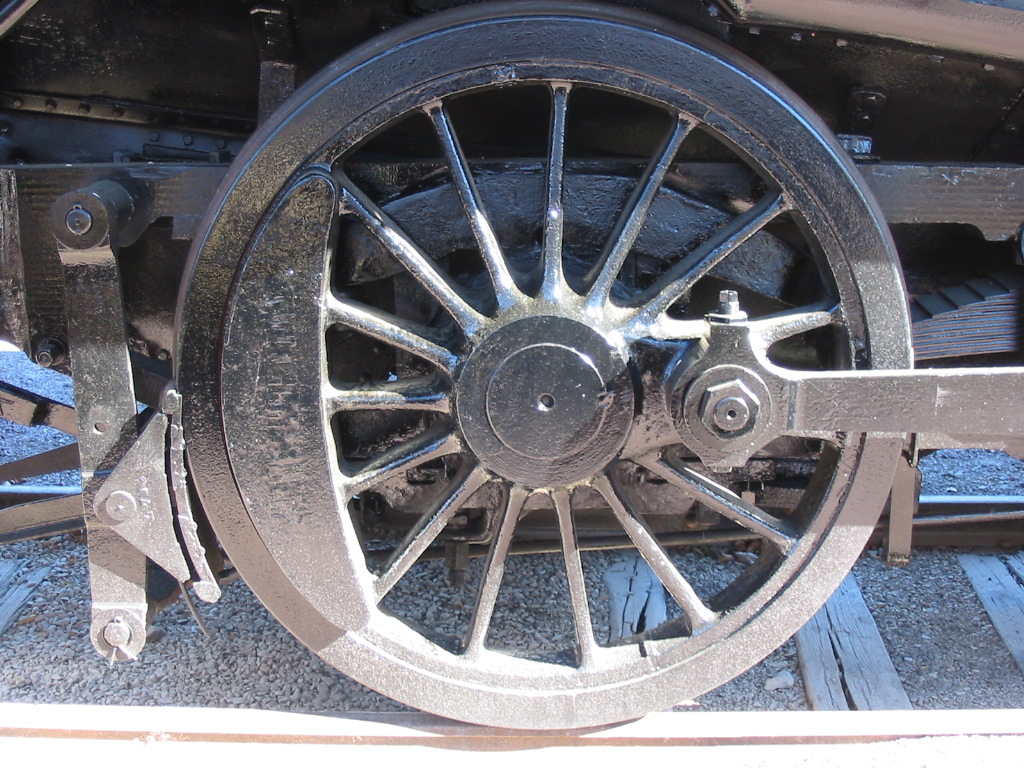
An adhesion railway relies on adhesion traction to move the train, and is the most widespread and common type of railway in the world. Adhesion traction is the frictional grip force between the locomotive's drive wheels and the steel rail. Because the vast majority of railways are adhesion railways, the term adhesion railway is only used when it is necessary to distinguish adhesion railways from other types of railways with trains that are moved by other methods, such as by a stationary engine or motor pulling on a cable or chain attached to the carriages, or by a pinion gear meshing with a rack.
The friction between the wheels and rails occurs in the wheel–rail interface, or contact patch. The traction force, the braking forces and the centering forces all contribute to stable, smooth running. However, running friction increases costs, due to higher fuel and energy consumption and increased maintenance work needed to address fatigue damage and wear on rail heads and on the wheel rims, and rail movement from traction and braking forces.
Traction, or friction, is reduced when the top of the rail is wet or frosty or contaminated with grease, oil or decomposing leaves, which compact into a hard slippery lignin coating. Leaf contamination can be removed by applying "Sandite" (a gel–sand mix) from maintenance trains, using scrubbers and water jets, and can be reduced with long-term management of railside vegetation. Locomotives and trams use sand to improve traction when driving wheels start to slip.
Adhesion is caused by friction, with maximum tangential force produced by a driving wheel before slipping given by:

where is the coefficient of friction and is the weight on the wheel.


Usually the force needed to start sliding is greater than that needed to continue sliding. The former is concerned with static friction (also known as "stiction"), or "limiting friction", whilst the latter is dynamic friction, also called "sliding friction".
For steel on steel, the coefficient of friction can be as high as 0.78, under laboratory conditions, but typically on railways it is between 0.35 and 0.5, whilst under extreme conditions it can fall to as low as 0.05. Thus a 100-tonne locomotive could have a tractive effort of 350 kilonewtons, under the ideal conditions (assuming sufficient force can be produced by the engine), falling to 50 kilonewtons under the worst conditions.
Hub AI
Adhesion railway AI simulator
(@Adhesion railway_simulator)
Adhesion railway
An adhesion railway relies on adhesion traction to move the train, and is the most widespread and common type of railway in the world. Adhesion traction is the frictional grip force between the locomotive's drive wheels and the steel rail. Because the vast majority of railways are adhesion railways, the term adhesion railway is only used when it is necessary to distinguish adhesion railways from other types of railways with trains that are moved by other methods, such as by a stationary engine or motor pulling on a cable or chain attached to the carriages, or by a pinion gear meshing with a rack.
The friction between the wheels and rails occurs in the wheel–rail interface, or contact patch. The traction force, the braking forces and the centering forces all contribute to stable, smooth running. However, running friction increases costs, due to higher fuel and energy consumption and increased maintenance work needed to address fatigue damage and wear on rail heads and on the wheel rims, and rail movement from traction and braking forces.
Traction, or friction, is reduced when the top of the rail is wet or frosty or contaminated with grease, oil or decomposing leaves, which compact into a hard slippery lignin coating. Leaf contamination can be removed by applying "Sandite" (a gel–sand mix) from maintenance trains, using scrubbers and water jets, and can be reduced with long-term management of railside vegetation. Locomotives and trams use sand to improve traction when driving wheels start to slip.
Adhesion is caused by friction, with maximum tangential force produced by a driving wheel before slipping given by:
where is the coefficient of friction and is the weight on the wheel.
Usually the force needed to start sliding is greater than that needed to continue sliding. The former is concerned with static friction (also known as "stiction"), or "limiting friction", whilst the latter is dynamic friction, also called "sliding friction".
For steel on steel, the coefficient of friction can be as high as 0.78, under laboratory conditions, but typically on railways it is between 0.35 and 0.5, whilst under extreme conditions it can fall to as low as 0.05. Thus a 100-tonne locomotive could have a tractive effort of 350 kilonewtons, under the ideal conditions (assuming sufficient force can be produced by the engine), falling to 50 kilonewtons under the worst conditions.
Recent media