
Recent from talks
Adolph Zukor
Knowledge base stats:
Talk channels stats:
Members stats:
Adolph Zukor
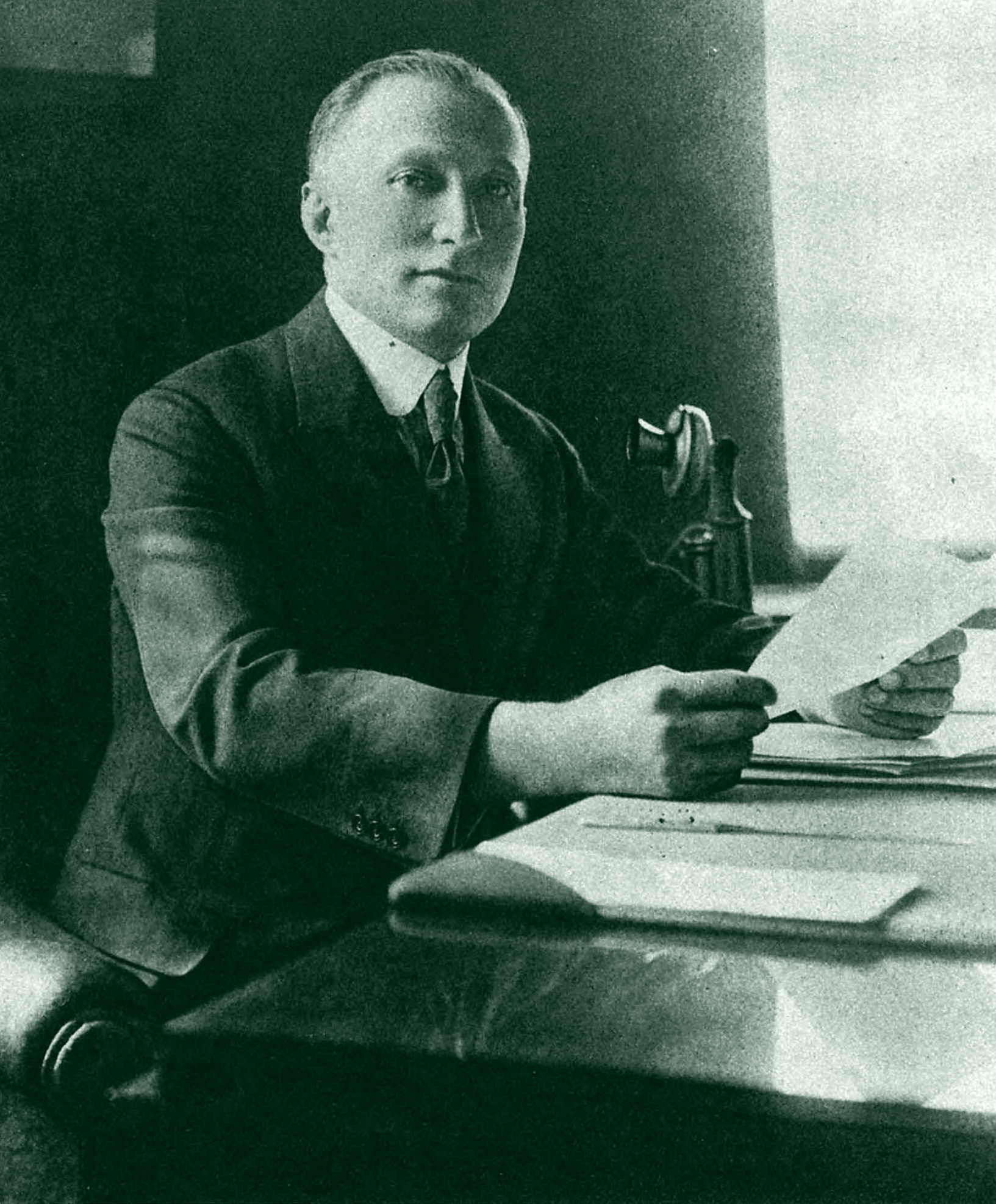
Adolph Zukor (/ˈzuːkər/; Hungarian: Czukor Adolf; January 7, 1873 – June 10, 1976) was a Hungarian-American film producer best known as one of the three founders of Paramount Pictures. He produced one of America's first feature-length films, The Prisoner of Zenda, in 1913.
Zukor was born to an Ashkenazi Jewish family in Ricse, in the Kingdom of Hungary in January 1873, which was then a part of the Austro-Hungarian Empire. His father, Jacob, who operated a general store, died when he was a toddler, while his mother, Hannah Liebermann, died when he was 7 years old. Adolph and his brother Arthur moved in with Kalman Liebermann, their uncle. Liebermann, a rabbi, expected his nephews to become rabbis, but instead Adolph served a three-year apprenticeship in the dry goods store of family friends. When he was 16, he decided to emigrate to the United States. He sailed from Hamburg on the s/s Rugia on March 1 and arrived in New York City under the name Adolf Zuckery on March 16, 1891. Like most immigrants, he began modestly. After landing in New York City, he began working in an upholstery shop. A friend then got him a job as an apprentice at a furrier.
Zukor stayed in New York City for two years. When he left to become a "contract" worker, sewing fur pieces and selling them himself, he was 20 years old and an accomplished designer. He was young and adventuresome, and the 1893 Columbian Exposition in Chicago drew him to the Midwest. There he started a fur business. In the second season of operation, Zukor's Novelty Fur Company expanded to 25 men and opened a branch.
Historian Neal Gabler wrote, "one of the stubborn fallacies of movie history is that the men who created the film industry were all impoverished young vulgarians..." Zukor clearly didn't fit this profile. By 1903, he already looked and lived like a wealthy young burgher, and he certainly earned the income of one. He had a commodious apartment at 111th Street and Seventh Avenue in New York City's wealthy German-Jewish section".
In 1918, he moved to New City, Rockland County, New York, where he purchased 300 acres of land from Lawrence Abraham, heir to the A&S Department Stores. Abraham had already built a sizable house, a nine-hole golf course and a swimming pool on this property. Two years later, Zukor bought an additional 500 acres, built a night house, guest house, movie theater, locker room, greenhouses, garages and staff quarters, and hired golf architect A.W. Tillinghast to build an 18-hole championship golf course. Today, Zukor's estate is the private Paramount Country Club.
In 1903, he became involved in the film industry when his cousin, Max Goldstein, approached him for a loan to invest in a chain of theaters. These theaters were started by Mitchell Mark in Buffalo, New York, and hosted Edisonia Hall. Mark needed investors to expand his chain of theaters. Zukor gave Goldstein the loan and formed a partnership with Mark and Morris Kohn, a friend of Zukor's who also invested in the theaters. Zukor, Mark, and Kohn opened a penny arcade operating as The Automatic Vaudeville Company on 14th Street in New York City. They soon opened branches in Boston, Philadelphia, and Newark, with funding by Marcus Loew. By 1910, Zukor already owned a nickelodeon chain and became Leow's partner in a theater circuit. Two years later, he sold his shares in Loew's company in order to purchase the French film, Queen Elizabeth.
In 1912, Adolph Zukor established Famous Players Film Company—advertising "Famous Players in Famous Plays"—as the American distribution company for the French film production Les Amours de la reine Élisabeth starring Sarah Bernhardt. The following year he obtained the financial backing of the Frohman brothers, the powerful New York City theatre impresarios. Their primary goal was to bring noted stage actors to the screen and Zukor went on to produce The Prisoner of Zenda (1913). He purchased an armory on 26th Street in Manhattan and converted it into Chelsea Studios, a movie studio that is still used today.
In 1916, the company merged with Jesse L. Lasky's company to form Famous Players–Lasky.
Hub AI
Adolph Zukor AI simulator
(@Adolph Zukor_simulator)
Adolph Zukor
Adolph Zukor (/ˈzuːkər/; Hungarian: Czukor Adolf; January 7, 1873 – June 10, 1976) was a Hungarian-American film producer best known as one of the three founders of Paramount Pictures. He produced one of America's first feature-length films, The Prisoner of Zenda, in 1913.
Zukor was born to an Ashkenazi Jewish family in Ricse, in the Kingdom of Hungary in January 1873, which was then a part of the Austro-Hungarian Empire. His father, Jacob, who operated a general store, died when he was a toddler, while his mother, Hannah Liebermann, died when he was 7 years old. Adolph and his brother Arthur moved in with Kalman Liebermann, their uncle. Liebermann, a rabbi, expected his nephews to become rabbis, but instead Adolph served a three-year apprenticeship in the dry goods store of family friends. When he was 16, he decided to emigrate to the United States. He sailed from Hamburg on the s/s Rugia on March 1 and arrived in New York City under the name Adolf Zuckery on March 16, 1891. Like most immigrants, he began modestly. After landing in New York City, he began working in an upholstery shop. A friend then got him a job as an apprentice at a furrier.
Zukor stayed in New York City for two years. When he left to become a "contract" worker, sewing fur pieces and selling them himself, he was 20 years old and an accomplished designer. He was young and adventuresome, and the 1893 Columbian Exposition in Chicago drew him to the Midwest. There he started a fur business. In the second season of operation, Zukor's Novelty Fur Company expanded to 25 men and opened a branch.
Historian Neal Gabler wrote, "one of the stubborn fallacies of movie history is that the men who created the film industry were all impoverished young vulgarians..." Zukor clearly didn't fit this profile. By 1903, he already looked and lived like a wealthy young burgher, and he certainly earned the income of one. He had a commodious apartment at 111th Street and Seventh Avenue in New York City's wealthy German-Jewish section".
In 1918, he moved to New City, Rockland County, New York, where he purchased 300 acres of land from Lawrence Abraham, heir to the A&S Department Stores. Abraham had already built a sizable house, a nine-hole golf course and a swimming pool on this property. Two years later, Zukor bought an additional 500 acres, built a night house, guest house, movie theater, locker room, greenhouses, garages and staff quarters, and hired golf architect A.W. Tillinghast to build an 18-hole championship golf course. Today, Zukor's estate is the private Paramount Country Club.
In 1903, he became involved in the film industry when his cousin, Max Goldstein, approached him for a loan to invest in a chain of theaters. These theaters were started by Mitchell Mark in Buffalo, New York, and hosted Edisonia Hall. Mark needed investors to expand his chain of theaters. Zukor gave Goldstein the loan and formed a partnership with Mark and Morris Kohn, a friend of Zukor's who also invested in the theaters. Zukor, Mark, and Kohn opened a penny arcade operating as The Automatic Vaudeville Company on 14th Street in New York City. They soon opened branches in Boston, Philadelphia, and Newark, with funding by Marcus Loew. By 1910, Zukor already owned a nickelodeon chain and became Leow's partner in a theater circuit. Two years later, he sold his shares in Loew's company in order to purchase the French film, Queen Elizabeth.
In 1912, Adolph Zukor established Famous Players Film Company—advertising "Famous Players in Famous Plays"—as the American distribution company for the French film production Les Amours de la reine Élisabeth starring Sarah Bernhardt. The following year he obtained the financial backing of the Frohman brothers, the powerful New York City theatre impresarios. Their primary goal was to bring noted stage actors to the screen and Zukor went on to produce The Prisoner of Zenda (1913). He purchased an armory on 26th Street in Manhattan and converted it into Chelsea Studios, a movie studio that is still used today.
In 1916, the company merged with Jesse L. Lasky's company to form Famous Players–Lasky.
Recent media