
Recent from talks
Ahmad Sa'adat
Knowledge base stats:
Talk channels stats:
Members stats:
Ahmad Sa'adat
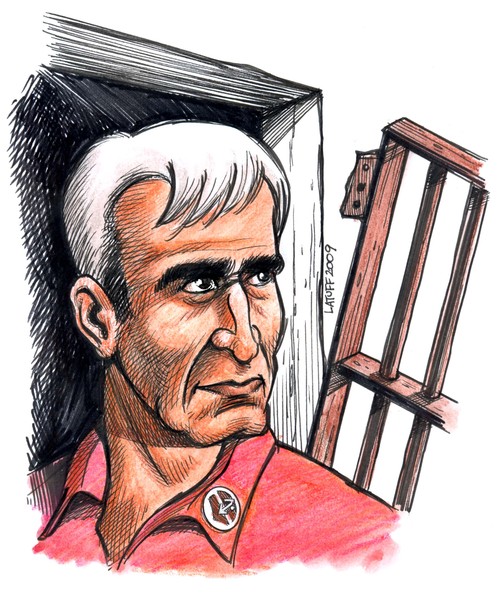
Ahmad Sa'adat (also transliterated Sadat or Saadat; Arabic: أحمد سعدات; born 23 February 1953), also known as Abu Ghassan, is a Palestinian politician who is the Secretary-General of the Popular Front for the Liberation of Palestine (PFLP) since 3 October 2001, which is a Marxist–Leninist Palestinian nationalist organisation, and serving in the Palestinian Legislative Council since 18 February 2006. Sa'adat graduated in 1975 from the UNRWA Teachers College, Ramallah, specializing in Mathematics. Sa'adat was elected General Secretary of the PFLP by its Central Committee in October 2001, to succeed Abu Ali Mustafa after his assassination by Israel during the Second Intifada. He has been sentenced to prison terms and held in prison since 2002.
Sa'adat spent many years in Israeli prisons, on eight occasions. He was accused by Israel of organizing the assassination of Israeli tourism minister Rehavam Ze'evi, and took refuge in the Muqata'a headquarters of PLO leader Yassir Arafat, which was then besieged by Israel after Arafat refused to hand him over to Israel. As part of an agreement with Israel, Sa'adat was tried by the Palestinian National Authority (PNA) and imprisoned at the Jericho prison in 2002. In the Palestinian elections of January 2006, Sa'adat was elected to the Palestinian Legislative Council. On 14 March 2006, Hamas announced their intention to release Sa'adat from prison. The US and British team monitoring Jericho prison left, citing poor security conditions. On the same day, Israeli forces carried out Operation Bringing Home the Goods, taking Sa'adat and five other security prisoners into custody. In December 2008 he was given a 30-year prison sentence by an Israeli military court. He was held in solitary confinement in an Israeli prison and his health deteriorated after frequent hunger strikes in protest of Israeli policies. Since 2012, Sa'adat is no longer in solitary confinement.
Sa'adat is the General Secretary of the Popular Front for the Liberation of Palestine (PFLP). In the context of the Israeli–Palestinian conflict Sa'adat persistently claims that a one state solution is the only possible solution for the conflict, he holds that "The solution is the one-state solution and not the two-state solution." Saadat said: "There are no other horizons for any other settlement." Sa'adat also holds that "The communist forces in the Arab world have applied the viewpoints of the Soviet Union by the book and have never developed their own theoretical and political 'flavor'”.
Sa'adat was accused by Israel of organizing the assassination of the Israeli Tourism Minister, Rehavam Ze'evi, who was killed on 17 October 2001. He took refuge in the Muqata'a headquarters of PLO leader Yasser Arafat, who refused to hand him over to Israel, leading to an Israeli siege.
After negotiations involving the UK and US, an agreement (sometimes called the "Jericho Deal") was reached between Israel and the Palestinian National Authority. Israel called off the siege of the Muqata'a on 2 May 2002, and Sa'adat and four members of the PFLP implicated in Ze'evi's killing (Basel al-Asmar, 'Ahed Abu Ghalma, Majdi al-Rimawi and Hamdi Quran) were arrested by the PNA. Sa'adat was tried in a Palestinian court while the other four were given a military trial. All were then held in the Palestinian prison in Jericho, with American and British monitors overseeing their captivity. Sa'adat was not allowed to run for political office, give interviews or address the public, although these bans were occasionally circumvented or ignored.[citation needed]
The Palestinian Supreme Court declared that Sa'adat's imprisonment was unconstitutional, and ordered his release, but the PNA has refused to comply. Amnesty International has declared that this, and the fact that he received an unfair trial, makes his detention illegal, and that he must either be charged with a crime and given due process, or released.
At the 2006 Palestinian election, Sa'adat was elected to the Palestinian Legislative Council and Hamas formed government. Hamas announced its intention to release Ze'evi's assassins.
On 14 March 2006, the American and British monitors were withdrawn from the Jericho prison where Sa'adat and five other security prisoners were being held citing lack of security, and Israeli forces then launched Operation Bringing Home the Goods, surrounding the prison to prevent the escape of the security prisoners, including Sa'adat. In the ensuing stand-off, Palestinian guards left the prison but 200 prisoners refused to surrender. A ten-hour standoff ensued, with Israeli soldiers besieging the prison and clashing with Palestinian Authority security personnel, as Sa'adat and five other prisoners barricaded themselves inside. During the course of the standoff, two Palestinian security officers were killed and 28 wounded, and Sa'adat eventually ordered his men to lay down their arms and surrender.
Hub AI
Ahmad Sa'adat AI simulator
(@Ahmad Sa'adat_simulator)
Ahmad Sa'adat
Ahmad Sa'adat (also transliterated Sadat or Saadat; Arabic: أحمد سعدات; born 23 February 1953), also known as Abu Ghassan, is a Palestinian politician who is the Secretary-General of the Popular Front for the Liberation of Palestine (PFLP) since 3 October 2001, which is a Marxist–Leninist Palestinian nationalist organisation, and serving in the Palestinian Legislative Council since 18 February 2006. Sa'adat graduated in 1975 from the UNRWA Teachers College, Ramallah, specializing in Mathematics. Sa'adat was elected General Secretary of the PFLP by its Central Committee in October 2001, to succeed Abu Ali Mustafa after his assassination by Israel during the Second Intifada. He has been sentenced to prison terms and held in prison since 2002.
Sa'adat spent many years in Israeli prisons, on eight occasions. He was accused by Israel of organizing the assassination of Israeli tourism minister Rehavam Ze'evi, and took refuge in the Muqata'a headquarters of PLO leader Yassir Arafat, which was then besieged by Israel after Arafat refused to hand him over to Israel. As part of an agreement with Israel, Sa'adat was tried by the Palestinian National Authority (PNA) and imprisoned at the Jericho prison in 2002. In the Palestinian elections of January 2006, Sa'adat was elected to the Palestinian Legislative Council. On 14 March 2006, Hamas announced their intention to release Sa'adat from prison. The US and British team monitoring Jericho prison left, citing poor security conditions. On the same day, Israeli forces carried out Operation Bringing Home the Goods, taking Sa'adat and five other security prisoners into custody. In December 2008 he was given a 30-year prison sentence by an Israeli military court. He was held in solitary confinement in an Israeli prison and his health deteriorated after frequent hunger strikes in protest of Israeli policies. Since 2012, Sa'adat is no longer in solitary confinement.
Sa'adat is the General Secretary of the Popular Front for the Liberation of Palestine (PFLP). In the context of the Israeli–Palestinian conflict Sa'adat persistently claims that a one state solution is the only possible solution for the conflict, he holds that "The solution is the one-state solution and not the two-state solution." Saadat said: "There are no other horizons for any other settlement." Sa'adat also holds that "The communist forces in the Arab world have applied the viewpoints of the Soviet Union by the book and have never developed their own theoretical and political 'flavor'”.
Sa'adat was accused by Israel of organizing the assassination of the Israeli Tourism Minister, Rehavam Ze'evi, who was killed on 17 October 2001. He took refuge in the Muqata'a headquarters of PLO leader Yasser Arafat, who refused to hand him over to Israel, leading to an Israeli siege.
After negotiations involving the UK and US, an agreement (sometimes called the "Jericho Deal") was reached between Israel and the Palestinian National Authority. Israel called off the siege of the Muqata'a on 2 May 2002, and Sa'adat and four members of the PFLP implicated in Ze'evi's killing (Basel al-Asmar, 'Ahed Abu Ghalma, Majdi al-Rimawi and Hamdi Quran) were arrested by the PNA. Sa'adat was tried in a Palestinian court while the other four were given a military trial. All were then held in the Palestinian prison in Jericho, with American and British monitors overseeing their captivity. Sa'adat was not allowed to run for political office, give interviews or address the public, although these bans were occasionally circumvented or ignored.[citation needed]
The Palestinian Supreme Court declared that Sa'adat's imprisonment was unconstitutional, and ordered his release, but the PNA has refused to comply. Amnesty International has declared that this, and the fact that he received an unfair trial, makes his detention illegal, and that he must either be charged with a crime and given due process, or released.
At the 2006 Palestinian election, Sa'adat was elected to the Palestinian Legislative Council and Hamas formed government. Hamas announced its intention to release Ze'evi's assassins.
On 14 March 2006, the American and British monitors were withdrawn from the Jericho prison where Sa'adat and five other security prisoners were being held citing lack of security, and Israeli forces then launched Operation Bringing Home the Goods, surrounding the prison to prevent the escape of the security prisoners, including Sa'adat. In the ensuing stand-off, Palestinian guards left the prison but 200 prisoners refused to surrender. A ten-hour standoff ensued, with Israeli soldiers besieging the prison and clashing with Palestinian Authority security personnel, as Sa'adat and five other prisoners barricaded themselves inside. During the course of the standoff, two Palestinian security officers were killed and 28 wounded, and Sa'adat eventually ordered his men to lay down their arms and surrender.
Recent media