



Community hub
Recent from talks
Knowledge base stats:
Talk channels stats:
Members stats:
Hardpoint
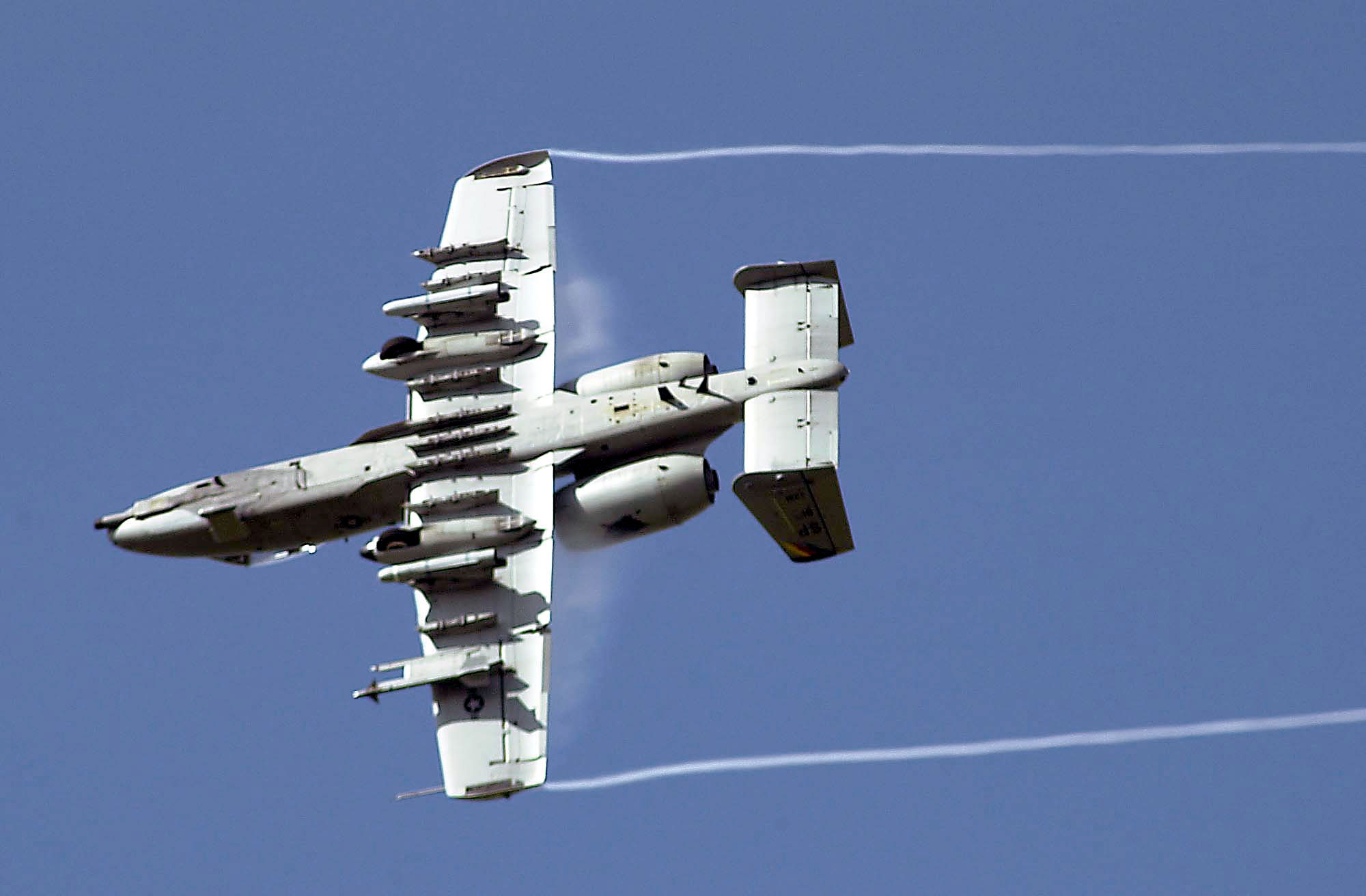
A hardpoint is an attachment location on a structural frame designed to transfer force and carry an external or internal load. The term is usually used to refer to the mounting points (more formally known as a weapon station or station) on the airframe of military aircraft that carry weapons (e.g. gun pods and rocket pods), ordnances (bombs and missiles) and support equipment (e.g. flares and countermeasures, targeting pods or drop tanks), and also include hardpoints (also known as pylons) on the wings or fuselage of a military transport aircraft, commercial airliner or private jet where external turbofan jet engines are often mounted.
In aeronautics, the term station is used to refer to a point of carriage on the frame of an aircraft. A station is usually rated to carry a certain amount of payload. It is a design number which already has taken the rated g-forces of the frame into account. Therefore, point loads on the structure from externally or internally mounted stores, engines, equipment, passengers, and payload are simply the weight of the item and any pylons, seats, mounting brackets, etc. multiplied by the maximum load factor which the aircraft will sustain when these items are carried.
In civilian aviation a station is usually used to carry an external engine or a fuel tank. As engines are usually a fixed installation, operators usually refer to them with the designation of the engine. Therefore, the term is mostly being used for load points meant for non-fixed installation.
In the military, a station can also be called weapons station. Unlike civilian aircraft, NATO aircraft frame strength is required to remain without detrimental deformations at 115 percent of the limit or specified loads, and without structural failure at ultimate loads. Most stations on a military aircraft serve to carry pods or weapons. A minor number of stations can also serve to carry external fuel tanks. These stations are called wet, a general aeronautic term referring to usage of fuel like wet thrust. The term wet is also carried over to the adapters, such as a pylon.
Wing stations require pylons to carry objects. Stations on the fuselage may not necessarily require a pylon, such as the fuselage stations on the McDonnell Douglas F-15 Eagle, while other aircraft need pylons for certain stations in order to provide clearance for the landing gear retraction sequence (like in F-14 Tomcat) or to provide necessary item space (like in Mikoyan MiG-27). While wing stations are usually of underwing design, some aircraft use hardpoints mounted on the top. For example, SEPECAT Jaguar has had some versions fitted with overwing hardpoints for air-to-air missiles directly above the innermost wing pylons, instead of putting them on the wingtips.
Swing-wing aircraft that mount pylons on the moving portion of the wing (such as the General Dynamics F-111 and the Panavia Tornado) must include a mechanism for swiveling the pylon as the wing sweeps fore or aft, in order to keep the pylon and store facing directly forwards at all times. The F-111's outermost pair of hardpoints do not swivel, and can only be used while the wing is fully extended. This restricts the aircraft to subsonic flight only while these pylons are fitted, usually fitted with fuel tanks during ferry flights. The pylons are automatically jettisoned if the wing sweep moves past 26 degrees, which would mean that the aircraft is accelerating towards transonic speeds.
Stations may be numbered for reference or not at all (F-4 Phantom II). The numbering is not necessarily consistent and may originate from elsewhere like station 559 on the B-52. There is not necessarily an order in which numbers are assigned. The order can be for example from left to right (F/A-18 Hornet) or vice versa (F-15 Eagle), or mirrored and from outboard to inboard. The often unique centerline (CL) station is no exception.
A pylon serves to connect the frame of an aircraft to an item or object that is being carried; hence, it is an adaptor. The use of a pylon is necessary to clear the carriage item of control surfaces as well as prevent undesired disturbance of the flow of air toward the wing. Pylons are usually designed to be aerodynamic to reduce air resistance (drag). There are many different forms, sizes and designs of pylons distinctly termed accordingly like a wedge adaptor or stub wing pylon.
Hub AI
Hardpoint AI simulator
(@Hardpoint_simulator)
Hardpoint
A hardpoint is an attachment location on a structural frame designed to transfer force and carry an external or internal load. The term is usually used to refer to the mounting points (more formally known as a weapon station or station) on the airframe of military aircraft that carry weapons (e.g. gun pods and rocket pods), ordnances (bombs and missiles) and support equipment (e.g. flares and countermeasures, targeting pods or drop tanks), and also include hardpoints (also known as pylons) on the wings or fuselage of a military transport aircraft, commercial airliner or private jet where external turbofan jet engines are often mounted.
In aeronautics, the term station is used to refer to a point of carriage on the frame of an aircraft. A station is usually rated to carry a certain amount of payload. It is a design number which already has taken the rated g-forces of the frame into account. Therefore, point loads on the structure from externally or internally mounted stores, engines, equipment, passengers, and payload are simply the weight of the item and any pylons, seats, mounting brackets, etc. multiplied by the maximum load factor which the aircraft will sustain when these items are carried.
In civilian aviation a station is usually used to carry an external engine or a fuel tank. As engines are usually a fixed installation, operators usually refer to them with the designation of the engine. Therefore, the term is mostly being used for load points meant for non-fixed installation.
In the military, a station can also be called weapons station. Unlike civilian aircraft, NATO aircraft frame strength is required to remain without detrimental deformations at 115 percent of the limit or specified loads, and without structural failure at ultimate loads. Most stations on a military aircraft serve to carry pods or weapons. A minor number of stations can also serve to carry external fuel tanks. These stations are called wet, a general aeronautic term referring to usage of fuel like wet thrust. The term wet is also carried over to the adapters, such as a pylon.
Wing stations require pylons to carry objects. Stations on the fuselage may not necessarily require a pylon, such as the fuselage stations on the McDonnell Douglas F-15 Eagle, while other aircraft need pylons for certain stations in order to provide clearance for the landing gear retraction sequence (like in F-14 Tomcat) or to provide necessary item space (like in Mikoyan MiG-27). While wing stations are usually of underwing design, some aircraft use hardpoints mounted on the top. For example, SEPECAT Jaguar has had some versions fitted with overwing hardpoints for air-to-air missiles directly above the innermost wing pylons, instead of putting them on the wingtips.
Swing-wing aircraft that mount pylons on the moving portion of the wing (such as the General Dynamics F-111 and the Panavia Tornado) must include a mechanism for swiveling the pylon as the wing sweeps fore or aft, in order to keep the pylon and store facing directly forwards at all times. The F-111's outermost pair of hardpoints do not swivel, and can only be used while the wing is fully extended. This restricts the aircraft to subsonic flight only while these pylons are fitted, usually fitted with fuel tanks during ferry flights. The pylons are automatically jettisoned if the wing sweep moves past 26 degrees, which would mean that the aircraft is accelerating towards transonic speeds.
Stations may be numbered for reference or not at all (F-4 Phantom II). The numbering is not necessarily consistent and may originate from elsewhere like station 559 on the B-52. There is not necessarily an order in which numbers are assigned. The order can be for example from left to right (F/A-18 Hornet) or vice versa (F-15 Eagle), or mirrored and from outboard to inboard. The often unique centerline (CL) station is no exception.
A pylon serves to connect the frame of an aircraft to an item or object that is being carried; hence, it is an adaptor. The use of a pylon is necessary to clear the carriage item of control surfaces as well as prevent undesired disturbance of the flow of air toward the wing. Pylons are usually designed to be aerodynamic to reduce air resistance (drag). There are many different forms, sizes and designs of pylons distinctly termed accordingly like a wedge adaptor or stub wing pylon.