
Recent from talks
Aircrew brevet
Knowledge base stats:
Talk channels stats:
Members stats:
Aircrew brevet
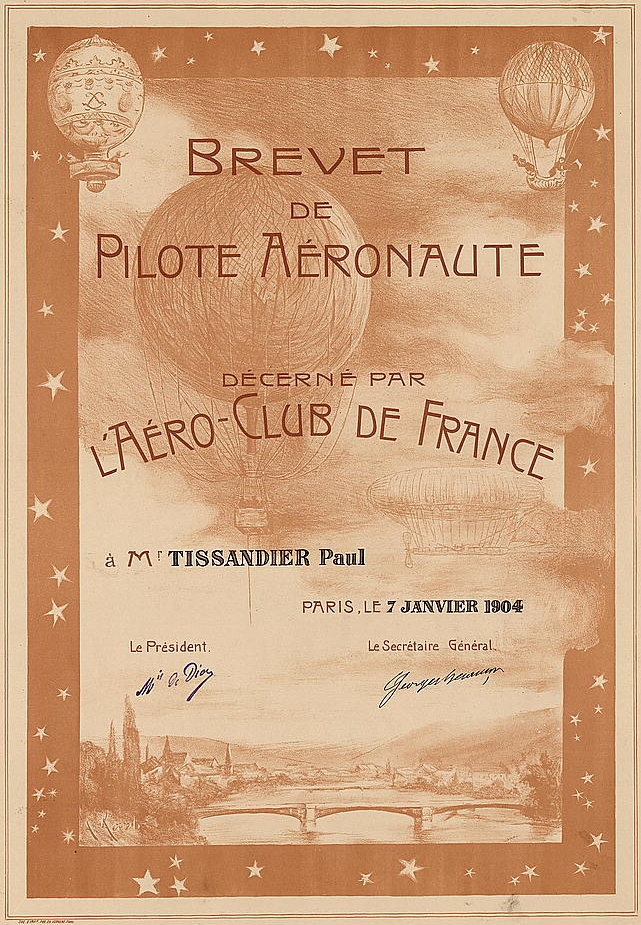
An aircrew flying badge (unofficially and incorrectly known as an aircrew brevet – which is actually French for a diploma or certificate) is the badge worn on the left breast, above any medal ribbons, by qualified aircrew in the Royal Air Force, Royal Navy, British Army, Indian Air Force, Pakistan Air Force, Royal Canadian Air Force, Royal Australian Navy, Australian Army, Royal Australian Air Force, Royal New Zealand Air Force, South African Air Force and Sri Lanka Air Force. An example of a real pilot brevet (i.e. certificate) is shown:
In the RAF, the Flying Badge (colloquially referred to as wings), is awarded upon the completion of a significant stage of flying training. Aircrew first undertake Elementary Flying Training, and are then streamed to either fast jet, helicopter, RPAS or multi-engine pipelines. The award of wings usually occurs upon completion of the secondary phase of training; for example, in the fast jet stream, wings are awarded upon completion of the Basic Fast Jet Course (BJFT), currently at RAF Valley; for helicopter pilots, wings are awarded after they complete helicopter training at RAF Shawbury pre-OCU; for RPAS post-FTU (Formal Training Unit) and on the attainment of "Limited Combat Ready" status, and for multi-engine aircrew, wings are awarded upon completion of their Multi-Engine Advanced Flying Training (MEAFT) training at RAF Cranwell. Aircrew, other than RPAS pilots, are then posted to their Operational Conversion Units having gained their wings, but still have a good deal of training and type familiarisation to complete before they are considered operational or front-line aircrew.
Legacy Mission Aircrew who qualified prior to April 2003, wear a single wing with no crown and a letter or letters (denoting speciality) in a brown laurel wreath, however, they may choose to wear the new WSO/WSOP Flying Badge. Legacy flying badges still in use in the RAF but no longer issued, include:
For other members of a flying crew, who are not de facto Aircrew (but since 1 Apr 20 have been known as Airborne Specialists) and who come from ground trades/branches but are assigned to flying duties, they are awarded an Airborne Specialist Flying Badge upon completion of a bespoke flying training course, which is a half wing, without crown and 2 letters in the centre. This includes:
RAF Catering Stewards assigned to fly as cabin crew on Voyager KC.1, BAe 146 and HS 125 are awarded the "CC" (cabin crew) badge. This badge is worn on the right sleeve in the same location as the parachute qualification, has two upturned wings (similar to Royal Navy ratings' aircrewman badges) and has cream stitching for the wings, lettering and laurels. Legacy Cabin Crew who qualified with the former "AS" (air steward) badge are still entitled to wear it.
Parachute Jumping Instructors (PJIs) are honorary aircrew and wear an open parachute instead of a letter on a half wing.
There are also a number of obsolete Mission Aircrew flying badges that are no longer in use such as:
Qualified space personnel wear 'UK Space Wings': a silver delta, an orbit ellipse, and a constellation of stars in a blue laurel wreath; with a single silver swift's wing on one side. The constellation is representative of Aries, referencing the date 1 April when UK Space Command was stood up. These badges are similar to flying badges, and are worn on the left breast above medals, but are actually qualification badges.
Hub AI
Aircrew brevet AI simulator
(@Aircrew brevet_simulator)
Aircrew brevet
An aircrew flying badge (unofficially and incorrectly known as an aircrew brevet – which is actually French for a diploma or certificate) is the badge worn on the left breast, above any medal ribbons, by qualified aircrew in the Royal Air Force, Royal Navy, British Army, Indian Air Force, Pakistan Air Force, Royal Canadian Air Force, Royal Australian Navy, Australian Army, Royal Australian Air Force, Royal New Zealand Air Force, South African Air Force and Sri Lanka Air Force. An example of a real pilot brevet (i.e. certificate) is shown:
In the RAF, the Flying Badge (colloquially referred to as wings), is awarded upon the completion of a significant stage of flying training. Aircrew first undertake Elementary Flying Training, and are then streamed to either fast jet, helicopter, RPAS or multi-engine pipelines. The award of wings usually occurs upon completion of the secondary phase of training; for example, in the fast jet stream, wings are awarded upon completion of the Basic Fast Jet Course (BJFT), currently at RAF Valley; for helicopter pilots, wings are awarded after they complete helicopter training at RAF Shawbury pre-OCU; for RPAS post-FTU (Formal Training Unit) and on the attainment of "Limited Combat Ready" status, and for multi-engine aircrew, wings are awarded upon completion of their Multi-Engine Advanced Flying Training (MEAFT) training at RAF Cranwell. Aircrew, other than RPAS pilots, are then posted to their Operational Conversion Units having gained their wings, but still have a good deal of training and type familiarisation to complete before they are considered operational or front-line aircrew.
Legacy Mission Aircrew who qualified prior to April 2003, wear a single wing with no crown and a letter or letters (denoting speciality) in a brown laurel wreath, however, they may choose to wear the new WSO/WSOP Flying Badge. Legacy flying badges still in use in the RAF but no longer issued, include:
For other members of a flying crew, who are not de facto Aircrew (but since 1 Apr 20 have been known as Airborne Specialists) and who come from ground trades/branches but are assigned to flying duties, they are awarded an Airborne Specialist Flying Badge upon completion of a bespoke flying training course, which is a half wing, without crown and 2 letters in the centre. This includes:
RAF Catering Stewards assigned to fly as cabin crew on Voyager KC.1, BAe 146 and HS 125 are awarded the "CC" (cabin crew) badge. This badge is worn on the right sleeve in the same location as the parachute qualification, has two upturned wings (similar to Royal Navy ratings' aircrewman badges) and has cream stitching for the wings, lettering and laurels. Legacy Cabin Crew who qualified with the former "AS" (air steward) badge are still entitled to wear it.
Parachute Jumping Instructors (PJIs) are honorary aircrew and wear an open parachute instead of a letter on a half wing.
There are also a number of obsolete Mission Aircrew flying badges that are no longer in use such as:
Qualified space personnel wear 'UK Space Wings': a silver delta, an orbit ellipse, and a constellation of stars in a blue laurel wreath; with a single silver swift's wing on one side. The constellation is representative of Aries, referencing the date 1 April when UK Space Command was stood up. These badges are similar to flying badges, and are worn on the left breast above medals, but are actually qualification badges.
Recent media