Hubbry Logo
Alberto FortisAlberto FortisMain
Open search
Alberto Fortis
Community hub
Alberto Fortis
logo
8 pages, 0 posts
0 subscribers
Be the first to start a discussion here.
Alberto Fortis
Alberto Fortis
from Wikipedia
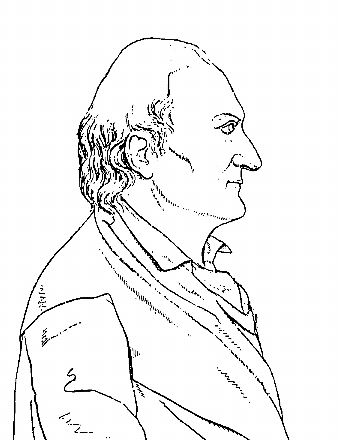
Sketch of Alberto Fortis in the Galleria dei letterati ed artisti più illustri delle provincie Austro - Venete che fiorirono nel secolo XVIII. Venezia, 1822, by Bartolommeo Gamba.

Alberto Fortis[a] (9 or 11 November 1741 – 21 October 1803) was a Venetian writer, naturalist and cartographer, citizen of Republic of Venice.

Life

[edit]

His real name was Giovanni Battista Fortis[1] (his religious name was Alberto[2]) and he was born in Padua on either 9 or 11 November 1741. He journeyed extensively in Dalmatia. His best-known work is Viaggio in Dalmazia (Journey to Dalmatia), originally published in 1774 and first published in London in 1778.[3][4]

The highlight of the book is the description of Morlachia, a historical region currently located in Croatia named after the Morlachs that inhabited the region. In his book, Fortis presented his literary discovery "Hasanaginica" as a Morlach (Vlach) ballad. Larry Wolff believed Fortis wrote the ballad as a poetry of South Slavs rather than a poetry of the Morlachs.[5] Fortis believed that the Morlachs preserved their old customs and clothes. Their ethnographic traits were traditional clothing, use of the gusle musical instrument accompanied with epic singing. He also published several specimens of Morlach songs. Fortis noted that the Slavic-speaking Morlachs called themselves “Vlachs”, but refuted the assumption that they might be related to the Latin-speaking Vlachs.

Alberto Fortis's account of the Morlachs, translated into French, English and German brought the Morlachs to the attention of Europe.[6] This started a new literary movement known as Morlachism.[7]

The Croatian writer Ivan Lovrić, who wrote Osservazioni di Giovanni Lovrich sopra diversi pezzi del viaggio in Dalmazia del signor abbot Alberto Fortis coll'aggiunta della vita di Soçivizça ("Observations of Giovanni Lovrich [Ivan Lovrić] on several pieces of the journey to Dalmatia of Mr. Abbot Alberto Fortis with the addition of the life of Soçivizça"), accused Fortis of many factual errors, which he attempted to rectify and showed the similarity between Vlach's language and the Romanian language.[8] Travels into Dalmatia played an important role in bringing the Dalmatian culture to the attention of Europe during the rise of Romantic notions about folklore. Dalmatian hinterlands became epitomized by Hasanaginica, a folk ballad that was first written down by Fortis.[9]

In 1795 Fortis was elected Fellow of the Royal Society in London. He died in Bologna eight years later on 21 October 1803.[3]

Works

[edit]
Viaggio in Dalmazia dell' Abate Alberto Fortis ("Journey to Dalmatia by Abbot Alberto Fortis"), 1774
  • Fortis, Alberto (1778). Travels into Dalmatia; containing general observations on the natural history of that country and the neighboring islands; the natural productions, arts, manners and customs of the inhabitants: in a series of letters from Abbe Alberto Fortis. London: J. Robson. OCLC 4895425.
  • Fortis, Alberto (1786). A poetical sketch of the revolutions that have happened in the natural history of our planet: intended as a specimen of a philosophical and theological poem. London: B. White. OCLC 642418397.

Notes

[edit]

References

[edit]

Bibliography

[edit]
[edit]
Revisions and contributorsEdit on WikipediaRead on Wikipedia
from Grokipedia
Alberto Fortis is an Italian singer-songwriter known for his provocative protest songs and major commercial success in the Italian music scene during the late 1970s and early 1980s. Born and raised in Domodossola, Piedmont, Fortis developed a passion for music from childhood and signed his first recording contract with RCA at age 20. Frustrated by the label's two-and-a-half-year inactivity clause, he wrote sharp protest songs such as "Milano e Vincenzo" and "A voi romani," which criticized music industry figures and Roman bureaucracy and initially caused controversy and temporary blacklisting, yet propelled him to widespread fame. His records reached high chart positions, trailing only international acts like Michael Jackson and Dire Straits, while his concerts drew massive, enthusiastic crowds and devoted fans who mobbed his appearances and even waited at his Milan apartment. Fortis brought pop elements to Italian auteur songwriting, producing enduring hits including "Milano e Vincenzo" and others from his early albums. He performed opening sets for artists such as James Brown in 1979 and Bob Dylan in 1992, and crossed paths with figures like Paul McCartney and Tina Turner. He has deliberately avoided mainstream platforms like the Sanremo Festival, preferring to follow his inspiration freely across decades of releases, including recent work such as the Latin-pop track "Mambo Tango & Cha Cha Cha."

Early life

Birth and family background

Alberto Fortis was born on June 3, 1955, in Domodossola, a town in the Piedmont region of northern Italy. At the time, Domodossola fell under the province of Novara, though it is now part of the province of Verbano-Cusio-Ossola (Verbania). He was born into a family with a notable medical background; his father was a medical surgeon who had been promoted to colonel in the Alpini for humanitarian merits and also served as the medical director of the city. His father was 54 years old at the time of Fortis's birth. His mother died when Fortis was 17 years old. A first cousin once removed (the first cousin of his mother) was Prof. Lino De Gasperis, a prominent Italian cardio-thoracic surgeon.

Music career

Debut and early success (1979–1980s)

Alberto Fortis launched his recording career as a singer-songwriter with the release of his self-titled debut album in 1979, where he served as the sole composer of both music and lyrics. The work positioned him within the Italian canzone d'autore tradition, blending introspective songwriting with an unconventional style that emphasized intense lyrics and distinctive arrangements. His follow-up album, La grande grotta, appeared in 1981 and was recorded at One Step Up Recording Studio in Los Angeles, reflecting his growing interest in international production and pop rock elements while maintaining his role as primary songwriter. During this early phase, Fortis directed video clips for three of his songs himself, marking a hands-on approach to visual promotion in an era when music videos were becoming more prominent in Italy.

Later career and ongoing work

In the 1990s, Alberto Fortis continued his recording career with a number of albums that built upon his established style as a singer-songwriter. In 1990, he released Carta Del Cielo on Epic Records. This was followed by the live album L'Uovo in 1991 and Dentro Il Giardino in 1994 on Virgin Records. After a quieter period in the late 1990s, Fortis returned in the 2000s with Angeldom in 2001 and Fiori Sullo Schermo Futuro in 2005, the latter on Universal. He followed these with Vai Protetto in 2008. His output in the 2010s showed renewed consistency, including Do L'anima in 2014, Con Te in 2016, and I Love You in 2018 on Azzurra Music. In 2019, he issued 1° OfficiALive, a deluxe box set featuring live recordings and video documentation, reflecting on his long career. Fortis's most recent studio work is the 2023 album La Sedia Di Lillà, released on Azzurra Music as an LP. These sporadic but persistent releases illustrate his continued activity as a musician and songwriter into the 2020s.

Discography highlights

Key studio albums

Alberto Fortis has released numerous studio albums since the late 1970s, establishing a discography that reflects his evolution as an Italian singer-songwriter. His self-titled debut album Alberto Fortis appeared in 1979 on Philips. Among his early works are Tra Demonio E Santità (1980), La Grande Grotta (1981), Fragole Infinite (1982), El Niño (1984), and West Of Broadway (1985), all issued on Philips. Notably, La Grande Grotta and West Of Broadway are considered cult albums in his catalog. Subsequent releases included Assolutamente Tuo (1987) on CBS, Carta Del Cielo (1990) on Epic, L'Uovo (1991) on Epic, and Dentro Il Giardino (1994) on Virgin. Later studio albums encompass Angeldom (2001), Fiori Sullo Schermo Futuro (2005), Vai Protetto (2008), Do L'anima (2014), Con Te (2016), I Love You (2018), and La Sedia Di Lillà (2023).

Notable songs and contributions

Alberto Fortis has contributed several notable songs to Italian popular music, characterized by his introspective lyrics and melodic style as a singer-songwriter. One particularly recognizable track is "Settembre", featured in the soundtrack of the 2017 film Stories of Love That Cannot Belong to This World, where Fortis is credited as the writer. Another significant song is "La sedia di lillà", which Fortis performed and wrote for inclusion in the 2009 TV mini-series Il mostro di Firenze. These cross-media placements underscore the reach of his compositions beyond standalone recordings, illustrating their cultural resonance in Italian audiovisual productions.

Film and television involvement

Television appearances

Alberto Fortis has appeared as a musical performer on several Italian television programs, particularly during the 1980s when his career gained momentum through album releases and live promotions. He made an appearance on the RAI music program Discoring in 1982, credited as himself in one episode, where he performed to promote his work. Videos of performances such as "Prendimi fratello" and "Settembre" from the show circulate online, confirming his role as a guest artist. Fortis also featured on the competitive music series Azzurro between 1983 and 1990, appearing as himself in two episodes. In the 1983 edition, broadcast on May 8 from the Teatro Petruzzelli in Bari, he performed the song "Liquido breve per Bibo" as part of the lineup that included other prominent Italian and international acts. These television spots aligned with his active recording period, helping introduce his distinctive style to broader audiences through RAI broadcasts. In a later appearance, Fortis participated in the 2006 edition of the reality television program Music Farm, where he competed among musicians and finished in third place.

Film credits and soundtrack work

Although primarily recognized for his work as a singer-songwriter, Alberto Fortis has made limited but notable contributions to film and related media, primarily through soundtrack placements that draw from his musical catalog. In the 2017 film Stories of Love That Cannot Belong to This World, Fortis is credited for writing the song "Settembre," which appears on the soundtrack, and he also received an on-screen acting or appearance credit in the project. His song "La sedia di lillà," which he wrote and performed, was featured in the 2009 production Il mostro di Firenze, with credits as both writer and performer for its use in one episode. These instances reflect occasional intersections between his music career and audiovisual media rather than a sustained focus on film work.

Personal life

Family and other interests

Alberto Fortis is known for being highly reserved about his personal life, with limited public information available regarding his family circumstances. It remains unknown whether he is married or has children. He grew up in a family environment with prominent figures in the medical field and has relatives in Genoa, a city to which he has long-standing personal ties after moving there to study medicine following high school. Fortis is of Jewish origins and is distantly related to Alessandro Fortis, a former President of the Council of the Kingdom of Italy. Born in Domodossola in the Piedmont region, Fortis has occasionally shared insights into his private aspirations through his work. In a 2016 interview, he described the song "Con te" as expressing his strong desire to have a child and build a family, a theme that carries both personal and universal resonance. Beyond his musical pursuits, Fortis has a noted passion for various forms of art and maintains a strong sense of friendship and family values. He is recognized as a poet and has expressed interest in great philosophers who advocate for peace among peoples, alongside a particular admiration for John Lennon.

Legacy and recognition

Influence in Italian music

Alberto Fortis is widely regarded as one of the most eclectic and innovative figures in the Italian canzone d'autore tradition, having significantly broadened the genre's boundaries through his fusion of autobiographical songwriting with progressive rock, international influences, and diverse stylistic contaminations. His self-titled debut album from 1979 is considered a landmark in Italian singer-songwriter music, containing several tracks that have become classics of the genre and marking a notable shift with its blend of classy pop-rock arrangements and often oneiric, hermetic lyrics. The album's commercial success and critical acclaim, including its ranking among the most significant works in Italian song history, underscored Fortis's ability to bring cantautorato closer to mainstream pop audiences during the late 1970s and early 1980s. His work stands out for its exceptional stylistic density, as exemplified by the 1981 album La grande grotta, which integrated pop, funk, soft-rock, gospel, Mediterranean melodies, oriental themes, and British pop elements within a compact format, representing one of the richest and most idea-filled records in his discography and in Italian music of the period. This album achieved substantial commercial impact, remaining in the charts for nine months and achieving high positions, while highlighting Fortis's peculiar vocal style—described as androgynous, velvety, and now almost extinct in Italy—which contributed to his distinctive presence in the singer-songwriter landscape. Critics have positioned him as a key outsider of the middle generation of cantautori, whose maverick approach and refusal of conventions made him unlike his contemporaries, yet capable of producing works of high originality and emotional directness. Despite these contributions, Fortis is frequently described as one of the greatest missed opportunities in Italian pop music history, owing to his gradual shift away from mainstream visibility after the early 1990s and the limited recognition among younger generations, even though his innovative contaminations and thematic breadth offered a potential model for a more open and culturally rich approach to canzone d'autore. His legacy remains anchored in critical appreciation for his fearless experimentation and fidelity to an inspired, non-banal artistic vision rather than widespread direct influence on subsequent artists.

Cultural impact

Alberto Fortis maintains a niche yet dedicated presence within the Italian music landscape, celebrated for his artistic independence and eclectic approach that defies easy categorization. His debut album Alberto Fortis (1979) stands out as one of the 100 most significant records in the history of Italian song, with songs that enchanted, disoriented, and provoked controversies—particularly “A voi romani” and “Milano e Vincenzo”—while showcasing crystalline talent and melodic sophistication. Despite early commercial peaks, including strong sales performance (with total career sales exceeding one million copies) and the album La grande grotta (1981) charting for nine months and often in the top 10, his career is frequently described as one of the greatest missed opportunities in Italian pop music history, blending rare commercial appeal with compositional complexity and genre contaminations that few contemporaries matched. Over time, Fortis has largely faded from mainstream attention, remaining largely unknown to younger generations and overlooked by media and critics, except for a handful of enduring iconic singles such as “Settembre” and “Riso” that continue to represent lasting highlights of his catalog. His broader cultural impact thus reflects a cult status rooted in uncompromising originality, freedom from trends, and a focus on expressing inner beauty rather than conforming to popular expectations, marking him as a free and inspired figure whose work prioritizes nuance in an increasingly simplified cultural context.

Areas of limited documentation

Detailed information on Alberto Fortis's involvement in film and television remains limited, with the primary source IMDb listing only one uncredited acting role as a singer in a recording studio scene in Liquirizia (1979), alongside a small number of soundtrack contributions and self-appearances mostly dating to the 1980s. Many sources, including his official website, do not address screen credits at all, underscoring reliance on external databases like IMDb for any available details in this area. Public discographies show inconsistencies in completeness across sources; Discogs catalogs an extensive range of releases, including studio albums up to La Sedia Di Lillà (2023), while the official website provides only a selective overview that emphasizes earlier works and the 2019 live project 1° officiALive without referencing subsequent output. Documentation of recent activity is present in contemporary news reporting but absent from primary platforms, as the official site—despite a modification date in May 2025—contains no updates on projects such as the 2025 single "Shopping con Alanis," an announced album for spring 2025, or ongoing concert dates through April 2025. These gaps in primary and centralized sources highlight the need to cross-reference news outlets, discography databases, and other secondary materials for a full picture of his career trajectory.

References

Add your contribution
Related Hubs
User Avatar
No comments yet.