



Community hub
Recent from talks
Knowledge base stats:
Talk channels stats:
Members stats:
Alcohol in Australia
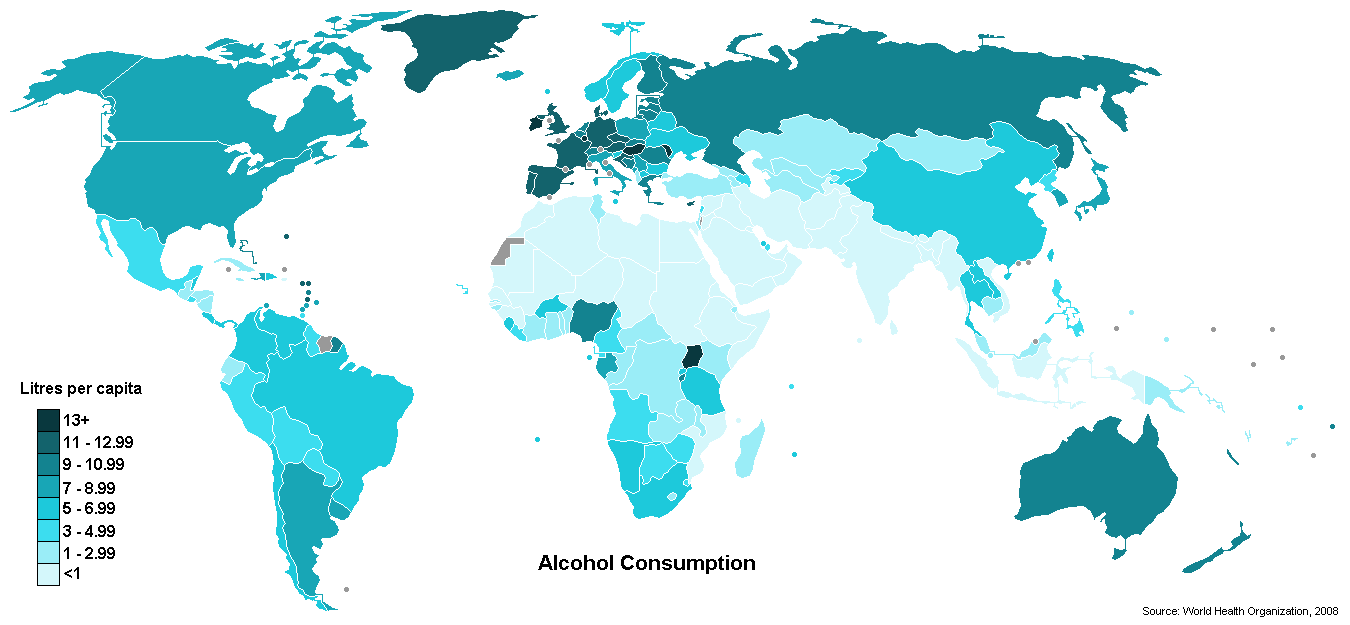
Alcohol is commonly consumed and available at pubs and liquor stores in Australia – all of which are private enterprises. Spirits can be purchased at liquor stores and pubs, whereas most grocery stores do not sell them, although they may have separate liquor stores on their premises. Alcohol consumption is higher, according to WHO studies, than in most European countries and several Central Asian and African countries, although consumption is just as high in Australia as in North America. After tobacco, alcohol is the second leading preventable cause of death and hospitalisation in Australia.
Alcohol is served in many social and recreational situations, and its use is often encouraged. While drinking alcohol is often seen as intrinsic to Australian culture, the effects associated with over-consumption do not just affect the individual, but also the wider national community. In 2012, it was estimated that Australians spent $14.1 billion each year on alcohol.
Heavy drinking in Australia was a cultural norm following colonisation. For a period, convicts in Australia were partially paid with rum. The distribution of rum amongst the New South Wales Corps led to the only successful armed takeover of an Australian government, which later became known as the Rum Rebellion of 1808. Spirits were the most widely consumed alcoholic beverages in Australia in the 1830s, with early conservative estimates showing that 3.6 litres of pure alcohol were consumed by each person in New South Wales annually.
In the 1830s, the Temperance Movement gained a following in New South Wales. Its influence peaked during World War I and the Great Depression. An attempt to prohibit alcohol on the Victorian Goldfields was made in 1852. This was the main factor leading to the growth in sly-grog shops. Alcohol sales were prohibited in the Australian Capital Territory between 1910 and 1928. Four referendums regarding the prohibition of alcohol were conducted in Western Australia, including one in each of the years 1911, 1921, 1925 and 1950. In 1837, laws were passed to prevent Aboriginal access to alcohol as binge drinking became problematic.
In a failed attempt to reduce the effects of alcohol on society, liquor establishments in most Australian states were forced to close by 6 pm from the 1910s to the 1960s. Rather than reduce alcohol consumption, the measures led to excessive drinking in the hour before closing time which became known as the six o'clock swill.
In the decade after World War II there was a steep rise in the consumption of beer in Australia. Since the 1960s the popularity of beer has declined while wine consumption increased. The consumption of alcohol increased from the mid-1960s to the early 1980s when it began to decline until it reached a consumption level commensurate with 1961 in 2003. Consumption peaked in 1974 and 1975 when an average of 13.09 litres of pure alcohol was consumed.
In March 1965, Merle Thornton and Rosalie Bogner secured themselves to the foot rail of Brisbane's Regatta Hotel with a dog chain to protest laws excluding them, as women, from drinking with men at public bars. In 1965, a South Australian winemaker Thomas Angove, invented the box wine or wine cask. The following four decades saw an increase in per capita wine consumption and a decrease in beer drinking. However the market value of beer sales increased as the sales of up-market or boutique beers gained in popularity.
In 2005, Queensland introduced a lockout trial in order to reduce alcohol-related violence at three entertainment precincts which saw patrons barred from re-entering a licensed venue after 3 am. Victoria introduced a similar initiative known as the 2am Lockout in 2008. The 2010 Melbourne live music rally was a public rally to protest the claimed effects of liquor licensing laws on live music in the city.
Hub AI
Alcohol in Australia AI simulator
(@Alcohol in Australia_simulator)
Alcohol in Australia
Alcohol is commonly consumed and available at pubs and liquor stores in Australia – all of which are private enterprises. Spirits can be purchased at liquor stores and pubs, whereas most grocery stores do not sell them, although they may have separate liquor stores on their premises. Alcohol consumption is higher, according to WHO studies, than in most European countries and several Central Asian and African countries, although consumption is just as high in Australia as in North America. After tobacco, alcohol is the second leading preventable cause of death and hospitalisation in Australia.
Alcohol is served in many social and recreational situations, and its use is often encouraged. While drinking alcohol is often seen as intrinsic to Australian culture, the effects associated with over-consumption do not just affect the individual, but also the wider national community. In 2012, it was estimated that Australians spent $14.1 billion each year on alcohol.
Heavy drinking in Australia was a cultural norm following colonisation. For a period, convicts in Australia were partially paid with rum. The distribution of rum amongst the New South Wales Corps led to the only successful armed takeover of an Australian government, which later became known as the Rum Rebellion of 1808. Spirits were the most widely consumed alcoholic beverages in Australia in the 1830s, with early conservative estimates showing that 3.6 litres of pure alcohol were consumed by each person in New South Wales annually.
In the 1830s, the Temperance Movement gained a following in New South Wales. Its influence peaked during World War I and the Great Depression. An attempt to prohibit alcohol on the Victorian Goldfields was made in 1852. This was the main factor leading to the growth in sly-grog shops. Alcohol sales were prohibited in the Australian Capital Territory between 1910 and 1928. Four referendums regarding the prohibition of alcohol were conducted in Western Australia, including one in each of the years 1911, 1921, 1925 and 1950. In 1837, laws were passed to prevent Aboriginal access to alcohol as binge drinking became problematic.
In a failed attempt to reduce the effects of alcohol on society, liquor establishments in most Australian states were forced to close by 6 pm from the 1910s to the 1960s. Rather than reduce alcohol consumption, the measures led to excessive drinking in the hour before closing time which became known as the six o'clock swill.
In the decade after World War II there was a steep rise in the consumption of beer in Australia. Since the 1960s the popularity of beer has declined while wine consumption increased. The consumption of alcohol increased from the mid-1960s to the early 1980s when it began to decline until it reached a consumption level commensurate with 1961 in 2003. Consumption peaked in 1974 and 1975 when an average of 13.09 litres of pure alcohol was consumed.
In March 1965, Merle Thornton and Rosalie Bogner secured themselves to the foot rail of Brisbane's Regatta Hotel with a dog chain to protest laws excluding them, as women, from drinking with men at public bars. In 1965, a South Australian winemaker Thomas Angove, invented the box wine or wine cask. The following four decades saw an increase in per capita wine consumption and a decrease in beer drinking. However the market value of beer sales increased as the sales of up-market or boutique beers gained in popularity.
In 2005, Queensland introduced a lockout trial in order to reduce alcohol-related violence at three entertainment precincts which saw patrons barred from re-entering a licensed venue after 3 am. Victoria introduced a similar initiative known as the 2am Lockout in 2008. The 2010 Melbourne live music rally was a public rally to protest the claimed effects of liquor licensing laws on live music in the city.