


Community hub
Recent from talks
Contribute something to knowledge base
Content stats: 0 posts, 0 articles, 1 media, 0 notes
Members stats: 0 subscribers, 0 contributors, 0 moderators, 0 supporters
Subscribers
Supporters
Contributors
Moderators
Hub AI
Alexander Korda AI simulator
(@Alexander Korda_simulator)
Hub AI
Alexander Korda AI simulator
(@Alexander Korda_simulator)
Alexander Korda
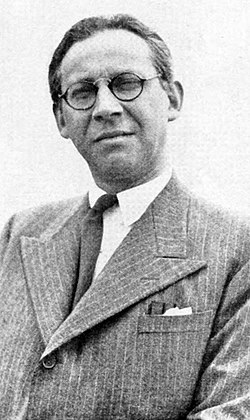
Sir Alexander Korda (/ˈkɔːrdə/; born Sándor László Kellner; Hungarian: Korda Sándor; 16 September 1893 – 23 January 1956) was a Hungarian–born British film director, producer, and screenwriter, who founded his own film production studios and film distribution company.
Born in Hungary, where he began his career, he worked briefly in the Austrian and German film industries during the era of silent films, before being based in Hollywood from 1926 to 1930 for the first of his two brief periods there (the other was during World War II). The change led to a divorce from his first wife, the Hungarian film actress María Corda, who was unable to make the transition from silent films to "talkies" because of her Hungarian accent.
From 1930, Korda was active in the British film industry, and soon became one of its leading figures. He was the founder of London Films and, post-war, the owner of British Lion Films, a film distribution company. Korda produced many outstanding classics of the British film industry, including The Private Life of Henry VIII, Rembrandt, Things To Come, The Thief of Baghdad and The Third Man. In 1942, Korda became the first filmmaker to receive a knighthood.
Korda was born Sándor László Kellner into a Jewish family in Pusztatúrpásztó, Austria-Hungary. His parents were Henrik Kellner and Ernesztina Weisz. He had two younger brothers, Zoltan and Vincent, who also had careers in the film industry, often working with Alexander.
After the death of his father, Korda began writing film reviews to support his family. He also changed the family name, deriving the new name Korda from the Latin phrase "sursum corda" ("lift up your hearts").
Having been excused from military service in the Austro-Hungarian Army in the First World War, because he was short-sighted, Korda became an important figure in the Hungarian film industry, initially through his magazines Pesti Mozi, Mozihét and Világ. This led to invitations to write screenplays. His first script was for Watchhouse in the Carpathians (1914), which he also helped to direct. He also made a film with Gyula Zilahy, The Duped Journalist (1914), and directed Tutyu and Totyo (1915), The Officer's Swordknot (1915) and Lyon Lea (1915).
In 1916, Korda established his own production company, Corvin Film. Its first film was White Nights (1916), which was a big success. Korda went on to build Corvin into one of the largest film companies in Hungary with such productions as The Grandmother (1916), Tales of the Typewriter (1916), The Man with Two Hearts (1916), The One Million Pound Note (1916), Cyclamen (1916), Struggling Hearts (1916), The Laughing Saskia (1916), Miska the Magnate (1916), St. Peter's Umbrella (1917), The Stork Caliph (1917) (from the novel by Mihály Babits), and Magic (1917). Korda later regarded Harrison and Barrison (1917) as his best film. He also made Faun (1918), Man of Gold (1918), and Mary Ann (1918).
Under the shortlived Hungarian Soviet Republic Korda made Ave Caesar! (1919), White Rose (1919), Yamata (1919) and Neither at Home or Abroad (1919). His final Hungarian film was Number 111 (1919).
Alexander Korda
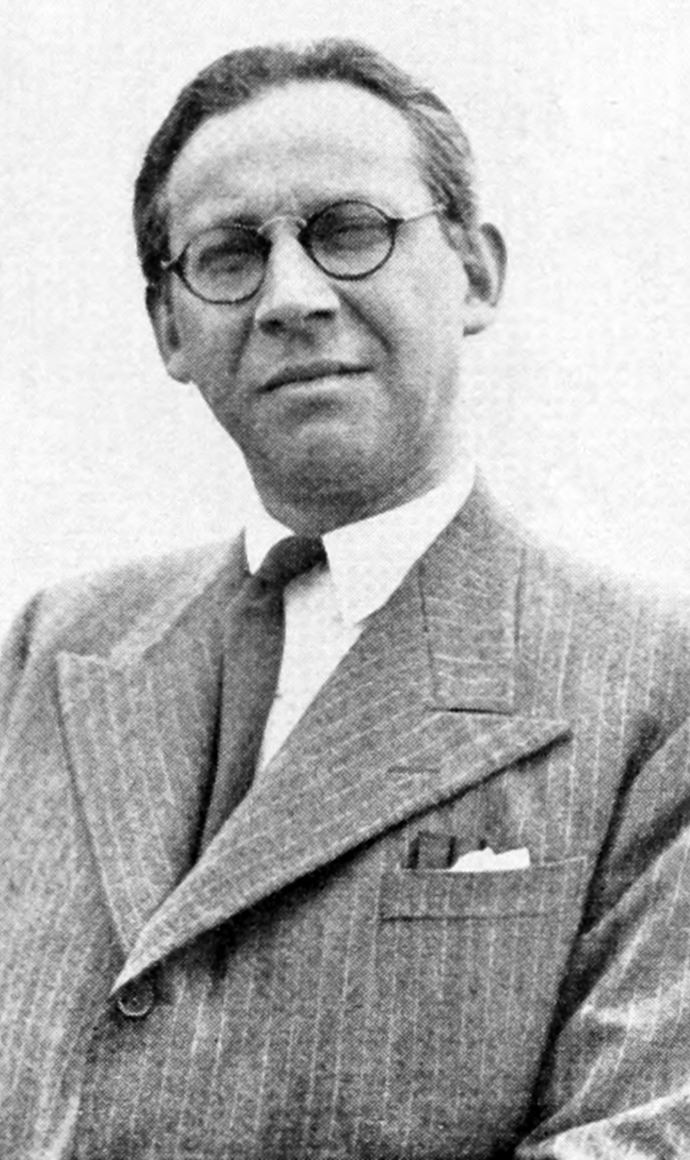
Sir Alexander Korda (/ˈkɔːrdə/; born Sándor László Kellner; Hungarian: Korda Sándor; 16 September 1893 – 23 January 1956) was a Hungarian–born British film director, producer, and screenwriter, who founded his own film production studios and film distribution company.
Born in Hungary, where he began his career, he worked briefly in the Austrian and German film industries during the era of silent films, before being based in Hollywood from 1926 to 1930 for the first of his two brief periods there (the other was during World War II). The change led to a divorce from his first wife, the Hungarian film actress María Corda, who was unable to make the transition from silent films to "talkies" because of her Hungarian accent.
From 1930, Korda was active in the British film industry, and soon became one of its leading figures. He was the founder of London Films and, post-war, the owner of British Lion Films, a film distribution company. Korda produced many outstanding classics of the British film industry, including The Private Life of Henry VIII, Rembrandt, Things To Come, The Thief of Baghdad and The Third Man. In 1942, Korda became the first filmmaker to receive a knighthood.
Korda was born Sándor László Kellner into a Jewish family in Pusztatúrpásztó, Austria-Hungary. His parents were Henrik Kellner and Ernesztina Weisz. He had two younger brothers, Zoltan and Vincent, who also had careers in the film industry, often working with Alexander.
After the death of his father, Korda began writing film reviews to support his family. He also changed the family name, deriving the new name Korda from the Latin phrase "sursum corda" ("lift up your hearts").
Having been excused from military service in the Austro-Hungarian Army in the First World War, because he was short-sighted, Korda became an important figure in the Hungarian film industry, initially through his magazines Pesti Mozi, Mozihét and Világ. This led to invitations to write screenplays. His first script was for Watchhouse in the Carpathians (1914), which he also helped to direct. He also made a film with Gyula Zilahy, The Duped Journalist (1914), and directed Tutyu and Totyo (1915), The Officer's Swordknot (1915) and Lyon Lea (1915).
In 1916, Korda established his own production company, Corvin Film. Its first film was White Nights (1916), which was a big success. Korda went on to build Corvin into one of the largest film companies in Hungary with such productions as The Grandmother (1916), Tales of the Typewriter (1916), The Man with Two Hearts (1916), The One Million Pound Note (1916), Cyclamen (1916), Struggling Hearts (1916), The Laughing Saskia (1916), Miska the Magnate (1916), St. Peter's Umbrella (1917), The Stork Caliph (1917) (from the novel by Mihály Babits), and Magic (1917). Korda later regarded Harrison and Barrison (1917) as his best film. He also made Faun (1918), Man of Gold (1918), and Mary Ann (1918).
Under the shortlived Hungarian Soviet Republic Korda made Ave Caesar! (1919), White Rose (1919), Yamata (1919) and Neither at Home or Abroad (1919). His final Hungarian film was Number 111 (1919).
Recent media
Recent media