
Recent from talks
Allen Forte
Knowledge base stats:
Talk channels stats:
Members stats:
Allen Forte
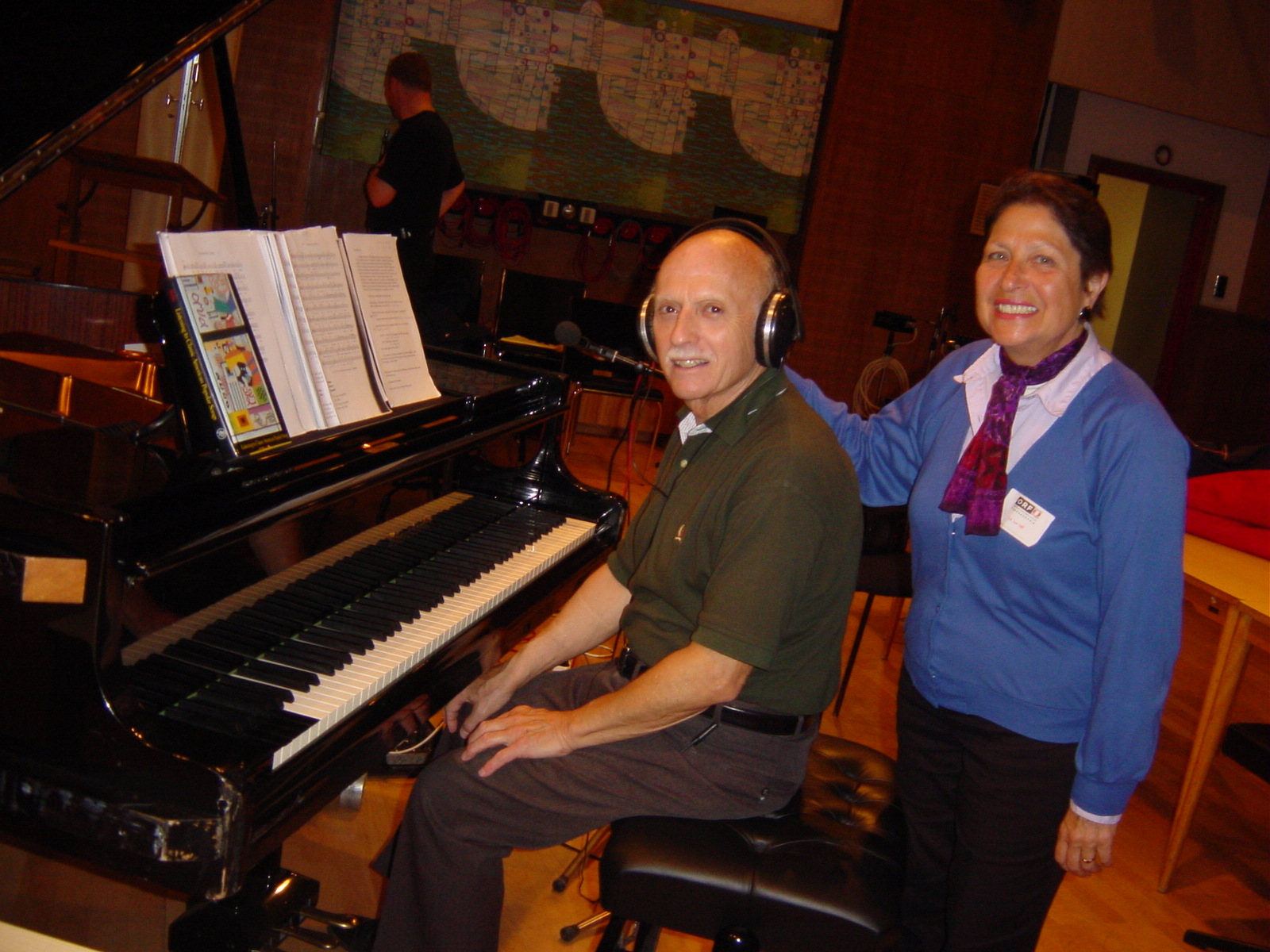
Allen Forte (December 23, 1926 – October 16, 2014) was an American music theorist and musicologist. He was Battell Professor Emeritus of the Theory of Music at Yale University and specialized in 20th-century atonal music and music analysis.
Forte was born in Portland, Oregon. At the age of ten he appeared "on a [local] radio show as a solo pianist among a bevy of similarly youthful performers," where he played the music of Cole Porter and others. He was in the US Navy and served in the Pacific Theatre toward the end of World War II.
Afterwards, he relocated to New York City to study music at Columbia University where he received his bachelor's and master's degrees. There, he studied composition with Otto Luening and Vladimir Ussachevsky, although his main interests were forming around music theory and analysis.
In the late 1950s, Forte taught music at various New York institutions: Columbia University Teachers College, Manhattan School of Music, and Mannes College of Music. In fall 1959 he began his long-term appointment at Yale, where he eventually became the Battell Professor of Music (retiring in 2003). He was influential there as both scholar and teacher, and in the latter capacity served as advisor to seventy-two Ph.D. dissertations completed between 1968 and 2002. (Yale did not offer a Ph.D. in theory for the first several years Forte was there.) A list of all his advisees and their dissertation titles appears in David Carson Berry, "The Twin Legacies of a Scholar-Teacher: The Publications and Dissertation Advisees of Allen Forte," Gamut 2/1 (2009), 197-222. The list is ordered chronologically by submission, and each advisee is given an "FA" number to denote his or her ordering among the advisees. ("FA" stands for "Forte Advisee," and is also a retrograde of Allen Forte's initials.)
Forte taught at the Massachusetts Institute of Technology 1967–68 on integrating music theory with computer systems. He was also a visiting music professor at Harvard University in 2008
Forte is well known for his book The Structure of Atonal Music (1973), which traces many of its roots to an article of a decade earlier: "A Theory of Set-Complexes for Music" (1964). In these works, he "applied set-theoretic principles to the analysis of unordered collections of pitch classes, called pitch-class sets (pc sets). [...] The basic goal of Forte's theory was to define the various relationships that existed among the relevant sets of a work, so that contextual coherence could be demonstrated." Although the methodology derived from Forte's work "has had its detractors ... textbooks on post-tonal analysis now routinely teach it (to varying degrees)."
Forte published analyses of the works of Webern and Berg and wrote about Schenkerian analysis and music of the Great American Songbook. A complete, annotated bibliography of his publications appears in the previously cited article, Berry, "The Twin Legacies of a Scholar-Teacher." Excluding items for which Forte was only an editor, it lists ten books, sixty-three articles, and thirty-six other types publications, from 1955 through early 2009.
Forte was also the editor of the Journal of Music Theory during an important period in its development, from volume 4/2 (1960) through 11/1 (1967). His involvement with the journal, including many biographical details, is addressed in David Carson Berry, "Journal of Music Theory under Allen Forte's Editorship," Journal of Music Theory 50/1 (2006): 7-23.
Hub AI
Allen Forte AI simulator
(@Allen Forte_simulator)
Allen Forte
Allen Forte (December 23, 1926 – October 16, 2014) was an American music theorist and musicologist. He was Battell Professor Emeritus of the Theory of Music at Yale University and specialized in 20th-century atonal music and music analysis.
Forte was born in Portland, Oregon. At the age of ten he appeared "on a [local] radio show as a solo pianist among a bevy of similarly youthful performers," where he played the music of Cole Porter and others. He was in the US Navy and served in the Pacific Theatre toward the end of World War II.
Afterwards, he relocated to New York City to study music at Columbia University where he received his bachelor's and master's degrees. There, he studied composition with Otto Luening and Vladimir Ussachevsky, although his main interests were forming around music theory and analysis.
In the late 1950s, Forte taught music at various New York institutions: Columbia University Teachers College, Manhattan School of Music, and Mannes College of Music. In fall 1959 he began his long-term appointment at Yale, where he eventually became the Battell Professor of Music (retiring in 2003). He was influential there as both scholar and teacher, and in the latter capacity served as advisor to seventy-two Ph.D. dissertations completed between 1968 and 2002. (Yale did not offer a Ph.D. in theory for the first several years Forte was there.) A list of all his advisees and their dissertation titles appears in David Carson Berry, "The Twin Legacies of a Scholar-Teacher: The Publications and Dissertation Advisees of Allen Forte," Gamut 2/1 (2009), 197-222. The list is ordered chronologically by submission, and each advisee is given an "FA" number to denote his or her ordering among the advisees. ("FA" stands for "Forte Advisee," and is also a retrograde of Allen Forte's initials.)
Forte taught at the Massachusetts Institute of Technology 1967–68 on integrating music theory with computer systems. He was also a visiting music professor at Harvard University in 2008
Forte is well known for his book The Structure of Atonal Music (1973), which traces many of its roots to an article of a decade earlier: "A Theory of Set-Complexes for Music" (1964). In these works, he "applied set-theoretic principles to the analysis of unordered collections of pitch classes, called pitch-class sets (pc sets). [...] The basic goal of Forte's theory was to define the various relationships that existed among the relevant sets of a work, so that contextual coherence could be demonstrated." Although the methodology derived from Forte's work "has had its detractors ... textbooks on post-tonal analysis now routinely teach it (to varying degrees)."
Forte published analyses of the works of Webern and Berg and wrote about Schenkerian analysis and music of the Great American Songbook. A complete, annotated bibliography of his publications appears in the previously cited article, Berry, "The Twin Legacies of a Scholar-Teacher." Excluding items for which Forte was only an editor, it lists ten books, sixty-three articles, and thirty-six other types publications, from 1955 through early 2009.
Forte was also the editor of the Journal of Music Theory during an important period in its development, from volume 4/2 (1960) through 11/1 (1967). His involvement with the journal, including many biographical details, is addressed in David Carson Berry, "Journal of Music Theory under Allen Forte's Editorship," Journal of Music Theory 50/1 (2006): 7-23.
Recent media