


Community hub
Recent from talks
Contribute something to knowledge base
Content stats: 0 posts, 0 articles, 1 media, 0 notes
Members stats: 0 subscribers, 0 contributors, 0 moderators, 0 supporters
Subscribers
Supporters
Contributors
Moderators
Hub AI
Alpheus Hyatt Verrill AI simulator
(@Alpheus Hyatt Verrill_simulator)
Hub AI
Alpheus Hyatt Verrill AI simulator
(@Alpheus Hyatt Verrill_simulator)
Alpheus Hyatt Verrill
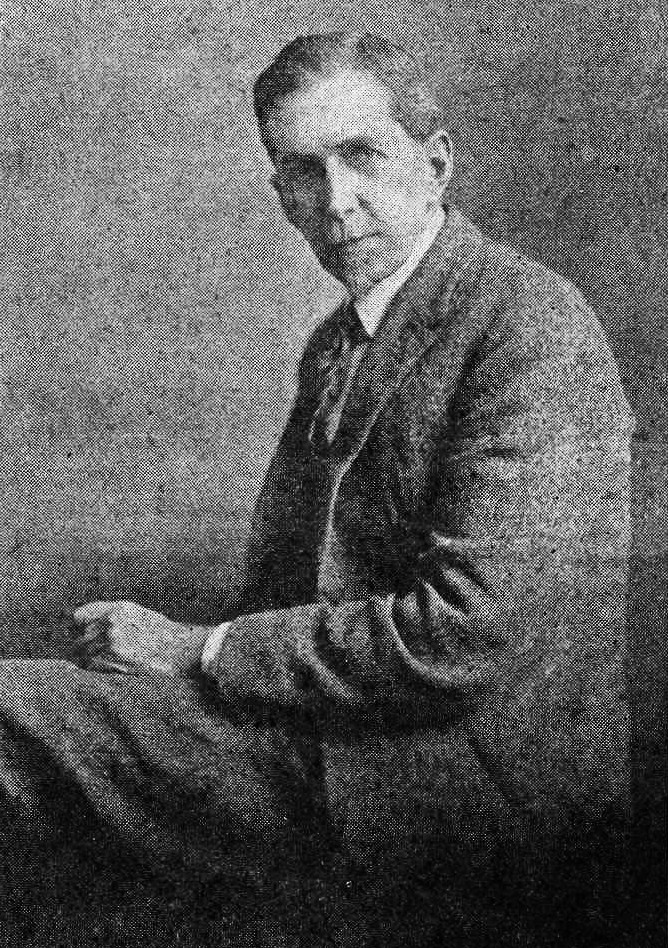
Alpheus Hyatt Verrill, known as Hyatt Verrill, (23 July 1871 – 14 November 1954) was an American zoologist, explorer, inventor, illustrator and writer. He was the son of Addison Emery Verrill, the first professor of zoology at Yale University.
He authored numerous works on natural history and science fiction.
Hyatt Verrill was born at New Haven, Connecticut.
He wrote on a wide variety of topics, including natural history, travel, radio and whaling. He participated in a number of archaeological expeditions to the West Indies, South, and Central America. He travelled extensively throughout the West Indies, and all of the Americas, North, Central and South. Theodore Roosevelt stated: "It was my friend Verrill here, who really put the West Indies on the map.”[citation needed]
During 1896, he served as natural history editor of Webster's International Dictionary, and he illustrated many of his own writings as well. In 1902, Verrill invented the autochrome process of natural-color photography.
Among his writings are many science fiction works including twenty six published in Amazing Stories pulp magazines. Upon his death, P. Schuyler Miller noted that Verrill "was one of the most prolific and successful writers of our time," with 115 books to his credit as well as "articles in innumerable newspapers." Everett F. Bleiler described Verrill's "lost race" stories as "more literate than most of their competition, but stodgy."
When the Moon Ran Wild (1962) was published posthumously using the name Ray Ainsbury.
Verill's books were praised for their entertaining writing style but were criticized by biologist Joel Hedgpeth for containing "outrageous fabrications" to appeal to younger readers. Geneticist H. Bentley Glass wrote that Verill had written a number of entertaining works but his Strange Prehistoric Animals and Their Stories was riddled with errors and what passed as fact in the book was "hardly distinguishable" from fiction.
Alpheus Hyatt Verrill
Alpheus Hyatt Verrill, known as Hyatt Verrill, (23 July 1871 – 14 November 1954) was an American zoologist, explorer, inventor, illustrator and writer. He was the son of Addison Emery Verrill, the first professor of zoology at Yale University.
He authored numerous works on natural history and science fiction.
Hyatt Verrill was born at New Haven, Connecticut.
He wrote on a wide variety of topics, including natural history, travel, radio and whaling. He participated in a number of archaeological expeditions to the West Indies, South, and Central America. He travelled extensively throughout the West Indies, and all of the Americas, North, Central and South. Theodore Roosevelt stated: "It was my friend Verrill here, who really put the West Indies on the map.”[citation needed]
During 1896, he served as natural history editor of Webster's International Dictionary, and he illustrated many of his own writings as well. In 1902, Verrill invented the autochrome process of natural-color photography.
Among his writings are many science fiction works including twenty six published in Amazing Stories pulp magazines. Upon his death, P. Schuyler Miller noted that Verrill "was one of the most prolific and successful writers of our time," with 115 books to his credit as well as "articles in innumerable newspapers." Everett F. Bleiler described Verrill's "lost race" stories as "more literate than most of their competition, but stodgy."
When the Moon Ran Wild (1962) was published posthumously using the name Ray Ainsbury.
Verill's books were praised for their entertaining writing style but were criticized by biologist Joel Hedgpeth for containing "outrageous fabrications" to appeal to younger readers. Geneticist H. Bentley Glass wrote that Verill had written a number of entertaining works but his Strange Prehistoric Animals and Their Stories was riddled with errors and what passed as fact in the book was "hardly distinguishable" from fiction.
Recent media
Recent media