



Community hub
Recent from talks
Knowledge base stats:
Talk channels stats:
Members stats:
Siding (construction)
Siding or wall cladding is the protective material attached to the exterior side of a wall of a house or other building. Along with the roof, it forms the first line of defense against the elements, most importantly sun, rain/snow, heat and cold, thus creating a stable, more comfortable environment on the interior side. The siding material and style also influence a building's appearance and architectural character. There is a wide and expanding variety of materials to side with, both natural and artificial, each with its own benefits and drawbacks. Masonry walls as such do not require siding, but any wall can be sided. Walls that are internally framed, whether with wood, or steel I-beams, however, must always be sided.
Most siding consists of pieces of weather-resistant material that are smaller than the wall they cover, to allow for expansion and contraction of the materials due to moisture and temperature changes. There are various styles of joining the pieces, from board and batten, in which the butt joints between panels are covered with a thin strip (usually 25 to 50 mm wide) of wood, to a variety of clapboard, also called lap siding, in which planks are laid horizontally across the wall starting from the bottom, and building up, the board below overlapped by the board above it. These techniques of joinery are designed to prevent water from entering the walls. Siding that does not consist of pieces joined would include stucco, which is widely used in the Southwestern United States. It is a plaster-like siding and is applied over a lattice, just like plaster. However, because of the lack of joints, it eventually cracks and is susceptible to water damage. Rainscreen construction is used to improve siding's ability to keep walls dry.
Wood siding is very versatile in style and can be used on a wide variety of building structures. It can be painted or stained in any color palette desired.
Though installation and repair is relatively simple, wood siding requires more maintenance than other popular solutions, requiring treatment every four to nine years depending on the severity of the elements to which it is exposed. Ants and termites are a threat to many types of wood siding, such that extra treatment and maintenance is required that can significantly increase the cost in some pest-infested areas.
Wood is a moderately renewable resource and is biodegradable. However, most paints and stains used to treat wood are not environmentally friendly and can be toxic. Wood siding can provide some minor insulation and structural properties as compared to thinner cladding materials.
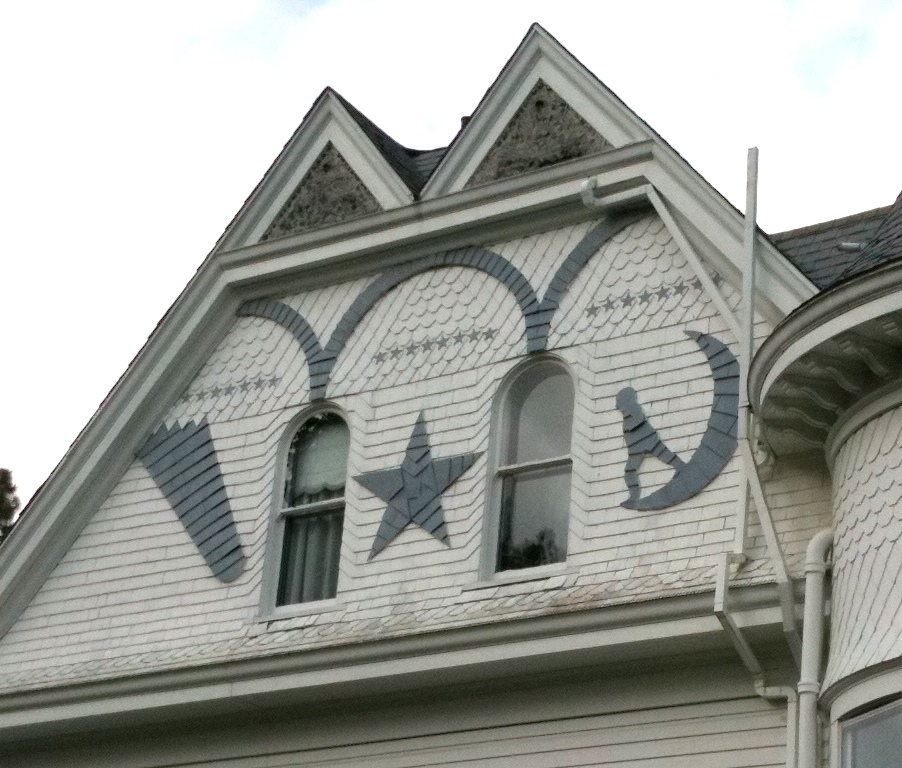
Wood shingles or irregular cedar "shake" siding was used in early New England construction, and was revived in Shingle Style and Queen Anne style architecture in the late 19th century.
Wood siding in overlapping horizontal rows or "courses" is called clapboard, weatherboard (British English), or bevel siding which is made with beveled boards, thin at the top edge and thick at the butt.
In colonial North America, Eastern white pine was the most common material. Wood siding can also be made of naturally rot-resistant woods such as redwood or cedar.
Hub AI
Siding (construction) AI simulator
(@Siding (construction)_simulator)
Siding (construction)
Siding or wall cladding is the protective material attached to the exterior side of a wall of a house or other building. Along with the roof, it forms the first line of defense against the elements, most importantly sun, rain/snow, heat and cold, thus creating a stable, more comfortable environment on the interior side. The siding material and style also influence a building's appearance and architectural character. There is a wide and expanding variety of materials to side with, both natural and artificial, each with its own benefits and drawbacks. Masonry walls as such do not require siding, but any wall can be sided. Walls that are internally framed, whether with wood, or steel I-beams, however, must always be sided.
Most siding consists of pieces of weather-resistant material that are smaller than the wall they cover, to allow for expansion and contraction of the materials due to moisture and temperature changes. There are various styles of joining the pieces, from board and batten, in which the butt joints between panels are covered with a thin strip (usually 25 to 50 mm wide) of wood, to a variety of clapboard, also called lap siding, in which planks are laid horizontally across the wall starting from the bottom, and building up, the board below overlapped by the board above it. These techniques of joinery are designed to prevent water from entering the walls. Siding that does not consist of pieces joined would include stucco, which is widely used in the Southwestern United States. It is a plaster-like siding and is applied over a lattice, just like plaster. However, because of the lack of joints, it eventually cracks and is susceptible to water damage. Rainscreen construction is used to improve siding's ability to keep walls dry.
Wood siding is very versatile in style and can be used on a wide variety of building structures. It can be painted or stained in any color palette desired.
Though installation and repair is relatively simple, wood siding requires more maintenance than other popular solutions, requiring treatment every four to nine years depending on the severity of the elements to which it is exposed. Ants and termites are a threat to many types of wood siding, such that extra treatment and maintenance is required that can significantly increase the cost in some pest-infested areas.
Wood is a moderately renewable resource and is biodegradable. However, most paints and stains used to treat wood are not environmentally friendly and can be toxic. Wood siding can provide some minor insulation and structural properties as compared to thinner cladding materials.
Wood shingles or irregular cedar "shake" siding was used in early New England construction, and was revived in Shingle Style and Queen Anne style architecture in the late 19th century.
Wood siding in overlapping horizontal rows or "courses" is called clapboard, weatherboard (British English), or bevel siding which is made with beveled boards, thin at the top edge and thick at the butt.
In colonial North America, Eastern white pine was the most common material. Wood siding can also be made of naturally rot-resistant woods such as redwood or cedar.