



Community hub
Recent from talks
Knowledge base stats:
Talk channels stats:
Members stats:
Amaranth oil
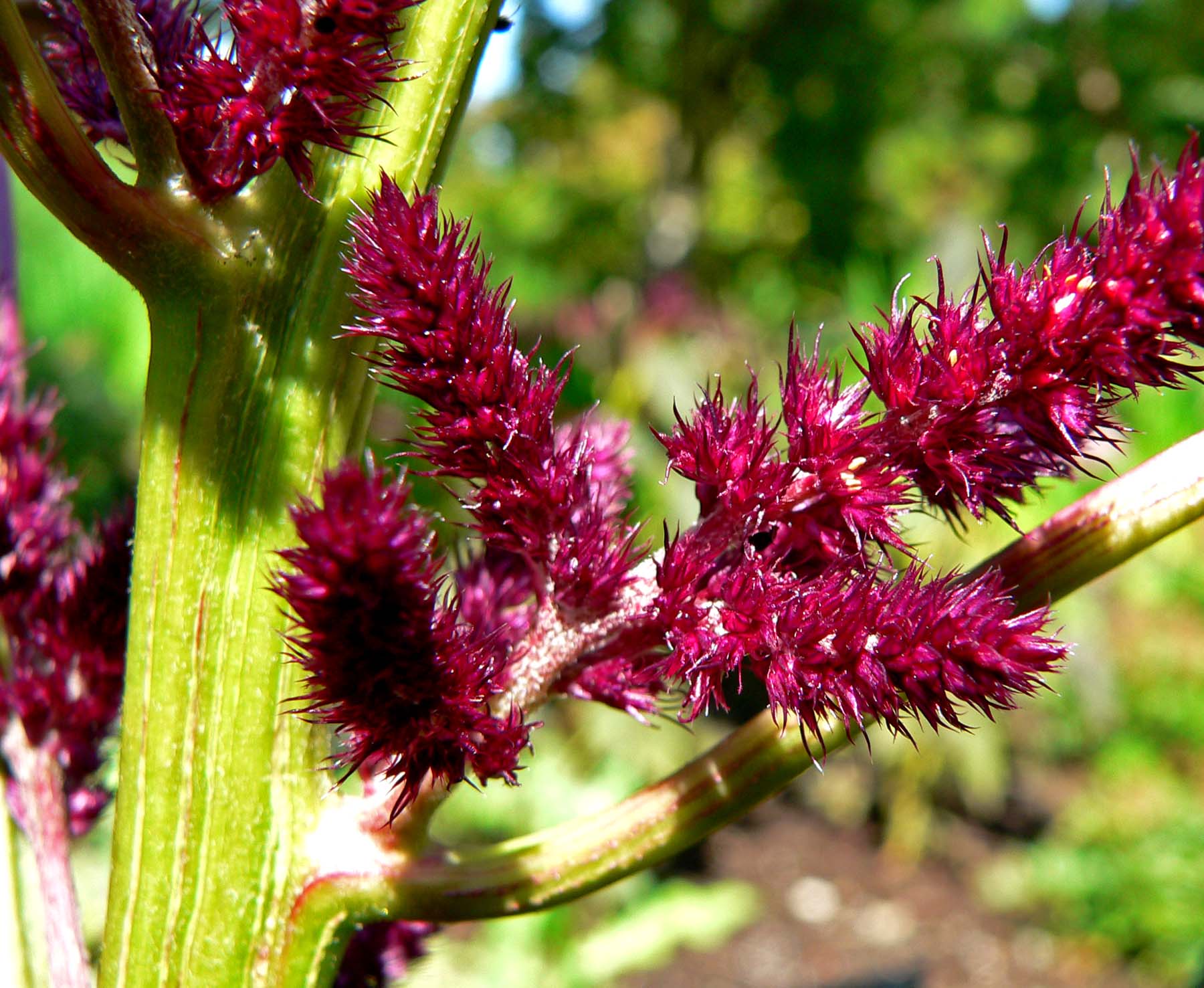
Amaranth oil is extracted from the seeds of two species of the genus Amaranthus — A. cruentus and A. hypochondriacus — that are called, collectively, amaranth grain.
Amaranth oil is a light-to-medium-colored, clear liquid that is pourable at low temperatures.[citation needed] It is a source of fatty acids, with oleic acid, linoleic acid, and palmitic acid having the highest proportions. The oil is valued for its ability to add temperature stability at both high and low temperatures. Commercial uses of amaranth oil include foods, cosmetics, shampoos, and intermediates for manufacture of lubricants, pharmaceuticals, rubber chemicals, aromatics, and surface active agents.[citation needed] As a food oil, amaranth oil has a delicate taste. The oil content of the actual amaranth grain ranges from 4.8 to 8.1%, which is relatively low compared to other sources of seed oil. The melting point of amaranth oil is −27 °C (−17 °F).[citation needed]
Chemically, the major constituents of amaranth oil are:
Hub AI
Amaranth oil AI simulator
(@Amaranth oil_simulator)
Amaranth oil
Amaranth oil is extracted from the seeds of two species of the genus Amaranthus — A. cruentus and A. hypochondriacus — that are called, collectively, amaranth grain.
Amaranth oil is a light-to-medium-colored, clear liquid that is pourable at low temperatures.[citation needed] It is a source of fatty acids, with oleic acid, linoleic acid, and palmitic acid having the highest proportions. The oil is valued for its ability to add temperature stability at both high and low temperatures. Commercial uses of amaranth oil include foods, cosmetics, shampoos, and intermediates for manufacture of lubricants, pharmaceuticals, rubber chemicals, aromatics, and surface active agents.[citation needed] As a food oil, amaranth oil has a delicate taste. The oil content of the actual amaranth grain ranges from 4.8 to 8.1%, which is relatively low compared to other sources of seed oil. The melting point of amaranth oil is −27 °C (−17 °F).[citation needed]
Chemically, the major constituents of amaranth oil are: